
If you want quick, easy setup for occasional content, a USB microphone is a great choice, as it connects directly and is budget-friendly. But if you’re aiming for professional, polished recordings and plan to grow long-term, an XLR setup offers superior sound quality with more control, though it requires extra equipment and technical know-how. Considering your goals and future needs will help you make the best decision—more details can guide you through what’s right for your business.
Open a free Amazon Business account
Business pricing, bulk buying and tax-exempt orders.
As an affiliate, we earn on qualifying purchases.
Key Takeaways
- Consider your required audio quality: USB offers basic clarity, while XLR provides professional-grade sound for high-quality content.
- Assess setup complexity: USB microphones are plug-and-play, ideal for quick, simple setups; XLR requires additional equipment and technical knowledge.
- Determine your content frequency: USB is suitable for occasional recordings; XLR is better for regular, polished production.
- Evaluate long-term goals: Investing in XLR hardware supports future growth and higher audio standards.
- Balance convenience and performance: Choose USB for ease and affordability, XLR for superior sound and professional results.

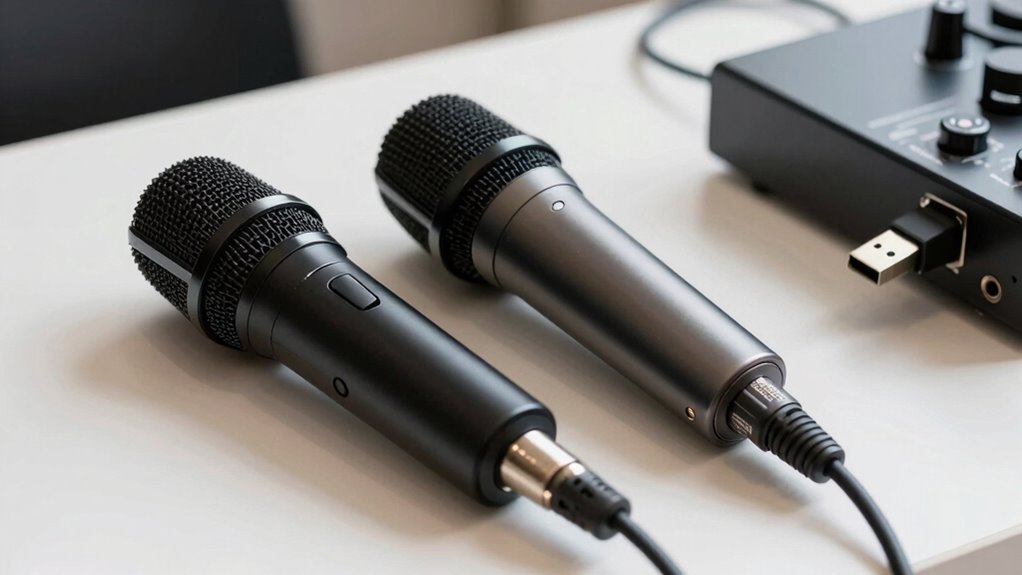
Are you unsure whether to choose a USB or XLR microphone for your setup? Making the right choice depends on how you prioritize audio quality and setup complexity. USB microphones are popular because they’re simple to use—plug and play. You connect them directly to your computer via USB, which makes setup quick and straightforward. If you’re just starting out or need to get content recorded quickly, a USB mic offers convenience without sacrificing too much audio quality. While they generally provide decent sound, their audio quality can sometimes be limited by built-in components, especially if you’re aiming for professional-sounding content. On the other hand, XLR microphones are designed for higher performance, offering superior audio quality because they use external audio interfaces or mixers. This setup allows for more precise control over sound, which is essential if you want your business content to sound polished and professional. However, the trade-off is that XLR setups are more complex; they involve additional equipment like audio interfaces, cables, and sometimes preamps. If you’re comfortable with technical setups or willing to invest time and money into a more advanced system, an XLR microphone can considerably elevate your audio quality. Additionally, the use of external audio interfaces in XLR setups aligns with the high‑signal quality standards often required for professional audio production. When choosing between the two, think about your long-term goals. If you need a quick, easy solution for occasional recordings, a USB mic might be enough. It’s portable, affordable, and doesn’t require much technical know-how. But if you’re producing content regularly, especially for a professional audience, investing in an XLR microphone makes sense. The improved audio fidelity can make your recordings sound clearer, more natural, and more engaging. Remember, the setup complexity of an XLR system means you’ll need to learn how to connect and configure additional equipment, but the payoff is a more customizable and higher-quality sound. Incorporating proper calibration can further enhance your audio clarity and consistency. Your decision should align with your priorities—whether it’s convenience and simplicity or top-tier audio performance. Also, consider future growth; if you plan to expand your setup or improve your production quality over time, starting with an XLR system could save you from needing an upgrade later. To make an informed decision, it’s helpful to understand audio quality standards and how they relate to your content needs. Ultimately, your choice hinges on balancing your comfort with technical setups against your desire for ideal audio quality. Both options have their merits, but understanding your needs and resources will help you make the best decision for your business content.
USB microphone for business content
As an affiliate, we earn on qualifying purchases.
As an affiliate, we earn on qualifying purchases.
Frequently Asked Questions
Which Microphone Type Offers Better Durability for Daily Use?
You’ll find that XLR microphones generally offer better durability for daily use because of their robust microphone materials and construction. During durability testing, XLR mics tend to withstand more wear and tear, making them ideal for frequent handling. USB microphones, while convenient, often use lighter materials that might not endure the same level of daily stress. So, if durability is your priority, XLR microphones are your best choice.
Can USB Microphones Be Used for Professional Broadcast-Quality Recordings?
Yes, USB microphones can be used for professional broadcast-quality recordings. They connect directly to your digital interface, simplifying setup and ensuring high recording quality. While they may not offer the same customization as XLR microphones, many USB models deliver impressive audio clarity suitable for professional content. For top-tier broadcast quality, choose a USB mic with high-resolution audio and a good built-in preamp to meet your recording needs.
Are There Compatibility Issues With Certain Devices When Choosing USB or XLR?
Coincidences often happen when you discover device compatibility issues, especially with USB microphones, which may not seamlessly connect to some devices or software. You’ll find that XLR setups require specific audio interfaces, which can complicate software integration. Always check device compatibility before purchasing, guaranteeing your chosen microphone works smoothly with your existing equipment. This way, you avoid surprises and ensure your recordings stay professional and hassle-free.
How Do Audio Latency Differences Impact Live Streaming or Recording?
Audio latency differences can substantially impact your live streaming or recording. With higher digital delay from USB microphones, you might notice a lag between your voice and the audio output, affecting real-time interaction. XLR setups typically offer better signal synchronization with lower latency, ensuring your audio stays in sync. This smooth synchronization is vital for professional-quality streams, making XLR preferable when minimal latency is essential for your content.
What Are the Cost Differences Between USB and XLR Microphones?
Think of choosing a microphone like buying a car—cost varies, and so do features. USB microphones are generally cheaper, perfect if you’re just starting out or need quick setup. XLR mics, favored by professionals, tend to be pricier but offer better audio quality and durability. Your decision depends on your brand reputation goals and how much you value microphone aesthetics; sometimes, investing in XLR is like buying a luxury car—more costly but long-lasting.
XLR microphone with audio interface
As an affiliate, we earn on qualifying purchases.
As an affiliate, we earn on qualifying purchases.
Conclusion
So, when you’re deciding between USB and XLR, remember that your choice shapes your sound’s destiny. USB offers simplicity and quick setup, perfect for casual or on-the-go content. XLR, though more complex, provides professional-grade audio that can elevate your recordings to legendary status. Think of it as the difference between a quick sketch and a masterpiece—your sound quality can truly become the stuff of legends if you choose wisely. Make your decision, and let your content shine brighter than a thousand suns!
professional podcast microphone XLR
As an affiliate, we earn on qualifying purchases.
As an affiliate, we earn on qualifying purchases.
As an affiliate, we earn on qualifying purchases.
Fall Picks
fall essentials
As an affiliate, we earn on qualifying purchases.