📊 Full opportunity report: Acoustic Dampening, Placement, and the “Rig in the Closet” Setup on ThorstenMeyerAI.com — validation score, market gap, and execution plan.

Get business pricing on tech for your team
- Business-only prices and quantity discounts
- Tax-exempt purchasing
- Multiple users, one account, clear invoices
TL;DR
Placing AI workstations in separate rooms or closets dramatically reduces noise. Proper ventilation in enclosed spaces is essential to prevent overheating. Acoustic foam alone is less effective than strategic placement.
Moving high-power AI workstations into separate rooms or closets significantly reduces noise levels at the user’s workspace, according to experts. This approach is often more effective than acoustic foam or other soundproofing methods alone and is increasingly adopted in professional AI setups.
Experts from ThorstenMeyerAI.com emphasize that the most effective way to reduce noise from powerful AI rigs is to increase physical distance—placing the machine in another room or a dedicated closet. This strategy leverages the principle that noise diminishes with distance, often making additional acoustic treatment unnecessary.
However, placing a heat-generating machine in an enclosed space requires careful ventilation. Sealed closets or cabinets can trap heat, risking thermal throttling or damage. To prevent this, active ventilation—such as quiet exhaust fans or ducted airflow—is recommended to maintain optimal temperatures without compromising noise reduction.
While acoustic foam and barriers help reduce airborne noise within a room, they do not address structure-borne noise or heat. Mechanical decoupling, such as rubber feet or anti-vibration pads, can mitigate low-frequency hums transmitted through the structure, but placement and ventilation remain the primary considerations for effective noise management.
Acoustic dampening
& the rig in the closet.
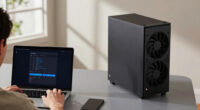
The most powerful noise fix isn’t a material — it’s a floor plan. A rig you can’t hear because it’s in another room beats any amount of foam. Tap the approaches in Part 1 to see what actually works.
(another room)
(levers 1–4)
(door / barrier)
(acoustic foam)
Contain the noise, not the heat
Why Proper Placement and Ventilation Matter for Quiet AI Workstations
Implementing strategic placement, like moving the rig into a separate room or closet, offers a substantial reduction in noise without costly acoustic treatments. This approach enhances workspace comfort and productivity, especially for those working remotely or in shared environments. Proper ventilation in enclosed spaces ensures hardware longevity and prevents thermal throttling, making the setup both quieter and more reliable.
quiet exhaust fan for server closet
As an affiliate, we earn on qualifying purchases.
As an affiliate, we earn on qualifying purchases.
Current Best Practices for Noise Reduction in AI Workstations
Traditional noise mitigation focuses heavily on acoustic foam and barriers, which only absorb airborne sound within a room. For more on this, see our guide on acoustic dampening and setup. Experts now recommend that users prioritize distance—placing the rig in another room or closet—as the most effective method. This advice aligns with the understanding that sound diminishes with distance and that heat management in enclosed spaces is critical for sustained operation.
Recent discussions in AI hardware communities highlight the growing trend of headless operation—controlling and monitoring rigs remotely over network connections—further supporting the idea that the physical proximity of the machine to the user is less important than its placement and ventilation.
"The most effective noise reduction is moving the rig into another room or closet. Acoustic foam alone is rarely enough, and heat management in enclosed spaces is crucial."
— Thorsten Meyer, AI hardware expert
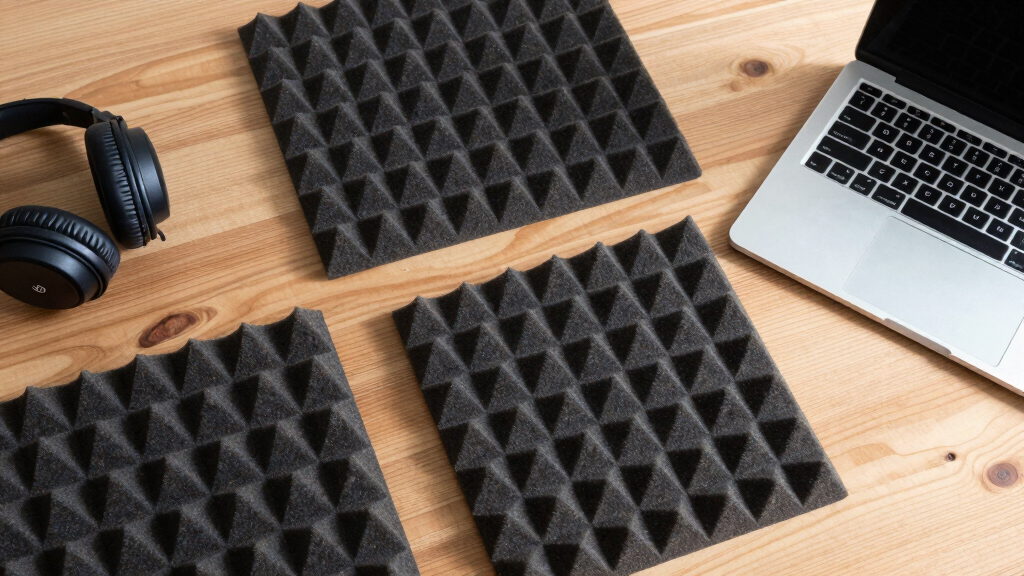
soundproof acoustic foam panels for computer room
As an affiliate, we earn on qualifying purchases.
As an affiliate, we earn on qualifying purchases.
Remaining Challenges in Enclosed and Quiet AI Setups
It is still unclear how best to balance noise reduction and heat dissipation in DIY versus professionally built soundproof cabinets. The optimal design for small-scale, affordable, yet effective cooling and soundproofing solutions is still evolving, and specific temperature thresholds for various hardware configurations are not universally established.
high airflow ventilation fan for enclosed PC
As an affiliate, we earn on qualifying purchases.
As an affiliate, we earn on qualifying purchases.
Next Steps for Implementing Quiet AI Workstations
Users and professionals should focus on integrating proper ventilation solutions when placing rigs in enclosed spaces, such as vented closets or soundproof cabinets with active airflow. Ongoing research and development into affordable, effective cooling and soundproofing will continue to improve options. Monitoring hardware temperatures and noise levels during operation will help refine best practices for different environments.
As an affiliate, we earn on qualifying purchases.
Key Questions
Is acoustic foam effective enough to quiet a high-power AI rig?
Acoustic foam primarily absorbs airborne noise within a room and is generally ineffective at significantly reducing the noise from a high-power rig placed in the same space. Placement and ventilation are more impactful strategies.
Can I place my AI rig in a closet without overheating it?
Yes, if the closet has proper ventilation—such as active exhaust fans or ducted airflow—it can maintain safe temperatures. Sealed spaces without airflow risk heat buildup and hardware damage.
What is the best way to reduce structure-borne noise from my GPU?
Using anti-vibration pads, rubber feet, or grommets under the machine can reduce low-frequency hums transmitted through the structure, but these are secondary to proper placement and ventilation.
Does moving the rig to another room affect my workflow?
For remote or network-based workflows, moving the rig to another room or closet does not impact productivity. Control and data transfer are usually handled over the network, making physical proximity less critical.
Source: ThorstenMeyerAI.com
Fall Picks
fall essentials
As an affiliate, we earn on qualifying purchases.