
🔍 Read the full analysis: What AI Can Teach Us About The Luddites’ Fears on ThorstenMeyerAI.com

Get business pricing on tech for your team
- Business-only prices and quantity discounts
- Tax-exempt purchasing
- Multiple users, one account, clear invoices
TL;DR
A November 5, 2026, essay from ThorstenMeyerAI.com revisits the 1811–13 Luddite protests and argues that workers’ concerns centered on pay, product quality and control over how machines were used. It draws parallels with current AI workplace debates, while the historical record does not establish that the Luddites opposed technology itself.
A November 5 analysis from ThorstenMeyerAI.com uses records of the 1811–13 Luddite protests to argue that the workers’ conflict was about more than machines: it also concerned low pay, the quality of goods and who controlled working conditions. The comparison matters as workers and employers debate how AI will change jobs and workplace rules, though the historical analogy does not establish that the two periods are identical.
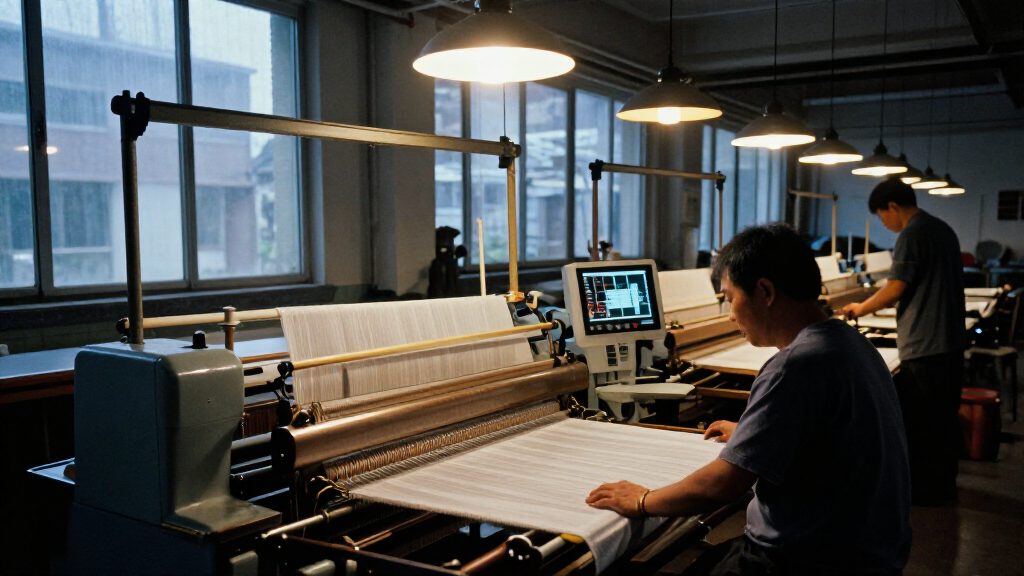
The analysis focuses on framework knitters in Nottinghamshire, who operated mechanical stocking frames by hand and foot, often at home or in small workshops. Many workers did not own the machines: Home Secretary Richard Ryder told the House of Commons in February 1812 that frames were hired to workers by masters or by people who had invested in them. Knitters paid to use the equipment and were paid by the piece by hosiers, merchants who supplied work and sold the finished goods.
Its account draws on a February 6, 1812 report by Nottingham magistrate Robert Baker to the Home Office, held in The National Archives. Baker wrote that in many places one-fifth of frame workers had been out of work and said the first resentment was directed at hosiers paying below-price rates. He reported that frame breakers targeted some of those employers and wider frames that made cheaper, lower-quality stockings. Baker said the protest had generally left other property alone, but his report is an official account by a magistrate, not a complete record of every participant’s views.
The unrest spread from Nottinghamshire to other textile areas, including Yorkshire and Lancashire. The government deployed troops, and Parliament passed the Frame-Breaking Act on March 20, 1812, making the destruction of frames a capital felony. The source says 17 men were executed in 1813. It also cites economist Robert Allen’s estimate that British real wages rose 12% from 1780 to 1840 while output per worker increased 46%; those figures describe that period and do not, by themselves, show how gains were distributed among workers.
The Workplace Questions Behind AI
The historical account shifts attention from whether workers welcomed a particular machine to who benefited from its use. In the source’s reading, the knitters’ complaints involved rates of pay, employment, product standards and power over the terms of production. Those questions remain relevant when employers adopt AI tools that may change tasks, staffing or the value of workers’ contributions.
The essay points to Hollywood writers’ contracts, German works-council rights and the EU AI Act as examples of contemporary debates over rules for technology at work. These are not equivalent to frame breaking or to the legal and economic conditions of early 19th-century Britain. The comparison is useful as a lens on worker voice and the distribution of gains, not as proof that AI will produce the same outcomes as mechanized textile production.
For readers, the practical point is that assessing workplace technology requires more than asking what a tool can do. It also requires examining how decisions are made, how pay and job conditions change, and whether workers have a say in those changes. The historical evidence can inform those questions, but it cannot settle current policy debates on its own.
Products Worth Considering

DJI Mic 3 Wireless Microphone Kit (2 Transmitters, 1 Receiver, Charging Case)

LG UltraGear 32GS60QC-B 32-inch Curved QHD Gaming Monitor (180Hz, 1ms, 1000R, AMD FreeSync, HDR10)

Logitech MX Master 4 Ergonomic Wireless Mouse with Haptic Feedback, Graphite
As an affiliate, we earn on qualifying purchases.
From Stocking Frames to AI Rules
“Luddite” is now commonly used to mean someone hostile to technology. The essay stresses that the original protesters were themselves machine workers: framework knitters who relied on stocking frames to make goods. Their letters used the name General Ned Ludd, but the National Archives describes Ludd as a mythical figure. The source says there is no reliable evidence that a historical Ned Ludd led the movement.
The protests began in Nottinghamshire in 1811 and expanded to textile districts elsewhere in 1812. Legal routes to collective action were restricted: the source notes that the Combination Acts of 1799 and 1800 made trade unions illegal, and that Parliament rejected a minimum wage for weavers in 1808. The analysis places those constraints alongside the workers’ protests, but does not imply that every Luddite had the same motives or that opposition to low pay explains every attack.
Limits of the Historical Comparison
The source presents Baker’s correspondence, parliamentary debate and legislation as evidence, but it does not establish that these records capture the full range of Luddite beliefs. Baker was a magistrate reporting to the government during unrest, and the analysis itself notes that threatening letters are not a straightforward record of workers’ aims. The specific reasons for individual attacks may have varied.
The comparison with AI is an interpretation, not a forecast. The source identifies current debates over contracts, workplace representation and regulation, but supplies no evidence that AI’s effects will mirror those of the stocking frame. It also does not provide a detailed account of how the cited modern rules are being applied or what outcomes they have produced. The wage and productivity estimates refer to a long historical period and cannot show, on their own, which groups captured the gains.
How AI Workplace Rules Develop
The analysis does not announce a new law, policy decision or research finding; it is a historical and contemporary comparison published on November 5, 2026. The next developments relevant to its argument are decisions about how employers introduce AI and how workers’ interests are represented. The source points readers toward contracts, works councils and regulation as places where questions of pay, quality and worker input can be addressed.
Whether those approaches will protect workers or share productivity gains fairly remains to be seen. Further evidence about AI’s effects on jobs, wages and working conditions will be needed to test claims about its impact. The historical record offers questions to ask; it does not supply a definitive answer about the future of work.
Key Questions
What did the Luddites protest?
The source says some Nottinghamshire frame breakers targeted machines associated with employers paying below-price rates and wider frames that produced cheaper, lower-quality stockings. It does not establish that every participant shared the same motive.
Were the Luddites opposed to all technology?
The workers discussed in the analysis operated stocking frames as part of their livelihoods. The source uses this to challenge the modern shorthand that a Luddite is simply someone who hates technology; it does not claim that no protesters opposed particular machines.
Who was General Ned Ludd?
The source says the name appeared on Luddite letters and that the National Archives describes Ludd as a mythical figure. It reports no reliable evidence that a real Ned Ludd led the movement.
How does the essay connect Luddism to AI?
It draws a limited comparison between historical concerns about pay, product quality and control of work and present debates over AI rules, worker representation and contracts. It does not claim that AI will have the same effects as textile machinery.
Source: ThorstenMeyerAI.com