
TL;DR

Get business pricing on tech for your team
- Business-only prices and quantity discounts
- Tax-exempt purchasing
- Multiple users, one account, clear invoices
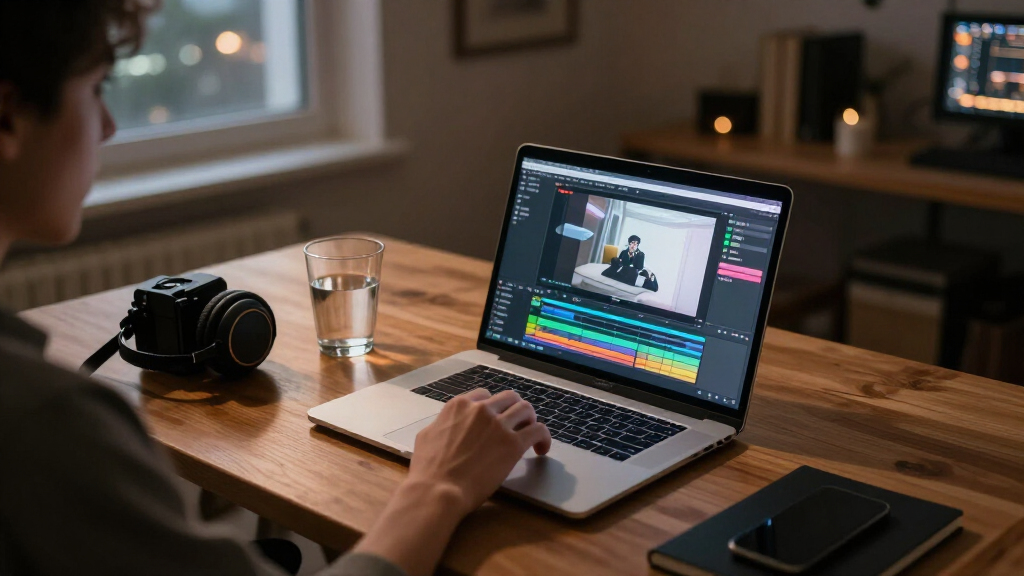
Thorsten Meyer says he built a hand-drawn video engine in one evening, then improved its first full video after finding it slow and visually sparse. His account describes code review by OpenAI’s Codex, human approval and measurements that became automated gates; the results come from his own build notes and experiments.
Thorsten Meyer says he built a new hand-drawn video engine in one evening, but its first full video the next morning was slow and visually sparse. In a personal account published November 6, he describes how code review, his own approval and measured revisions helped turn the initial experiment into a video released on his site hours later.
Meyer said the idea came from watching an explainer whose visual style he liked. To avoid copying it, he says he wrote down only general style traits, such as hand-drawn lines and a continuous illustrated world, and used no drawings, assets or layouts from the original. Claude built the engine from scratch, according to his account; he says the colors came from his own design system and the handwriting font was openly licensed.
That evening, OpenAI’s Codex reviewed the code. Meyer says Codex had a limited role: it reviewed and reported findings but did not build. He says it identified five findings, each fixed with a test that failed against the earlier code. He then watched a roughly one-minute test video and approved it for publication. The short version appeared in an article about local votes against data centers, he wrote.
The following morning, the first full video in the new style felt “slow and boring” to Meyer. He cited excessive white space, icons that did not support the narration and a finished illustration that remained still. After revising the video, he reported changes across its first three scenes: the share of the frame filled with content rose from 15% to 66%, time with a still picture fell from 29 seconds to zero, and camera moves increased from three to 27. He says thresholds for sparse scenes and irrelevant icons now stop a build.
Can One Evening Turn an AI Idea Into a Production Video?
Thorsten Meyer says he built a hand-drawn video engine in one evening, then revised its first full video after finding it slow and visually sparse. His account describes code review, human approval and measured checks before release.
From idea to release
Meyer describes separate steps for checking code, judging the video and addressing visual problems.
Claude built the hand-drawn video engine from scratch, according to Meyer.
OpenAI’s Codex reported five findings; Meyer says each was fixed with a test.
Meyer watched a roughly one-minute test video and approved it for publication.
After finding the first full video slow and sparse, he measured changes and released an improved version hours later.
What changed on screen
The reported measurements cover the video’s first three scenes, based on Meyer’s build notes.
- Content filled 15% of the frame
- Still picture lasted 29 seconds
- Three camera moves
- Content filled 66% of the frame
- No time with a still picture
- Twenty-seven camera moves
Checks that stop a build
The production rules target two visual issues described in the account.
- Stop builds when a scene is too empty.
- Stop builds when icons do not support the narration.
- Keep a human responsible for deciding whether the video communicates well.
From Video Critique to Build Gates
The account illustrates a distinction between producing a working demo and approving a finished video. Meyer’s process adds separate code review, a person responsible for viewing the result, and measurements tied to specific visual problems. Those steps matter because an output can run correctly while still being dull or poorly matched to its narration.
The reported figures are from the first three scenes of this project’s video, according to Meyer’s build notes; they do not establish that every video produced by the engine will improve by the same amount. The gates he describes encode particular judgments about empty frames and unhelpful icons. They may catch those issues, while a human still has to decide whether the video communicates well.
Products Worth Considering

DJI Mic 3 Wireless Microphone Kit (2 Transmitters, 1 Receiver, Charging Case)

Sonos Era 100 SL Compact Microphone-Free Speaker, White

Samsung Galaxy Tab A11+ 11-Inch Tablet, 6GB RAM, 128GB Storage, Expandable, Gray
As an affiliate, we earn on qualifying purchases.
The Checks Behind This Release
Meyer frames the video project as part of a wider effort to move AI-assisted work into production. He says every finding in the account comes from his own build notes, incident notes or published experiments. The article is explicitly personal and says the post was created with AI assistance; its account is not an independent evaluation of the workflow or video engine.
He also describes examples from other experiments to explain why he uses checks. In a weight-edit experiment, he says a model completed 12 of 15 legal answers, compared with four previously, while its legal score remained at zero. In another review round, he reports that all 12 tests written by the author passed, while four of a reviewer’s six checks failed. He also recalls a warning system that logged about 1,300 warnings in August without reaching anyone, because the log went unread and an alert email did not go out. These are separate examples, not results from the video build.
““Slow and boring.””
— Thorsten Meyer, describing the first full video
What the Build Notes Cannot Show
The measurements are Meyer’s own reported results, and the account provides no independent assessment of the video, its audience response or the reliability of the engine across multiple projects. It is also unclear how the two automated gates define a scene as too empty or an icon as unrelated to the narration, and whether they catch all such problems.
The article describes a one-minute test video published the same evening and a later, improved video that went live hours after the first full version. It does not specify the final video’s length, provide a full technical account of the engine or report how many revisions the improved version required. The article’s excerpt also does not supply audience metrics or explain how the reported measurements were calculated.
How the Production Gates Will Be Used
Meyer says the two checks for overly empty scenes and icons that illustrate nothing said now stop the build when triggered. His account describes this as the new production rule following the measured revision. It does not give a date for another video or say whether the system will be updated after further use.
The next evidence would come from how these gates perform on later videos: whether they catch the problems they target and whether human reviewers approve the resulting work. For now, the published account documents one project’s path from an evening prototype to a released video, alongside the author’s own measurements and process.
Key Questions
What happened in the project?
Thorsten Meyer says he built a hand-drawn video engine in one evening, found its first full video visually slow and sparse, then revised it and published an improved version hours later.
What changed in the first three scenes?
Meyer reports that filled frame area rose from 15% to 66%, still-picture time fell from 29 seconds to zero, and camera moves increased from three to 27. These figures apply to the first three scenes, based on his build notes.
Who built and reviewed the engine?
Meyer says Claude built the engine and OpenAI’s Codex reviewed the code. He says Codex found five issues that were fixed with tests; he then personally watched and approved a short test video.
Are the results independently verified?
The account presents the measurements as Meyer’s own build notes. It does not provide an independent evaluation or audience data.
Source: Thorsten Meyer AI