
🔍 Read the full analysis: 9 Top Ultrawide Monitors For Gaming And Productivity To Consider In 2027 on ThorstenMeyerAI.com

Get business pricing on tech for your team
- Business-only prices and quantity discounts
- Tax-exempt purchasing
- Multiple users, one account, clear invoices
TL;DR
A buyer’s guide from ThorstenMeyerAI.com names nine ultrawide monitors for gaming and productivity, led by the Dell S3425DW for mixed use and Samsung’s 49-inch Odyssey G9 for screen area. The guide’s recommendations are not independently verified here, and its source provides limited model-by-model specifications, pricing and test results.
ThorstenMeyerAI.com has published its nine-monitor ultrawide buying guide for gamers and productivity users, recommending the Dell S3425DW as its best overall choice and the 49-inch Samsung Odyssey G9 for maximum screen area. The recommendations reflect the guide’s stated priorities, but the supplied material does not include full test results, prices or a complete specification sheet for every model.
The guide says the Dell S3425DW combines a 120Hz refresh rate with a USB-C hub and power delivery, which it presents as a useful mix for gaming and laptop-based work; see also how to choose an ultrawide monitor. It describes the Odyssey G9 as a 49-inch Dual QHD option with extensive horizontal space, while warning that its 1000R curve calls for a deep desk. The article does not provide current prices or a detailed account of how either monitor performed in testing.
The other models named are the CRUA 34-inch WQHD, a 34-inch LG WFHD IPS model, and Sceptre ultrawides, alongside four picks that the supplied source excerpt does not identify by model name. The guide says the CRUA and Sceptre options offer refresh rates in the 165Hz–180Hz range, but may make tradeoffs in color uniformity or stand adjustments. It singles out the LG for its white chassis and IPS panel, which offers wider viewing angles than VA panels, according to the guide.
Its selection criteria include refresh rate and response time for gaming, color coverage and connections for work, panel type, stand adjustments and value, criteria also explored in other ultrawide monitor picks. Those are criteria described by the publisher, not evidence of a standardized comparative test. The material provides no measured response times, color-calibration data or independent validation of its rankings.
The 9 picks
- 1
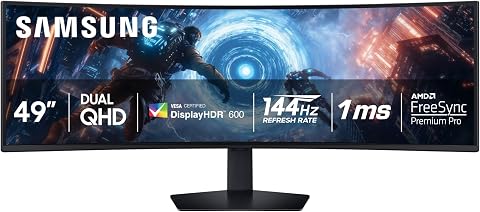 Samsung 49-Inch Odyssey G9 Curved Dual QHD Gaming Monitor, 144Hz, FreeSync Pr…View on Amazon →
- 2
 Z-Edge UG49W 49-Inch Curved Ultrawide Monitor, 5120×1440, 165HzView on Amazon →
- 3
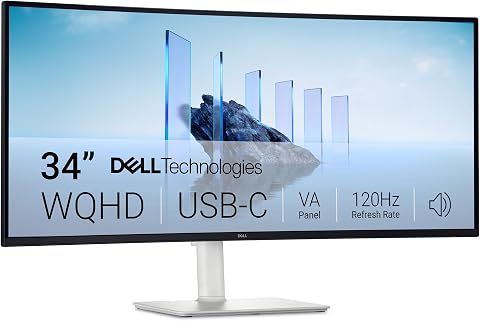 Dell 34 Plus USB-C Curved Monitor (S3425DW) – 34" WQHD, 120Hz, FreeSync PremiumView on Amazon →
- 4
 LG 34WR55QK-B 34-Inch Curved UltraWide WQHD MonitorView on Amazon →
- 5
 Samsung 34-inch ViewFinity S50GC Ultra-WQHD MonitorView on Amazon →
- 6
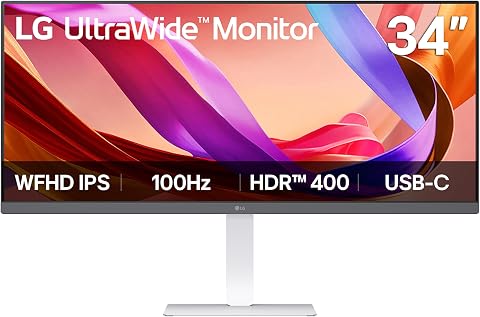 LG 34-inch UltraWide WFHD IPS Monitor, 100Hz, DisplayHDR 400, USB-C, HDMI and…View on Amazon →
- 7
 SANSUI 34-Inch Curved UWQHD Gaming Monitor (3440 x 1440, 200Hz)View on Amazon →
- 8
 CRUA 34-inch WQHD 165Hz Ultrawide Curved Gaming Monitor (1500R, FreeSync)View on Amazon →
- 9
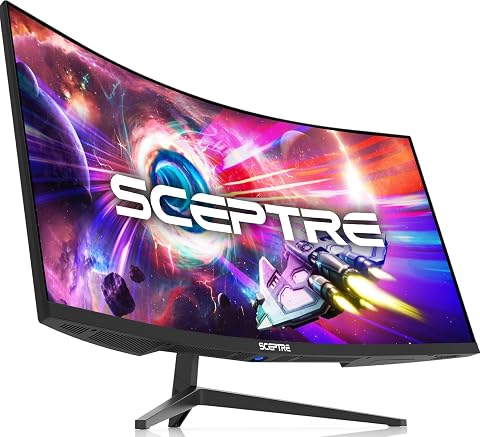 Sceptre 34-inch Curved Ultrawide WQHD Monitor (3440 x 1440), 180Hz, 1ms, Disp…View on Amazon →
Choosing Between Screen Space and Usability
The recommendations highlight a practical choice for buyers: a larger, more immersive display can take more desk space and demand more graphics performance, while a smaller ultrawide may suit everyday work and gaming with fewer setup constraints. A 49-inch Dual QHD display has far more pixels to drive in games than a 34-inch WQHD model, so the guide’s screen-size comparison also has implications for graphics hardware.
For people using laptops, the Dell’s reported USB-C power and hub features could reduce cable clutter by combining display, data and charging connections. For buyers focused on fast gameplay, the guide points to higher refresh rates, while cautioning that those figures do not by themselves establish color quality, response performance or overall value. Readers should treat the list as a starting point and check current specifications, prices and return policies before buying.
Products Worth Considering

Samsung Odyssey OLED G5 27-Inch QHD Gaming Monitor

LG UltraGear 34G600A-B 34-Inch Curved WQHD Gaming Monitor, 160Hz

Apple Watch Series 8 GPS 41mm Midnight Aluminum Case with Midnight Sport Band
As an affiliate, we earn on qualifying purchases.
How the Guide Frames Its Picks
The source organizes its recommendations around familiar ultrawide tradeoffs: VA versus IPS panels, screen curvature, resolution, connectivity and ergonomics. It says VA panels generally offer stronger contrast but can show dark-motion smearing; IPS panels typically provide broader viewing angles while having less deep blacks. These are general panel characteristics, and performance can vary by specific monitor.
It also contrasts 3440-by-1440 WQHD displays, common among 34-inch models in the guide, with 5120-by-1440 Dual QHD screens such as the G9. The source says 1000R curves are more enveloping than 1500R or 1800R curves and may be less suited to straight-line work. Its estimate that an aggressive curve calls for at least 30 inches of desk depth is a recommendation from the guide, not a universal ergonomic standard.
“The Dell S3425DW wins on versatility, offering a USB-C power delivery hub that reduces cable clutter for laptop users.”
— ThorstenMeyerAI.com buyer’s guide
Missing Models, Tests and Current Prices
The supplied source names only five of the promised nine monitors in identifiable terms: the Dell, Samsung, CRUA, LG and Sceptre models or product lines. It does not name the remaining four picks, so this article cannot reliably list all nine without adding unsupported products. The source also omits prices, exact model numbers for some entries, test methods and measured results, including color accuracy and response times.
It is also unclear when the guide was published, whether every product is currently available, and whether the cited specifications apply to all regional versions. The guide’s rankings and claims about value, ergonomics and performance should be understood as its editorial judgments, not confirmed findings from an independent comparative review.
Verify Availability Before Buying
Readers considering a monitor should compare the manufacturer’s current specifications with the guide’s claims, especially USB-C power delivery, refresh rate, resolution and stand movement. They should also check the exact model number, warranty, price and desk measurements; product names and specifications can vary across versions and markets.
A fuller assessment of the nine-pick list would require the missing four model names and evidence such as standardized measurements, test conditions and dated pricing. Until those details are available, the guide can help frame the tradeoffs, but it does not establish which monitor is best for every buyer.
Key Questions
Which monitor does the guide recommend for mixed gaming and work?
It names the Dell S3425DW as its overall choice, citing a 120Hz refresh rate and USB-C hub with power delivery. The source does not provide independent test results to verify that ranking.
Which model offers the most screen area?
The guide points to the 49-inch Samsung Odyssey G9, with a 5120-by-1440 Dual QHD display. It also warns that the 1000R curve may require a deep desk.
Does the source identify all nine monitors?
No. The supplied material identifies the Dell, Samsung, CRUA, LG and Sceptre options, but does not name four of the promised nine picks.
Are the recommendations based on published benchmark tests?
The source describes selection criteria, including refresh rate, color, connectivity and ergonomics, but the supplied material does not include benchmark tables, measured results or detailed test methods.
Source: ThorstenMeyerAI.com