
📊 Full opportunity report: The Power Bottleneck: AI Data Centers and the Grid Cliff Approaching 2027-2028 on ThorstenMeyerAI.com — validation score, market gap, and execution plan.
TL;DR
AI data center growth faces a significant power supply challenge, with grid expansion taking years and capacity limits near. This could slow AI infrastructure deployment by 2028, affecting industry growth and costs.
Power capacity constraints are now actively limiting the deployment of AI data centers, with industry leaders like Microsoft and AWS unable to match the rapid growth in AI demand due to grid limitations.
In May 2026, industry analysis indicates that the mismatch between hyperscaler capital expenditure and the pace of grid expansion is a critical bottleneck. Microsoft has committed over $15 billion to data center development in the UAE, where power availability exceeds that in many US markets, highlighting regional disparities.
Data center electricity demand is projected to reach approximately 1,050 terawatt-hours globally by 2026, making it the fifth-largest energy consumer worldwide. This demand is growing at about 12% annually, driven by AI workloads that are significantly more power-intensive than traditional web services.
The capacity expansion for power grids—taking 4-8 years for new transmission lines and 5-10 years for new generation facilities—lags far behind the 12-24 month timeline for hyperscaler capex deployment. This disparity is causing a tightening of available power in key regions such as Northern Virginia, Dublin, and Singapore, risking a slowdown in AI infrastructure growth.
Capex meets
the grid cliff.
Capex deploys in 12-24 months. Grid responds in 4-10 years. The mismatch is structural.
Global data center electricity 1,050 TWh by 2026 — fifth-largest in the world. Demand growth 12% CAGR vs 2-3% for total grid. Microsoft committed $15.2B to UAE for power-rich location. Three Mile Island restart 2028. PJM auction cleared $15B. AI service costs rise 5-20% through 2027-2028.
2024 → 2026 → 2030. The grid wasn’t designed for this.
Data center electricity demand has been compounding at 12% annually since 2017. Four times faster than total global electricity consumption. A single AI task uses up to 1,000× the electricity of a traditional web search.
Four strategies. None sufficient alone.
Geographic relocation · nuclear restart · off-grid microgrids · battery storage. Most hyperscaler strategies combine elements of all four.
Three paths. One constraint.
30/50/20 probability allocation reflects response-side execution uncertainty. Base scenario is most likely because the response strategies are real and beginning to deploy, but timelines are aggressive and execution risk is meaningful.
- Nuclear on timeTMI + SMRs deliver as announced.
- BYOP scales fastCrusoe-style proliferates.
- Costs +30-50%Plateau through 2028.
- AI prices +5-12%Pass-through manageable.
- Outcome: Capex deploys with 6-12 mo delays max.
- Nuclear delays 1-3ySMRs 18-36 mo late.
- Relocation acceleratesUAE / Norway / Iceland.
- Costs +50-80%New contracts.
- AI prices +12-20%Material pass-through.
- Outcome: Capex delays 12-24 mo systematic.
- Nuclear fails / delaysSMRs 24-48 mo late.
- Storage supply chainLithium / rare earths bind.
- Costs +80-120%Severe pass-through.
- AI prices +20-35%Demand destruction risk.
- Outcome: Capex delays 24-36 mo · impairment cycles 2028-29.
AI infrastructure is now an infrastructure problem more than a software problem. The companies that solve power constraint while solving the other constraints — architectural, capability, regulatory — capture durable advantage. The next 18-36 months produce the data on which side of the line each major player ends up on.
Four assignments. By role.
Update capex models for 12-24 month delays.
Differentiate on power-strategy quality: Microsoft (UAE + nuclear + microgrid) and Alphabet (Iceland + SMR + storage) best-positioned. Meta most exposed (mostly grid-dependent in Louisiana). Track nuclear-restart project execution as forward indicator. Power strategy is now material to capex returns.
Lock in long-term pricing now.
Negotiate hyperscaler partnership pricing now to lock current cost structure. Plan margin guidance for 5-20% service-cost uplift through 2026-2028. Evaluate alternative deployment regions (Norway, Iceland, UAE) for capacity expansion bypassing primary-market constraint. China sphere price gap compounds.
Begin scale expansion planning.
Transmission and substation expansion at scales matching DC load growth. Engage public utility commissions on rate-base investment + customer-class assignment. Develop time-of-use pricing incentivizing DC load profiles aligned with grid availability. Data center demand is structural, not transitional.
Negotiate with price-discount escalators.
Multi-region AI service architecture (US + Europe + Asia-Pacific) reduces single-region power-constraint exposure. Long-term commitments capture current pricing; short-term commitments preserve optionality but face upward repricing risk through 2027-2028. Geographic diversification matters now.
Impacts of Power Constraints on AI Infrastructure Growth
This power bottleneck threatens to slow the expansion of AI data centers, potentially delaying AI advancements and increasing operational costs. Rising grid modification costs are already causing a 30-50% increase in electricity contracts, which could be passed on to consumers. The situation raises questions about the sustainability of current AI growth trajectories and the need for strategic energy planning.

APC UPS 1500VA Smart-UPS Single Phase Online Uninterruptible Power Supply (SRT1500XLA), Black
- Power Protection Type: Double-conversion online Sine Wave
- Power Capacity: 1350W/1500VA
- Management Feature: Smart-slot for remote management
As an affiliate, we earn on qualifying purchases.
As an affiliate, we earn on qualifying purchases.
Historical and Projected Power and Data Center Capacity Trends
Since 2017, AI workloads have grown at 12% annually, four times faster than global electricity consumption. Major hyperscalers like Microsoft, Amazon, and Alphabet have committed hundreds of billions in capex to data centers, primarily in regions with available power. However, the physical and regulatory timelines for grid expansion remain significantly longer, creating a structural mismatch.
Recent developments include record-breaking capacity auctions in PJM, driven by data center demand, and regional commitments like Microsoft’s $15.2 billion investment in the UAE. Meanwhile, the power density of AI racks continues to increase, further amplifying the demand for reliable, high-capacity power supplies.
“Power, not silicon, is now the rate-limiting factor for AI’s next phase.”
— Jensen Huang, Nvidia CEO

GlobalRack 27U Open Frame Server Rack,22-35" Depth Adjust,with Wheels
- Adjustable Depth Range: 22 to 35 inches for flexibility
- Robust Load Capacity: Supports up to 1200 lbs (550kg)
- Universal Compatibility: Fits standard 19-inch rack equipment
As an affiliate, we earn on qualifying purchases.
As an affiliate, we earn on qualifying purchases.
Uncertainties Surrounding Power Expansion and Deployment Rates
While the structural mismatch is confirmed, the exact timeline for grid upgrades in specific regions and the potential for alternative solutions (such as energy storage or nuclear power) remain uncertain. The pace at which utilities can accelerate grid projects is also unclear, as is the industry’s ability to adapt to rising costs.

Advanced Concepts for Renewable Energy Supply of Data Centres
As an affiliate, we earn on qualifying purchases.
As an affiliate, we earn on qualifying purchases.
Next Steps in Addressing Power Capacity Challenges
Industry stakeholders are likely to focus on accelerating grid modernization projects, exploring new energy sources, and optimizing AI workload efficiency. Monitoring regional grid upgrade timelines and policy responses will be critical through 2026 and 2027, as the industry seeks to mitigate deployment delays and cost impacts.
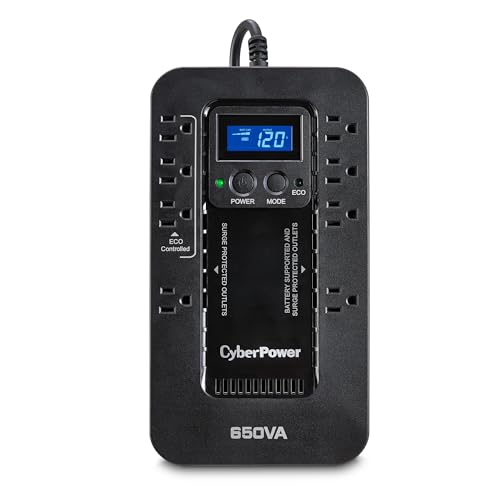
CyberPower EC650LCD Ecologic UPS Battery Backup and Surge Protector
- Power Capacity: 650VA/390W battery backup
- Technology: Simulated sine wave output
- Display Panel: Multifunction LCD for status info
As an affiliate, we earn on qualifying purchases.
As an affiliate, we earn on qualifying purchases.
Key Questions
How soon could power constraints slow AI data center deployment?
Based on current grid expansion timelines, significant constraints could impact deployment as early as 2027-2028 if current trends persist.
What regions are most affected by these power constraints?
Key regions include Northern Virginia, Dublin, Singapore, and parts of the US and Europe where grid capacity is nearing saturation or expansion is delayed.
Are there solutions to mitigate this power bottleneck?
Potential solutions include accelerating grid upgrades, deploying energy storage, increasing nuclear capacity, or relocating data centers to regions with surplus power, though each has practical and regulatory challenges.
How will rising electricity costs affect AI service prices?
Electricity cost increases of 30-50% on new contracts are already observed, which may be passed on to customers, potentially raising AI service prices or reducing profit margins.
Source: ThorstenMeyerAI.com