
🔍 Read the full analysis: Should Your Business Run AI On-Prem? IBM’s CEO Weighs In on ThorstenMeyerAI.com

Get business pricing on tech for your team
- Business-only prices and quantity discounts
- Tax-exempt purchasing
- Multiple users, one account, clear invoices
TL;DR
IBM CEO Arvind Krishna argued on the company’s October 21 earnings call that open-weight models can approach frontier performance at a fraction of the token cost, and that enterprises can run them on their own infrastructure. A comparison published by Artificial Analysis puts the leading downloadable model at 80% of the leading proprietary model’s score as of October 26; costs, workload, utilization and staffing all affect whether on-premises deployment makes financial sense.
IBM CEO Arvind Krishna said on the company’s October 21 earnings call that open-weight AI models can be about 90% as effective as frontier models at 10% to 25% of their token cost, making them worth considering for some enterprise workloads. A benchmark comparison from Artificial Analysis, read October 26, puts the leading downloadable model at 46.3 points against 57.6 for the top proprietary model—about 80%—while the economics of running models on a company’s own servers depend on utilization and costs beyond hardware.
In the call’s question-and-answer session, Krishna described open models as having narrowed the performance gap with proprietary systems. He said that in late 2024 a leading model might score 70 while an open model scored 20 or 30; by late 2025, he said, the comparison was closer to 70 versus 50. He then asked whether a company would prefer something “10% of the cost” and “90% as good as the best,” rather than paying ten times as much. Those figures were his illustrations, not the results of a benchmark he named.
Krishna pointed to routine work such as summarizing email, examining contracts and answering customer calls as tasks that may not require the most capable available model. He also said banks and trading firms may want AI that is “sovereign,” so outside parties cannot access their underlying data or logs. Open-weight models, he said, give organizations rights to run systems on premises or in private clouds. IBM is an interested party in that argument: its business includes enterprise hardware, and Krishna linked on-premises demand to sales of the company’s Spyre cards.
The independent comparison cited in the source article uses Artificial Analysis’s Intelligence Index. On its October 26, 2026 reading, Xiaomi’s MiMo-V2.6-Pro scored 46.3, the highest listed score among models with downloadable weights, while Claude Opus 5.5 scored 57.6 among proprietary models. That makes the open model about 80% of the leader’s score on this index, not 90%. The score is a measure on that benchmark, not a universal estimate of how well every model performs on every business task.
IBM's 90% claim, checked
Open weights reach 80% of the leader
Krishna says open-weight models are "90% as effective". On an independent index the best model you can download today reaches 80% of the best closed one, up from about half two years ago.
Best open model as a share of the best closed
Artificial Analysis Intelligence Index, current version, best downloadable vs. best proprietary model at each date.
What Krishna said
Illustrations from the earnings call, not a named benchmark.
- Late 2024"70" vs. "20 or 30"Krishna, Q3 call, 21 Oct · no named benchmark
- Late 2025"70 to 50"Krishna, Q3 call, 21 Oct · no named benchmark
- Now"90% as effective"Krishna, Q3 call, 21 Oct · no named benchmark
Top downloadable models today
Intelligence Index score and licence type. Read the licence before the leaderboard.
| Model | Index | Licence |
|---|---|---|
| MiMo-V2.6-Pro Xiaomi | 46.3 | MIT |
| DeepSeek V4.1 Flash 1017 DeepSeek | 45.1 | MIT |
| GLM-5.3 Z AI | 44.8 | own commercial licence |
| Step 5 Preview StepFun | 43.7 | own commercial licence |
| Muse Spark Open Meta | 38.9 | licence with conditions |
In points the gap did not shrink: 7.5 points at the end of 2024, 11.3 today. Closed models moved too.
Sources: Artificial Analysis, Intelligence Index v4.3.2 (read 26 Oct 2026), IBM Q3 2026 earnings call transcript (21 Oct 2026), Artificial Analysis on Kimi K3.1 Pro (23 Oct 2026).
Powered by Thorsten Meyer AI
The On-Prem Cost Depends on Workload
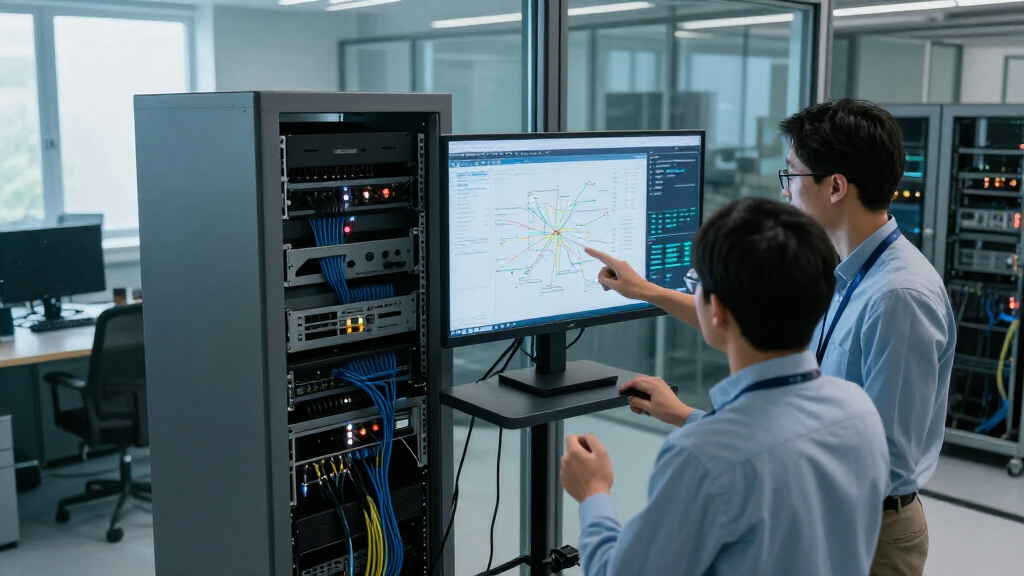
The comparison matters because an on-premises decision is not simply a choice between a cheaper model and a more expensive one. It is a decision about performance, data control and operating cost. A model that is adequate for routine document work may not meet the quality or reliability needs of more demanding tasks. A business also has to weigh the benefit of keeping data and logs within its own environment against the equipment, people and infrastructure needed to operate the system.
The source article’s illustrative hardware comparison shows why utilization can change the calculation. It says an eight-GPU H200 server lists from $172,643, while renting the same GPU class on AWS costs $63.30 an hour. On those figures, the purchase price equals roughly 114 days of cloud rental at continuous full use; at 25% use, the simple comparison stretches to about 15 months. The calculation excludes staff, cooling and networking, so it is not a full break-even estimate. Low or uneven demand can make rented capacity more attractive; steady, heavy use may improve the case for buying.
Krishna himself identified a capability gap: enterprises need people who can manage model kernels and networking. He said that gap remains outside the most sophisticated organizations, while cloud services are the easier option despite being more expensive. That is a practical constraint for companies weighing control against operational complexity, particularly those without an established AI infrastructure team.
Products Worth Considering

Samsung 27-inch Odyssey OLED G6 QD-OLED QHD Gaming Monitor

Bose SoundLink Flex (2nd Gen) Portable Bluetooth Speaker

Amazon Kindle Paperwhite (12th Generation, 2024), 16 GB, 7-inch Display, Jade
As an affiliate, we earn on qualifying purchases.
How Open Models Narrowed the Gap
Artificial Analysis’s historical figures in the source show the leading open-weight model at 51% of the leading proprietary score at the end of 2024, 74% at the end of 2025, and 68% at the end of June 2026. The October 26 comparison puts it at 80%. The relative gap has narrowed from the end of 2024, but the raw point difference in the cited index is 7.5 points then and 11.3 points in October. The leaders on both sides changed over time, so the percentage comparison should not be read as a like-for-like test of fixed models.
One possible exception to the current 80% figure is Kimi K3.1 Pro, which scores 55.1 on the index, or 96% of Claude Opus 5.5’s score. But the source says Moonshot had promised to release its weights “by Nov 4”; until they are actually available, it remains a closed model for this comparison. The article also notes that no licence had been published and that the model’s reported 2.8 trillion parameters could make deployment a data-centre-scale undertaking.
Licensing is another distinction between models described as open. The source identifies MiMo-V2.6-Pro and DeepSeek V4.1 Flash 1017 as MIT-licensed, while other models have their own commercial or custom terms. Downloadable weights do not automatically mean unrestricted commercial use. IBM also said its llm-d project helps run large models at five to ten times lower cost; that is an IBM claim, and the source article says it could not independently verify the figure.
Benchmark Scores Are Not a Cost Model
The figures do not settle which deployment is cheaper for a particular business. The Artificial Analysis index provides a cross-model comparison, but the source does not establish that its scores predict results for every enterprise task. Nor does Krishna’s “90% as effective” estimate specify a workload, evaluation method or model pair. The index’s current comparison is closer to 80% for the leading downloadable model, while Kimi K3.1 Pro’s higher score does not make it open until its weights are released.
The cited hardware and cloud prices are list-price comparisons, not complete ownership costs. Actual economics would depend on purchase terms, utilization, staffing, power, cooling, networking, maintenance and the price of the chosen model or service. The source also gives hosted-model prices that differ substantially by provider, so “a tenth of the price” is not a universal rate. It remains unclear whether IBM’s claimed llm-d savings have been independently measured under comparable conditions.
Watch for Weights and Real-World Costs
The next concrete milestone cited in the source is Moonshot’s promised release of Kimi K3.1 Pro’s weights by November 4, 2026. Whether the files arrive, what licence accompanies them and what infrastructure they require will affect whether the model can be counted as a practical open-weight option.
For businesses, the next step is a workload-specific comparison rather than relying on a single score or price claim. That means testing candidate models on the company’s own tasks, checking licence terms, estimating expected server use and including the staff and facility costs of running the system. IBM has not, in the supplied material, provided a complete cost model showing when its on-premises approach beats cloud deployment.
Key Questions
What did IBM CEO Arvind Krishna say about open-weight AI?
On IBM’s October 21 earnings call, Krishna said open-weight models could cost 10% to 25% as much per token as frontier models while being “90% as effective.” He also argued that some routine enterprise work may not need the most capable model.
Do current benchmark results show open models are 90% as capable?
Not in the comparison cited here. Artificial Analysis’s October 26 index reading gives the leading downloadable model a score of 46.3 and the leading proprietary model 57.6, putting the former at about 80% of the latter on that index. The score does not establish performance on every business task.
Does running AI on premises always cost less?
No. The economics depend on GPU purchase or rental prices, how consistently the hardware is used, and additional expenses such as staffing, cooling and networking. A server’s purchase price may compare favorably with cloud rental at full use but take longer to recover at lower utilization.
Why might a company choose on-premises AI?
Krishna said some firms, including banks and trading companies, want greater control over data and logs. Running a model on company infrastructure or in a private cloud may support that goal, but it also requires suitable hardware and technical staff.
Is Kimi K3.1 Pro an open-weight model now?
Not according to the source material. Moonshot had promised its weights by November 4, 2026, but until they are released, the model remains closed for purposes of the comparison. The source also said no licence had been published.
Source: ThorstenMeyerAI.com