
🔍 Read the full analysis: How “After Action” Uses AI To Reimagine Film Credits on ThorstenMeyerAI.com

Get business pricing on tech for your team
- Business-only prices and quantity discounts
- Tax-exempt purchasing
- Multiple users, one account, clear invoices
TL;DR
After Action is an AI-built exhibition piece that presents 24 web experiences as productions in a fictional Wing V theater. Its centerpiece is a navigable film-credit roll intercut with code-generated miniature scenes; it is an art-directed website, not a real company or a record of military activity.
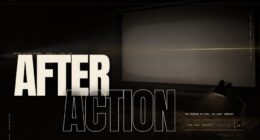
After Action, a live, AI-built web exhibition, presents 24 web experiences as the closing credits of a fictional Wing V theater, replacing a conventional gallery of project cards with a continuous, navigable reel. The work uses a cinema setting and small, code-built sand-table scenes to make browsing itself the exhibit; its fictional military framing does not describe a real company or real military activity.
The site’s central device is a continuous credit roll that visitors can pause or navigate by chapter. JavaScript tracks elapsed time and moves a single track with a GPU-friendly transform, while chapter stops coordinate the time display, locator line, chapter label and jump controls. The names are taken out of keyboard focus while moving; a stationary linked register after the theater offers an accessible alternative route through the same projects.
Every eight productions, the roll gives way to a miniature scene: CSS-built terrain and markers evoke a shield formation, a catapult’s arc and two keys moving toward a shared lock. These scenes use perspective, layered contour gradients and raised markers rather than a separate image for each vignette. The aesthetic combines cinema black, beam-white, sand amber and credit gold, with letterbox bars, grain and a projected-light effect.
The source describes an implementation designed around local assets and no external requests. It says the ambient video intended for the theater was unavailable in the described build, so the hero uses a locally stored still image with visual effects instead. Motion is intended to pause when the page is hidden; visitors who prefer reduced motion receive a manual-scroll alternative. Optional synthetic projector audio starts off and is stopped when disabled.
How “After Action” Uses AI To Reimagine Film Credits
Inside a fictional Wing V theater, 24 web experiences appear as a continuous film-credit roll. Code-built miniature scenes turn browsing into the exhibition itself.
A paced, navigable reel replaces a conventional wall of project cards.
Wing V is part of the artistic conceit, not a real company or record of military activity.
A credit roll becomes the interface
After Action treats credits as the main way into a collection, rather than an ending appended to a portfolio. Visitors follow a paced sequence, pause the roll, or jump between chapters. Small visual interludes break up the reel.
One moving track
JavaScript tracks elapsed time and moves a single credit track with a GPU-friendly transform. Chapter stops coordinate the timer, locator line, label and jump controls.
Motion has alternatives
Moving names leave keyboard focus. A stationary linked register offers another route to the same projects, while reduced-motion visitors can browse by manual scrolling.
Miniatures in the reel
Every eight productions, CSS-built terrain and markers evoke a shield formation, a catapult arc or two keys approaching a shared lock.
From brief to Wing V theater
The source frames the collection as the finale of a nearly empty cinema: the closing credits, rather than a gallery, become the exhibition. Its production names and military imagery belong to that fictional setting.
24 projects
Distinct web experiences are cast as productions in Wing V.
Chaptered credits
A continuous roll makes sequence and navigation part of the work.
Code-built terrain
Layered contours, perspective and raised markers form miniature scenes.
Cinema light
Black, beam-white, sand amber and credit gold shape the visual language.
Terrain made from layers
The described vignettes use perspective, contour gradients and raised markers instead of a separate image for every scene.
The theater combines letterbox bars, grain and projected-light effects. The source says the intended ambient video was unavailable in that build, so its hero uses a locally stored still with visual effects.
What the source says—and what it leaves open
The exhibit describes its intended behavior and production brief. The available material does not include an independent technical review or measured evaluation.
Described in the project material
- ✓Single-page HTML, CSS and JavaScript concept, with no frameworks, build steps, CDNs or external requests in the brief.
- ✓Responsive layouts, keyboard focus states, reduced-motion handling and animation intended to pause when a tab is hidden.
- ✓Optional synthetic projector audio starts off and is stopped when disabled.
- ✓A local still image stands in for unavailable ambient video in the described build.
Not independently verified
- ~Launch date, current site state, independent accessibility audit and performance measurements.
- ~Who built the site and how much of the finished implementation came from AI.
- ~Whether the unavailable ambient video will return or a technical review is planned.
- ~The source attributes the brief to Claude Fable 5 and execution to the FABLE/175 pipeline; these remain claims from the exhibit material.
Follow the idea from collection to credits
The exhibition’s organizing metaphor links a set of projects to a theater experience, then provides alternate ways to reach the work.
Key questions
What is After Action?
An AI-built exhibition website presenting 24 web experiences as productions in a fictional Wing V theater, centered on a navigable credit roll and miniature scenes.
Does it document real military activity?
No. The source describes Wing V as fictional and says the project is not a real company or account of military activity.
Are the miniature scenes image assets?
The terrain scenes are described as CSS-built. The theater hero uses a local still image because the planned ambient video was unavailable in the described build.
What is the next step for readers?
Visit the live exhibit and compare its current experience with the source description. The material announces no follow-up release or review date.
A Credit Roll Becomes the Interface
After Action treats the credits as the main interface, not as an ending appended to a conventional portfolio. That changes how the collection is encountered: visitors follow a paced sequence and can jump between chapters, while the intervening vignettes provide visual breaks. The format turns a list of projects into a designed viewing experience rather than a grid of thumbnails.
The approach also makes accessibility part of the work’s structure. A linked, stationary register preserves access to the same material without requiring visitors to track moving text, and the reduced-motion option substitutes manual scrolling for continuous animation. These choices matter because the exhibition’s central effect depends on motion; alternatives let more visitors explore its contents without relying on that effect.
The project is also a specific example of AI-assisted web art direction: the supplied brief names an AI coding agent and a production pipeline, while the finished concept combines generated content, interface behavior and a coherent visual metaphor. The source does not independently document how much of the implementation was produced by AI, so the label describes the work as presented, not a verified account of its production process.
As an affiliate, we earn on qualifying purchases.
From Brief to Wing V Theater
The source identifies After Action as room 125 of 175 and frames it as a finale for a collection of 24 linked web experiences, each treated as a production in the fictional Wing V. Its stated concept is a nearly empty cinema where the credits, rather than a gallery, become the exhibition. The production names and military imagery belong to that conceit and should not be read as evidence of actual military operations.
The published art-direction brief calls for a single-page site built with HTML, CSS and JavaScript, without frameworks, build steps, CDNs or external requests. It also specifies responsive layouts, keyboard focus states, reduced-motion handling and animation that pauses when a browser tab is hidden. The brief is presented as having been written by Claude Fable 5 and executed by the FABLE/175 pipeline; those are claims in the exhibit’s own source material, not independently verified findings.
One implementation detail differs from the original brief: the brief asks for code-generated visuals and no image assets, while the described build uses a local still image for the hero because the planned ambient video was unavailable. The dioramas and atmospheric layers remain described as code-generated. The source does not give a publication date, technical audit or independent evaluation of the live site.
interactive film credit roll display
As an affiliate, we earn on qualifying purchases.
As an affiliate, we earn on qualifying purchases.
What the Source Does Not Verify
The source describes the live site and its intended behavior, but does not supply an independent technical review, accessibility audit, performance measurements or screenshots from the requested responsive test widths. Claims about smooth performance, accessibility and the implementation should therefore be treated as descriptions of the project rather than independently measured results.
The source also does not state when the site went live, identify the people responsible for building it, or quantify how AI contributed to the finished work. It says an intended ambient video was unavailable but does not explain why or whether it will be restored. The available material does not establish whether the site has changed since the described build.
As an affiliate, we earn on qualifying purchases.
The Live Exhibit and Its Follow-Up
The immediate next step for readers is to visit the live After Action site and compare its credit-roll experience with the implementation described here. The exhibition’s brief outlines responsive design, motion controls and a stationary project index, but the source gives no announced follow-up release, restoration schedule for the intended video or date for a technical review.
Any later account should distinguish changes visible on the site from the original brief and document when those changes were checked. Until then, the confirmed development is the presentation of a 24-project collection as a fictional theater’s final reel; questions about authorship, AI’s exact contribution and future updates remain open.
GPU-accelerated JavaScript libraries
As an affiliate, we earn on qualifying purchases.
As an affiliate, we earn on qualifying purchases.
Key Questions
What is After Action?
After Action is an AI-built exhibition website that presents 24 web experiences as productions in a fictional Wing V theater. Its main feature is a navigable film-credit roll interrupted by miniature scenes.
Does the site document real military activity?
No. The source explicitly describes the Wing V theater as fictional and says the project is not an account of real military activity or a real company.
How does the credit roll work?
JavaScript tracks elapsed time and moves one continuous credit track. Visitors can pause or jump between chapters, and a separate stationary linked register provides access to the projects without following the moving text.
Are the sand-table scenes images?
The source says the miniature terrain scenes are built with CSS, using perspective, layered gradients and markers. It also says the theater’s hero uses a locally stored still image because the planned ambient video was unavailable in the described build.
What remains unknown about the project?
The source does not give a launch date, independent accessibility or performance results, the names of the people who built the site, or a measured account of AI’s contribution. It also does not say whether the unavailable video will be restored.
Source: ThorstenMeyerAI.com
Fall Picks
fall essentials
As an affiliate, we earn on qualifying purchases.