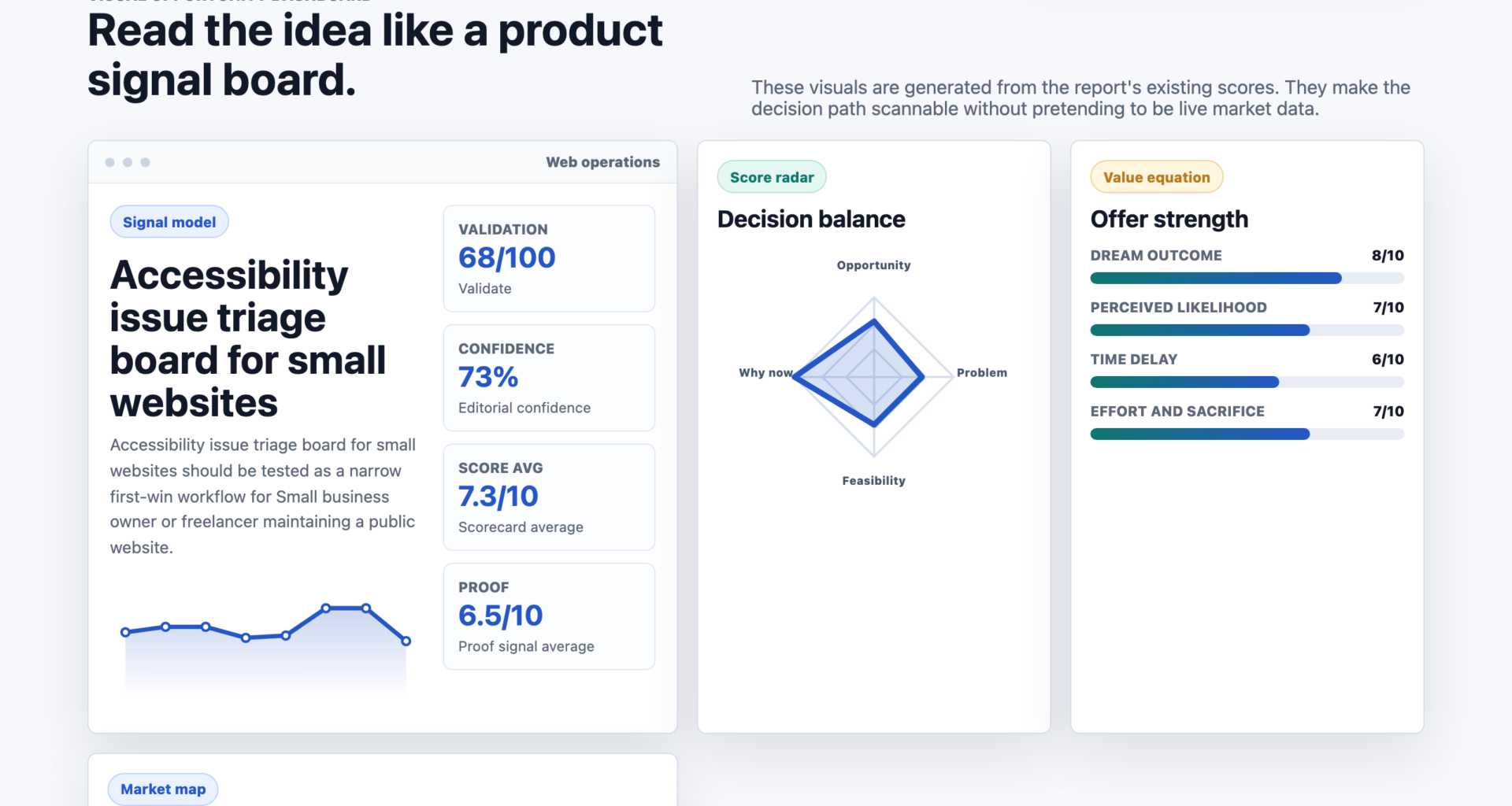

📊 Full opportunity report: Accessibility issue triage board for small websites on IdeaNavigator AI — validation score, market gap, and execution plan.

Get business pricing on tech for your team
- Business-only prices and quantity discounts
- Tax-exempt purchasing
- Multiple users, one account, clear invoices
TL;DR
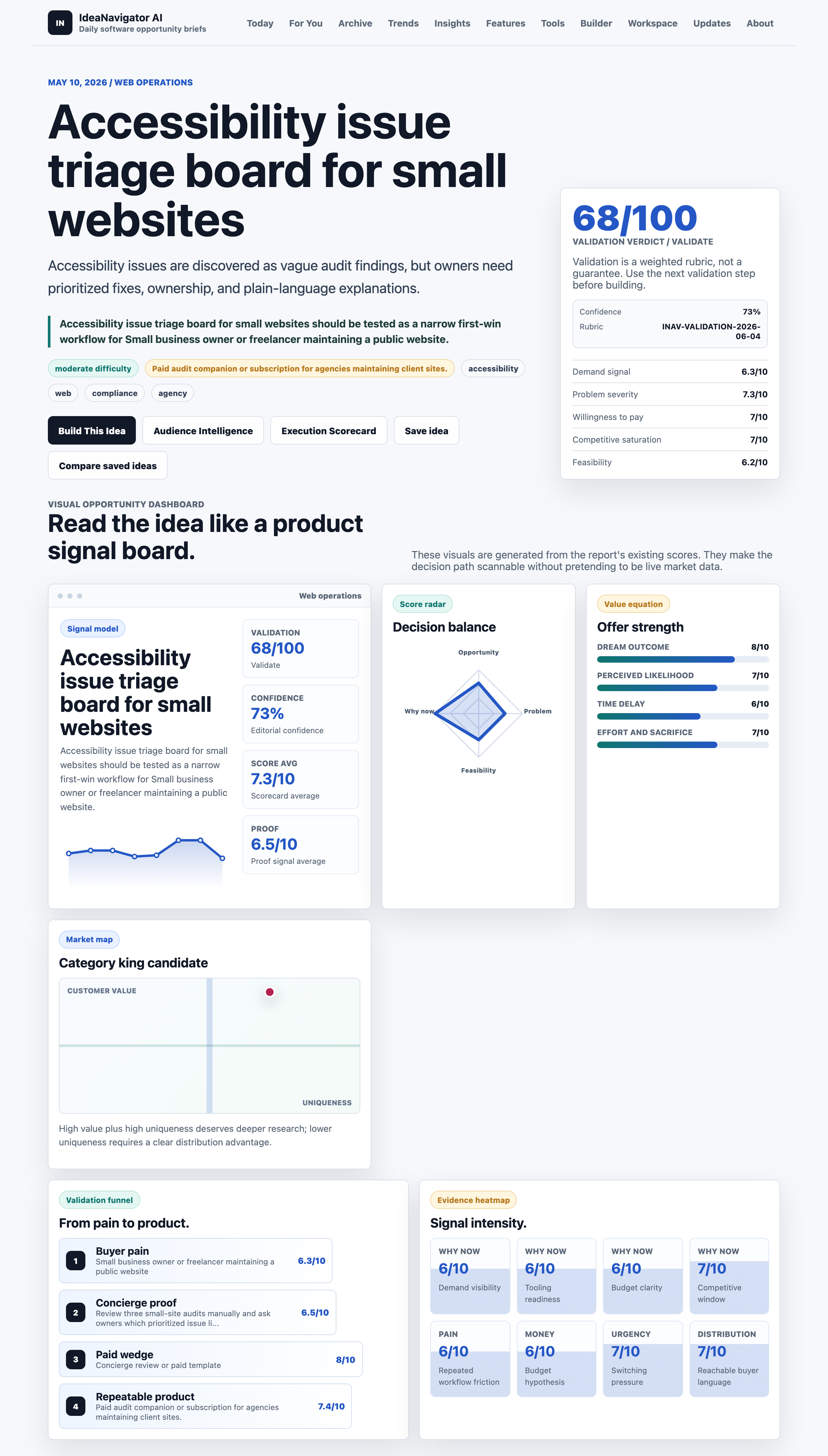
A proposed accessibility issue triage board aims to help small website owners prioritize and manage accessibility fixes. It is currently in testing based on manual review and feedback from small-site audits.
A new accessibility issue triage board tailored for small websites is in the testing stage, aiming to help small business owners and freelancers manage accessibility fixes more efficiently. This development responds to increasing awareness among small organizations that accessibility is an operational responsibility, not a one-time redesign.
The proposed triage board is designed to import audit notes, group issues by page and severity, and convert them into repair tickets. It aims to streamline the process of fixing accessibility issues on small websites, which often receive vague audit findings without clear prioritization.
According to sources involved in the project, this workflow tool is intended as a narrow first-win solution, focusing initially on small sites maintained by individual owners or freelancers. The goal is to validate its usefulness by reviewing three small-site audits manually and gathering feedback on whether owners would pay to keep their issue lists updated.
Why Small Website Owners Need Better Accessibility Tools
This development matters because small website owners and freelancers often lack dedicated resources to manage accessibility issues. A simple, effective triage system could improve compliance, user experience, and reduce the burden of vague audit findings. As accessibility becomes a standard operational expectation, tools like this could fill a critical gap in small-site management.
Products Worth Considering

Amazon Kindle Paperwhite Signature Edition (12th Generation, 2024), 32 GB, Metallic Raspberry

Logitech MX Master 4 Ergonomic Wireless Mouse with Haptic Feedback, Pale Gray

Logitech MX Master 4 for Mac Wireless Ergonomic Mouse, White Silver
As an affiliate, we earn on qualifying purchases.
Growing Awareness of Accessibility Responsibilities for Small Sites
Over recent years, more small organizations have recognized that accessibility is an ongoing operational task rather than a one-time redesign. Traditional audits often produce vague or broad findings, leaving owners unsure about what to fix first. The idea of a dedicated triage board emerges from the need to translate audit notes into actionable, prioritized repair steps, especially for small teams or individual owners.
“This triage board could be a practical first step for small website owners to manage accessibility issues without overwhelming them with technical details.”
— an anonymous researcher
“Focusing on a narrow workflow for small sites could demonstrate real value before expanding to larger or more complex websites.”
— an industry observer
Uncertainties Around Adoption and Effectiveness
It is not yet clear how small website owners will respond to the triage board or whether it will significantly improve their ability to fix accessibility issues. The project is still in the testing phase, and feedback from initial reviews is pending.
Next Steps for Validation and Potential Rollout
The next steps include reviewing three small-site audits manually, collecting owner feedback on the usefulness of the prioritized issue list, and assessing whether they are willing to pay for ongoing updates. Depending on the results, developers may refine the tool and consider broader deployment.
Key Questions
What is the main purpose of the accessibility triage board?
The triage board aims to help small website owners prioritize, group, and manage accessibility issues discovered during audits, turning vague findings into actionable repair tickets.
Who is this tool intended for?
It is designed for small business owners and freelancers maintaining public websites who lack dedicated accessibility resources.
How will the effectiveness of the triage board be tested?
By manually reviewing three small-site audits, gathering owner feedback on the prioritized issue list, and evaluating whether they find the tool valuable enough to pay for ongoing updates.
What are the potential benefits of this workflow?
It could make accessibility fixes more manageable, improve compliance, and reduce the confusion caused by vague audit findings for small-site owners.
When might this tool become widely available?
It is still in early testing; broader availability will depend on initial validation results and user feedback, which are expected in the coming months.
Source: IdeaNavigator AI