A security camera floodlight combines outdoor video monitoring with motion-triggered illumination, but the right choice depends on whether you value brighter lighting, wider coverage, easier installation, or sharper footage most. My best overall pick is the Ring Floodlight Cam Wired Pro – 2K, a strong balance of camera features and practical security tools. The eufy Floodlight Camera E340 stands out for its dual-lens approach, while the Blink Outdoor 4 Floodlight Camera is a wireless option for buyers who want to avoid running power to the fixture. The main tradeoffs are wired installation versus placement flexibility, and advanced features versus simpler setup and ongoing service needs. Read on for the full breakdown and guidance on choosing a floodlight camera for your property.

Get business pricing on tech for your team
- Business-only prices and quantity discounts
- Tax-exempt purchasing
- Multiple users, one account, clear invoices
Key Takeaways
- The Ring Floodlight Cam Wired Pro – 2K is the balanced pick: it pairs 2K video with color night vision, two-way talk, motion detection, and a siren, though it needs a wired installation.
- Dual-lens models answer a different need than higher-resolution single cameras: the eufy E340 prioritizes varied views, while Ring‘s 4K Pro targets buyers who put image detail first.
- Wired options dominate for brighter, continuously powered lighting: the Blink Wired Floodlight models list 2,600 lumens, far above the 700-lumen Blink Outdoor 4 Floodlight.
- Wireless does not mean every placement is easy: Blink Outdoor 4 and Arlo Pro 3 avoid a hardwired camera connection, but buyers still need to plan for charging or battery upkeep and reliable Wi-Fi.
- Brand ecosystems shape the shortlist: Nest, Ring, Blink, Arlo, eufy, Tapo, and WYZE differ in app and service approaches, so compatibility and storage preferences may matter as much as resolution.
| Blink Outdoor 4 Floodlight Camera, Wireless, 700 Lumens, 1-Camera System | 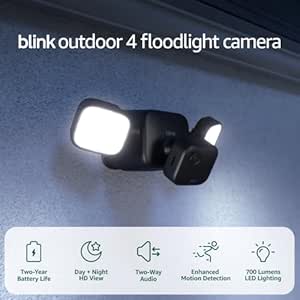 | Best for Wire-Free Installation | Lighting: 700-lumen motion-triggered LED | Video: 1080p HD live view | Night vision: Infrared | VIEW ON AMAZON | See Our Full Breakdown |
| Ring Floodlight Cam 2K Wired Security Camera |  | Best for Zoomed-In Detail | Video resolution: 2K | Zoom: Up to 6x enhanced zoom | Brightness: 2000 lumens | VIEW ON AMAZON | See Our Full Breakdown |
| Ring Floodlight Cam Wired Pro – 2K Video, Color Night Vision, Two-Way Talk, Motion Detection, Security Siren, White |  | Best for Precise Motion Alerts | Video resolution: Retinal 2K | Lighting: 2000-lumen floodlights | Motion detection: 3D Motion Detection | VIEW ON AMAZON | See Our Full Breakdown |
| gdend 3K UHD Wired Outdoor Floodlight Security Camera |  | Best for Local Continuous Recording | Listed video resolution: 1296p | Floodlight brightness: 2200 lumens | Light coverage: 270° adjustable | VIEW ON AMAZON | See Our Full Breakdown |
| Blink Wired Floodlight Security Camera, 1080p HD, 2600 Lumens, Black |  | Best for Bright, Simple Floodlighting | Field of view: 143° diagonal | Camera resolution: 1080p HD | Frame rate: Up to 30 fps | VIEW ON AMAZON | See Our Full Breakdown |
| Blink Wired Floodlight Camera, 1080p HD, 2600 Lumens, White |  | Best for Bright, Straightforward Coverage | Camera resolution: 1080p HD | Field of view: 143° diagonal | Lighting: 2,600 lumens, 5,000 K LEDs | VIEW ON AMAZON | See Our Full Breakdown |
| Arlo Wired Floodlight Security Camera, 2K HDR, 1 Camera |  | Best for Smart-Home Compatibility | Video resolution: 2K HDR | Floodlight brightness: Up to 2,000 lumens | Field of view: Listed as 160° in specifications and 130° in product description | VIEW ON AMAZON | See Our Full Breakdown |
| Google Nest Cam with Floodlight – Outdoor Security Camera |  | Best for Intelligent Alerts | Resolution: 1080p HDR | Night vision: Yes | Detection: People, animals, vehicles, motion; familiar-face recognition with subscription | VIEW ON AMAZON | See Our Full Breakdown |
| eufy Security Floodlight Camera E30, 2K |  | Best for Wide-Area Tracking Without Monthly Fees | Resolution: 2K | Coverage: 360° pan and tilt | AI features: Human and vehicle detection with auto-tracking | VIEW ON AMAZON | See Our Full Breakdown |
| WYZE Floodlight Camera v2, 2K HD Outdoor Security Camera | 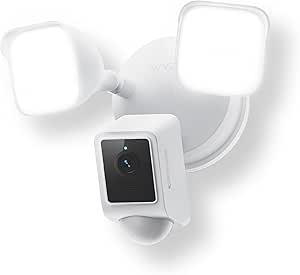 | Best for Local Continuous Recording | Resolution: 2K HD | Field of view: 160° | Motion detection: 270° PIR | VIEW ON AMAZON | See Our Full Breakdown |
| Ring Floodlight Cam Wired Pro Security Camera, 2K Video, Color Night Vision, Two-Way Talk, Black |  | Best Overall | Video resolution: Retinal 2K | Floodlight brightness: 2,000 lumens | Night vision: Color | VIEW ON AMAZON | See Our Full Breakdown |
| Ring Floodlight Cam 4K Pro (2nd Gen), Wired, Black |  | Best for Maximum Detail | Video resolution: 4K | Enhanced zoom: Up to 10× | Field of view: 140° horizontal, 85° vertical | VIEW ON AMAZON | See Our Full Breakdown |
| Tapo 2K Outdoor Pan/Tilt Wireless Floodlight Security Camera, C615F KIT |  | Best Solar-Powered Pick | Resolution: 2K | Floodlight brightness: 800 lumens | Pan/tilt range: 360° horizontal, 130° vertical | VIEW ON AMAZON | See Our Full Breakdown |
| eufy Security Floodlight Camera E340 with Dual Lenses |  | Best for Local Recording and Tracking | Resolution: Up to 3K; maximum 2K with AI Tracking or Dual Views | Zoom: Up to 8× hybrid zoom | Coverage: 360° pan-and-tilt | VIEW ON AMAZON | See Our Full Breakdown |
| Arlo Pro 3 Wireless Floodlight Security Camera, 2K HDR, 1 Camera |  | Best for Flexible Wireless Placement | Video resolution: 2K HDR | Field of view: 160° | Zoom: 12× | VIEW ON AMAZON | See Our Full Breakdown |
| security camera floodlight | Audio | Power | Floodlight brightness |
|---|---|---|---|
| Blink Outdoor 4 Floodlight Cam | Two-way audio | — | — |
| Ring Floodlight Cam 2K Wired S | Two-way talk with noise cancellation | Hardwired, 100–240 V | — |
| Ring Floodlight Cam Wired Pro | — | Wired | — |
| gdend 3K UHD Wired Outdoor Flo | — | Corded electric, 120 volts | 2200 lumens |
| Blink Wired Floodlight Securit | Two-way audio | Hardwired; neutral wire required; 100–240 VAC, 50/60 Hz, 45 W | — |
| Blink Wired Floodlight Camera | Two-way audio | Hardwired; neutral wire required; 100–240 VAC, 50/60 Hz, 45 W | — |
| Arlo Wired Floodlight Security | Two-way audio | — | Up to 2,000 lumens |
| Google Nest Cam with Floodligh | Two-way audio | — | — |
| eufy Security Floodlight Camer | — | — | 2,000 lumens |
| WYZE Floodlight Camera v2 | — | — | — |
| Ring Floodlight Cam Wired Pro | Two-way talk with Audio+ | — | 2,000 lumens |
| Ring Floodlight Cam 4K Pro | Two-way talk with Audio+ and advanced noise cancellation | Hardwired, 110–240 V | 2,000 lumens |
| Tapo 2K Outdoor Pan/Tilt Wirel | — | Battery with solar charging | 800 lumens |
| eufy Security Floodlight Camer | — | — | 2,000 lumens |
| Arlo Pro 3 Wireless Floodlight | Two-way audio | Rechargeable battery; solar compatible | Up to 2,000 lumens on battery; up to 3,000 lumens with separately sold outdoor magnetic charging cable |
More Details on Our Top Picks
Blink Outdoor 4 Floodlight Camera, Wireless, 700 Lumens, 1-Camera System
I’d choose the Blink Outdoor 4 Floodlight Camera when avoiding a new power run matters more than maximizing brightness. Its battery-powered design, included Sync Module Core, and included batteries make installation more flexible than the hardwired Ring Floodlight Cam 2K or Blink Wired Floodlight Security Camera. The tradeoff is a 700-lumen light, far below the wired Blink’s 2600 lumens and Ring’s 2000, so it suits a doorway or smaller approach better than lighting a broad yard. You still get 1080p live view, infrared night vision, two-way audio, and dual-zone motion detection. Battery life is listed as up to two years, but advanced AI detection and cloud storage need a subscription; local storage calls for separately sold accessories.
Pros:- Wireless installation avoids connecting the camera to household wiring
- Includes Sync Module Core and batteries
- Two-way audio and infrared night vision support basic monitoring after dark
- Dual-zone enhanced motion detection helps tailor alert areas
Cons:- 700-lumen output is much dimmer than the wired Blink and Ring floodlight options
- AI-powered detection and cloud storage require an optional subscription
- Local storage requires separately sold Sync Module XR and MicroSD card
Best for: Renters or homeowners who want a floodlight camera for a porch or entryway without running power wiring
Not ideal for: Buyers who need bright coverage across a large yard or want included recording storage without extra accessories or a subscription
- Lighting:700-lumen motion-triggered LED
- Video:1080p HD live view
- Night vision:Infrared
- Audio:Two-way audio
- Motion detection:Dual-zone enhanced motion detection
- Battery life:Up to two years with included batteries and Sync Module
- Connectivity:Wireless; works with Alexa
- Included components:Outdoor 4 Floodlight Camera, Sync Module Core, two AA Energizer lithium batteries, four D Cell batteries, mounting kit, power adapter, and USB cable
- Local storage:Up to 256 GB with separately sold Sync Module XR and MicroSD card
Our verdict“Choose this Blink for a smaller area where wire-free setup matters more than high-output lighting or built-in local recording.”
Ring Floodlight Cam 2K Wired Security Camera
The Ring Floodlight Cam 2K is the detail-first wired pick here: its 2K video and up to 6x enhanced zoom give buyers more room to inspect activity than the 1080p Blink Wired Floodlight. Its 2000-lumen lights are also much brighter than the battery-powered Blink Outdoor 4, making it a stronger fit for an exposed driveway or side yard. Customizable motion zones can help limit alerts from areas you do not need to monitor, while two-way talk and a remote-activated siren add ways to respond. The costs of that capability are practical: installation needs hardwired power, and certain recording and alert features require a Ring Protect subscription. It also uses 2.4 GHz Wi-Fi, so this is a less flexible choice where wiring or network reach is a concern.
Pros:- 2K video with up to 6x enhanced zoom
- 2000-lumen motion-activated floodlights
- Customizable motion zones help focus alerts on selected areas
- Two-way talk and remote-activated siren allow direct responses
Cons:- Requires hardwired installation
- Some recording and alert features require a compatible subscription
- Single-band 2.4 GHz Wi-Fi may limit placement flexibility
Best for: Homeowners with existing outdoor wiring who want 2K footage, zoom, and adjustable detection zones for a driveway or yard
Not ideal for: Renters, buyers avoiding subscriptions for recording features, or households without a suitable hardwired power point
- Video resolution:2K
- Zoom:Up to 6x enhanced zoom
- Brightness:2000 lumens
- Color temperature:3000 K
- Power:Hardwired, 100–240 V
- Connectivity:Single-band Wi-Fi 4, 2.4 GHz
- Audio:Two-way talk with noise cancellation
- Motion detection:Advanced detection with customizable motion zones
- Dimensions:11.61 × 7.83 × 8.70 in (295 × 199 × 221 mm)
Our verdict“Pick the Ring Floodlight Cam 2K if you have wired power and value zoomable footage and zone controls over a wire-free setup.”
Ring Floodlight Cam Wired Pro – 2K Video, Color Night Vision, Two-Way Talk, Motion Detection, Security Siren, White
I’d put the Ring Floodlight Cam Wired Pro ahead of the standard Ring Floodlight Cam 2K for buyers who care most about distinguishing relevant movement from passing activity. Its 3D Motion Detection is the defining difference, while 2K video, color night vision, 2000-lumen lights, and a 110 dB siren make it a more complete deterrence setup than the 700-lumen Blink Outdoor 4. The siren can add an immediate response option, but this camera still depends on wired power, which rules it out for many renters and makes placement less flexible. Full features require a Ring Protect subscription, so it is not the simplest pick for someone seeking recording without ongoing service costs. Compared with the Ring 2K model, the Pro’s appeal is precision and color night viewing rather than zoom specifications.
Pros:- 3D Motion Detection offers precise movement monitoring
- 2000-lumen floodlights pair with color night vision
- Built-in 110 dB siren provides an active deterrent
- 2K video supports detailed outdoor monitoring
Cons:- Requires wired installation, which can limit placement or require electrical work
- Full features require a Ring Protect subscription
- The product details do not specify zoom capability, unlike the Ring Floodlight Cam 2K
Best for: Homeowners with wired installation who want more targeted motion detection, color night viewing, and an audible deterrent
Not ideal for: Renters or buyers who need a battery-powered camera or want full recording features without a Ring Protect subscription
- Video resolution:Retinal 2K
- Lighting:2000-lumen floodlights
- Motion detection:3D Motion Detection
- Siren:110 dB security siren
- Night vision:Color Night Vision
- Connectivity:Wi-Fi
- Power:Wired
- Smart home compatibility:Compatible with Ring Protect and Alexa
Our verdict“Choose the Ring Wired Pro if precise motion detection and a loud siren matter more than battery flexibility or subscription-free recording.”
gdend 3K UHD Wired Outdoor Floodlight Security Camera
The gdend 3K UHD Wired Outdoor Floodlight Security Camera is the clearest fit for buyers who want continuous recording without making a subscription the center of the setup. It includes a 64GB SD card and supports 24/7 recording, unlike the Blink Wired Floodlight, whose local storage needs separately sold accessories. Its adjustable 270° lighting coverage and 2200-lumen output can also suit irregular approaches where fixed light direction is limiting. The listed video resolution is 1296p, however, so I would not choose it on the strength of the “3K UHD” title alone; Ring’s 2K models have clearer stated resolution details and specific motion features. This gdend camera is wired, needs Wi-Fi, and has less established smart-home information in the supplied specs, so buyers prioritizing ecosystem compatibility may prefer Ring or Blink.
Pros:- Includes a 64GB SD card for local storage
- Supports 24/7 continuous recording
- Adjustable 270° floodlight coverage with 2200-lumen output
- IP65 weather resistance and two-way audio
Cons:- Requires corded electrical power
- Listed resolution is 1296p despite the 3K UHD product title
- Supplied specifications do not identify Alexa or another smart-home compatibility option
Best for: Homeowners seeking continuous local recording, included storage, and adjustable lighting coverage for a wired outdoor area
Not ideal for: Buyers who need a battery-powered camera, prefer a well-documented smart-home ecosystem, or want the video resolution stated consistently
- Listed video resolution:1296p
- Floodlight brightness:2200 lumens
- Light coverage:270° adjustable
- Siren:105 dB
- Weather resistance:IP65
- Power:Corded electric, 120 volts
- Wi-Fi:2.4 GHz / 5 GHz
- Storage and recording:64GB SD card included; 24/7 continuous recording
- Operating temperature:-25°C to 45°C
Our verdict“Choose gdend when included local storage and continuous recording matter more than battery operation or clearly specified smart-home integration.”
Blink Wired Floodlight Security Camera, 1080p HD, 2600 Lumens, Black
If the main job is to light a wide approach, I’d favor the Blink Wired Floodlight Security Camera over the battery-powered Blink Outdoor 4: its 2600-lumen output is far stronger than that model’s 700 lumens. The 1080p camera adds color night view, two-way audio, customizable motion zones, and a 105 dB siren, giving it useful response features without the more advanced motion positioning of the Ring Wired Pro. Its 143° diagonal field of view helps cover a broad scene, though 1080p lacks the 2K detail and zoom offered by the Ring Floodlight Cam 2K. The main constraint is installation: it needs hardwired power and a neutral wire. Recording also has extra requirements, since extended cloud storage and person detection need a subscription, while local storage accessories are sold separately.
Pros:- 2600-lumen lighting is brighter than the other Blink floodlight in this batch
- 143° diagonal field of view covers a broad area
- Color night view, two-way audio, and customizable motion zones
- 105 dB siren and Alexa compatibility
Cons:- Hardwired installation requires a neutral wire
- Person detection and extended cloud storage require a subscription
- Local storage accessories are sold separately
Best for: Homeowners with a neutral wire who want strong floodlighting, broad viewing coverage, and basic two-way response features
Not ideal for: Renters, buyers seeking 2K footage or zoom, and anyone wanting included local storage without additional accessories
- Field of view:143° diagonal
- Camera resolution:1080p HD
- Frame rate:Up to 30 fps
- Lighting:2600 lumens; 5000 K LEDs
- Power:Hardwired; neutral wire required; 100–240 VAC, 50/60 Hz, 45 W
- Wi-Fi:2.4 GHz 802.11b/g/n
- Siren:105 dB, measured at 4 in (10 cm)
- Audio:Two-way audio
- Compatibility:Alexa and all Blink Sync Modules
Our verdict“Pick the wired Blink for powerful lighting and broad coverage when you have the required wiring and do not need 2K video.”
Blink Wired Floodlight Camera, 1080p HD, 2600 Lumens, White
I’d choose the Blink Wired Floodlight Camera when strong illumination matters more than higher-resolution footage. Its 2,600-lumen lights outshine the Arlo Wired Floodlight’s 2,000-lumen output, helping light a driveway or side yard when motion triggers the camera. The 1080p view, color night view, two-way audio, and 105 dB siren cover core monitoring needs, while customizable zones can reduce alerts from areas you don’t want watched.
The tradeoff is that this is a simpler, subscription-dependent choice: person detection and continued cloud storage require a paid plan, and local storage needs separately sold Blink accessories. It also needs hardwired power with a neutral wire. Compared with the eufy E30, it lacks 360-degree tracking and 2K video, but its brighter lights may suit buyers prioritizing visible deterrence.
Pros:- 2,600-lumen lighting is brighter than the Arlo Wired Floodlight’s listed 2,000 lumens.
- 1080p live view includes color night view.
- Customizable motion zones, two-way audio, and a 105 dB siren support active monitoring.
- Works with Alexa and all Blink Sync Modules.
Cons:- Requires hardwired installation and a neutral wire.
- Person detection and continued cloud storage require a paid subscription.
- Sync Module and local storage drive are sold separately.
Best for: Homeowners with an existing outdoor junction and neutral wire who want bright lighting, basic camera coverage, and Alexa compatibility.
Not ideal for: Buyers who want subscription-free local recording, person detection without a plan, or flexible placement without outdoor wiring.
- Camera resolution:1080p HD
- Field of view:143° diagonal
- Lighting:2,600 lumens, 5,000 K LEDs
- Siren:105 dB
- Audio:Two-way audio
- Power:Hardwired; neutral wire required; 100–240 VAC, 50/60 Hz, 45 W
- Wi-Fi:2.4 GHz 802.11b/g/n
- Dimensions and weight:178 × 173 × 198 mm; 1.13 kg
Our verdict“Choose this Blink if bright floodlighting and basic Alexa-connected monitoring matter more to you than 2K detail or included local storage.”
Arlo Wired Floodlight Security Camera, 2K HDR, 1 Camera
The Arlo Wired Floodlight is the pick I’d favor for households that want a 2K HDR camera to work across a broad mix of smart-home platforms. It lists compatibility with Alexa, Google Home, Apple Home, and SmartThings, a wider roster than the Blink Wired Floodlight’s Alexa support. Its color night vision, 12x zoom, two-way audio, and siren make it a capable hardwired monitor for yards and driveways.
Its floodlight reaches up to 2,000 lumens, less than Blink’s 2,600 lumens and WYZE’s 2,800, so it is not the brightest choice here. Arlo’s product information also gives conflicting field-of-view figures—160° in the specifications and 130° in the description—which makes coverage harder to judge. Cloud history and advanced detection require a paid plan after the trial, and installation calls for a compatible junction box.
Pros:- 2K HDR video with color night vision provides more detail than 1080p models such as the Blink Wired Floodlight.
- Compatible with Alexa, Google Home, Apple Home, and Samsung SmartThings.
- Includes two-way audio, a siren, and 12x zoom.
- Hardwired power supports continuous operation.
Cons:- Cloud video history and advanced detection require a paid plan after the included trial.
- Requires hardwired installation with a compatible junction box.
- Product information gives conflicting field-of-view values of 160° and 130°.
Best for: Smart-home households using more than one major platform that want hardwired 2K HDR video and color night vision.
Not ideal for: Buyers focused on maximum floodlight brightness, subscription-free cloud history, or a clearly stated field of view.
- Video resolution:2K HDR
- Floodlight brightness:Up to 2,000 lumens
- Field of view:Listed as 160° in specifications and 130° in product description
- Night vision:Color
- Zoom:12x
- Power and Wi-Fi:Hardwired; 2.4 GHz Wi-Fi
- Audio:Two-way audio
- Smart-home compatibility:Amazon Alexa, Google Home, Apple Home, Samsung SmartThings
- Junction box compatibility:4-inch round UL-listed
Our verdict“Pick Arlo for broad smart-home compatibility and 2K HDR detail, but skip it if maximum brightness or unambiguous coverage specs are your priority.”
Google Nest Cam with Floodlight – Outdoor Security Camera
I’d put the Google Nest Cam with Floodlight on the shortlist for buyers who want alerts sorted by what the camera sees, rather than relying mainly on motion zones. It can distinguish people, animals, and vehicles, with familiar-face recognition available through Nest Aware. That makes it more targeted than the Blink Wired Floodlight, whose person detection requires a subscription, and can help reduce unnecessary notifications in a busy outdoor area.
The camera records at 1080p HDR, so it gives up the 2K detail offered by the Arlo Wired Floodlight and eufy E30. Without a subscription, recorded events are limited to up to one hour; extended history and face recognition add a recurring-plan dependency. Wi-Fi is also central to its operation, and the provided details do not specify light output or a field-of-view figure, making it harder to compare coverage and illumination directly.
Pros:- Can distinguish people, animals, vehicles, and general motion.
- 1080p HDR video includes night vision.
- Two-way audio supports communication through the camera.
- Offers up to one hour of recorded events without a subscription.
Cons:- Familiar-face recognition and extended recording require Nest Aware.
- 1080p resolution provides less detail than the 2K Arlo and eufy options.
- Wi-Fi dependence may limit reliability where outdoor signal is weak.
Best for: Google Home users who want alerts categorized by people, animals, and vehicles, with optional familiar-face recognition.
Not ideal for: Buyers who prioritize 2K footage, detailed floodlight brightness specifications, or extended recordings without a subscription.
- Resolution:1080p HDR
- Night vision:Yes
- Detection:People, animals, vehicles, motion; familiar-face recognition with subscription
- Audio:Two-way audio
- Connectivity:Wi-Fi
- Storage without subscription:Up to 1 hour of recorded events
- Nest Aware Plus recording:10 days of 24/7 recording
- Lighting:Motion-activated floodlights
Our verdict“Choose Nest if categorized alerts in a Google-centered home matter more than 2K footage or subscription-free event history.”
eufy Security Floodlight Camera E30, 2K
The eufy Security Floodlight Camera E30 earns its place for buyers who need a camera to follow movement across a wide yard, not just watch one fixed angle. Its 360° pan-and-tilt coverage and AI tracking for people and vehicles can keep a moving subject in view, while scheduled patrols add coverage when the area is quiet. Unlike the Arlo Wired Floodlight, whose cloud history depends on a paid plan, the E30 lists no monthly fee and supports continuous recording when hardwired.
The 2K camera and 2,000-lumen lights are capable, though the WYZE Floodlight Camera v2 offers more light at 2,800 lumens and a fixed 160° field of view. E30’s moving coverage is its strength, but it still needs wired power for 24/7 recording and works only on 2.4 GHz Wi-Fi. Its larger body may also take more space on an exterior wall.
Pros:- 360° pan-and-tilt coverage can follow activity beyond a fixed camera angle.
- AI detection tracks people and vehicles.
- 2K recording and 2,000-lumen motion-activated lighting.
- Supports continuous recording when hardwired without a monthly fee.
Cons:- 24/7 recording requires hardwired power.
- Only supports 2.4 GHz Wi-Fi.
- Its 10.94-inch length and 4-pound weight may be a bulky fit for some mounting locations.
Best for: Homeowners with a broad yard or driveway who want AI tracking and continuous local recording without a monthly subscription.
Not ideal for: Buyers who need wireless placement, 5 GHz Wi-Fi, or a smaller floodlight camera for a tight mounting spot.
- Resolution:2K
- Coverage:360° pan and tilt
- AI features:Human and vehicle detection with auto-tracking
- Floodlight brightness:2,000 lumens
- Recording:24/7 when hardwired
- Wi-Fi:2.4 GHz
- Subscription:No monthly fee
- Dimensions and weight:10.94 × 7.4 × 6.57 inches; 4 pounds
Our verdict“Choose the E30 for moving, wide-area coverage and no monthly fee, but only if you can provide wired power and 2.4 GHz Wi-Fi.”
WYZE Floodlight Camera v2, 2K HD Outdoor Security Camera
The WYZE Floodlight Camera v2 stands out for buyers who want bright lighting and continuous recording without making cloud storage the center of the setup. Add a microSD card and it can record continuously for up to 30 days, a useful contrast with the Arlo Wired Floodlight’s paid-plan requirement for cloud video history. Its 2K HD camera, 160° view, 270° PIR detection, and 2,800-lumen lights give it a strong fixed-camera setup for monitoring a driveway or entry area.
Those lights are brighter than the eufy E30’s 2,000-lumen output, but WYZE cannot pan and tilt to track a moving person across a yard. Installation is hardwired, the network connection is limited to 2.4 GHz Wi-Fi, and the outdoor power adapter is sold separately. Local recording also depends on adding a microSD card, rather than being ready out of the box.
Pros:- 2K HD video, color night vision, and a 160° field of view.
- 2,800-lumen lights are brighter than the eufy E30’s 2,000-lumen lights.
- Supports 24/7 local recording to microSD for up to 30 days.
- Includes customizable motion zones, two-way audio, and a 105 dB siren.
Cons:- Requires hardwired installation.
- Supports 2.4 GHz Wi-Fi only, not 5 GHz.
- Outdoor power adapter is sold separately, and continuous local recording requires a microSD card.
Best for: Homeowners with hardwired power who want a bright fixed-view camera and ongoing local recording to a microSD card.
Not ideal for: Buyers who need pan-and-tilt tracking, 5 GHz Wi-Fi, or an outdoor power adapter included in the package.
- Resolution:2K HD
- Field of view:160°
- Motion detection:270° PIR
- Light output:2,800 lumens
- Siren:105 dB
- Wi-Fi:2.4 GHz; not compatible with 5 GHz
- Local recording:24/7 to microSD card; up to 30 days
- Weather resistance and power:IP65; hardwired
- Mounting:Ceiling or wall
Our verdict“Pick WYZE for bright fixed-angle monitoring and microSD-based continuous recording, but choose the eufy E30 if you need a camera that tracks activity across the yard.”
Ring Floodlight Cam Wired Pro Security Camera, 2K Video, Color Night Vision, Two-Way Talk, Black
I rank this Ring as the best-balanced wired floodlight camera here: its 2K video, color night vision, and 2,000-lumen lights cover the core needs of monitoring a driveway or yard without the added complexity of dual lenses or 4K recording. 3D Motion Detection is designed to narrow alerts to relevant movement, while the 110 dB siren adds a response option beyond lights and two-way talk. Compared with the Ring Floodlight Cam 4K Pro, this model gives up sharper footage and zoom, but it may suit buyers who do not need those higher-detail features. The tradeoffs are a hardwired installation and a Ring Protect subscription for full features. I would skip it if you need a battery-powered setup or want to avoid ongoing service requirements.
Pros:- 2K video with color night vision helps show more detail after dark.
- 2,000-lumen floodlights illuminate broad outdoor areas.
- 3D Motion Detection is designed to help reduce irrelevant alerts.
- 110 dB siren and Alexa integration add useful response and control options.
Cons:- Hardwired installation may be difficult without an existing outdoor connection.
- Full features require a compatible Ring Protect subscription.
- It lacks the 4K resolution and enhanced zoom of the Ring Floodlight Cam 4K Pro.
Best for: Homeowners with existing outdoor wiring who want a capable Ring camera for a driveway or yard, plus Alexa voice control.
Not ideal for: Renters or buyers without suitable wiring, and anyone who wants full features without a Ring Protect subscription.
- Video resolution:Retinal 2K
- Floodlight brightness:2,000 lumens
- Night vision:Color
- Motion detection:3D Motion Detection
- Audio:Two-way talk with Audio+
- Siren:110 dB
- Color:Black
Our verdict“Choose this Ring for a well-rounded, wired 2K floodlight camera with a siren, but pick the 4K Pro if identifying distant details is your priority.”
Ring Floodlight Cam 4K Pro (2nd Gen), Wired, Black
The 4K resolution and up to 10× enhanced zoom make this Ring the detail-first choice in the group. They can help buyers inspect activity farther from the camera, while the 140° horizontal field of view covers a generous area and customizable 3D motion zones help focus monitoring. Like the Ring Floodlight Cam Wired Pro, it has 2,000-lumen lights and hardwired power; the premium here is sharper footage, zoom, and Wi-Fi 6 rather than a brighter floodlight. The compromise is practical: it needs a wired installation, a strong upload connection is recommended, and some features require a Ring subscription. I would choose the standard Wired Pro instead if 2K is enough and a simpler, less detail-focused setup better fits the property.
Pros:- 4K video and up to 10× enhanced zoom support closer inspection of distant activity.
- Customizable 3D motion zones help tailor alerts to the monitored area.
- 2,000-lumen floodlights provide strong illumination.
- Dual-band Wi-Fi 6 supports 2.4 GHz and 5 GHz connections.
Cons:- Requires hardwired power.
- Recommended performance calls for at least 15 Mbps upload speed.
- Some features require a compatible Ring subscription.
Best for: Homeowners with hardwired power and reliable broadband who need to inspect people or activity at a distance.
Not ideal for: Buyers seeking a wireless installation, those with limited upload bandwidth, or anyone who does not need 4K and zoom.
- Video resolution:4K
- Enhanced zoom:Up to 10×
- Field of view:140° horizontal, 85° vertical
- Floodlight brightness:2,000 lumens
- Motion detection:3D Motion Detection with customizable zones
- Audio:Two-way talk with Audio+ and advanced noise cancellation
- Power:Hardwired, 110–240 V
- Connectivity:Wi-Fi 6, dual-band 2.4 GHz and 5 GHz
- Weather resistance:Weather resistant; camera only
Our verdict“Pick the 4K Pro when distant detail and zoom matter more than installation simplicity or avoiding subscription-dependent features.”
Tapo 2K Outdoor Pan/Tilt Wireless Floodlight Security Camera, C615F KIT
For buyers who cannot run power to a mounting spot, the solar-powered Tapo C615F KIT offers a different kind of coverage from the wired Ring and eufy models. Its camera pans and tilts across 360° horizontal and 130° vertical, while AI tracking can follow movement; that mobility helps cover a broad area without relying on a fixed view. The tradeoff is a less powerful 800-lumen floodlight, well below the 2,000-lumen lights on the Ring Floodlight Cam Wired Pro and eufy E340. Solar charging also depends on suitable sunlight, and the stated charging conditions rule out temperatures below 32°F. Subscription-free AI detection is a plus, but local storage needs a separately purchased microSD card. I would favor it for flexible placement, not for maximum illumination.
Pros:- Solar charging reduces the need to run power to the camera.
- 360° horizontal and 130° vertical pan/tilt coverage can monitor a broad area.
- AI tracking and subscription-free AI detection support more focused monitoring.
- 2K resolution provides more detail than basic HD video.
Cons:- The 800-lumen light is less powerful than the 2,000-lumen Ring and eufy options.
- Solar charging works best with direct sunlight and requires temperatures above 32°F.
- A microSD card or HDD storage setup must be purchased separately.
Best for: Homeowners who need wireless, solar-assisted coverage of a wide yard and can mount the camera where it receives direct sunlight.
Not ideal for: Buyers in shaded or cold locations, or anyone who needs a brighter floodlight for a large, dark area.
- Resolution:2K
- Floodlight brightness:800 lumens
- Pan/tilt range:360° horizontal, 130° vertical
- Power:Battery with solar charging
- Battery life:Up to 140 days
- Wi-Fi:2.4 GHz
- Storage:microSD up to 512 GB; card sold separately
Our verdict“Choose the Tapo for solar-assisted pan-and-tilt coverage where wiring is impractical, but select a brighter wired model for stronger floodlighting.”
eufy Security Floodlight Camera E340 with Dual Lenses
The E340 stands apart from the Ring models by pairing a wide-angle lens with a telephoto lens, then combining them with pan-and-tilt coverage and AI tracking. That makes it a strong fit for a yard where a fixed camera might miss movement or where the owner wants both a broad view and closer detail. Its 24/7 local recording can avoid a cloud-subscription requirement, although recording depends on adding a microSD card or HomeBase S380. There is a resolution tradeoff: the camera reaches up to 3K, but maximum resolution drops to 2K when AI tracking or Dual Views is active. Compared with the simpler Ring Floodlight Cam Wired Pro, the E340 offers more flexible views and local recording, but its larger, heavier design and storage setup may take more planning.
Pros:- Dual wide and telephoto lenses combine broad coverage with closer views.
- 360° pan-and-tilt and AI tracking follow activity across the scene.
- 24/7 local recording is available through microSD or HomeBase S380.
- 2,000-lumen floodlight and 95 dB alarm add light and audible response.
Cons:- Maximum resolution drops to 2K with AI Tracking or Dual Views enabled.
- Local recording requires a separately installed microSD card or HomeBase S380.
- At 1,380 g, it is heavier than a basic fixed-camera setup.
Best for: Homeowners who want pan-and-tilt tracking, two viewing perspectives, and continuous local recording without relying on cloud storage.
Not ideal for: Buyers who want the highest resolution while using AI tracking, or a compact camera that records locally without added storage hardware.
- Resolution:Up to 3K; maximum 2K with AI Tracking or Dual Views
- Zoom:Up to 8× hybrid zoom
- Coverage:360° pan-and-tilt
- Detection:AI detection and tracking for people, vehicles, and events
- Recording and storage:24/7 local recording via microSD up to 128 GB or eufy HomeBase S380
- Floodlight brightness:2,000 lumens
- Alarm:95 dB
- Connectivity:Dual-band Wi-Fi 6, 2.4 GHz and 5 GHz
- Dimensions and weight:12.6 × 8.5 × 7.3 in; 1,380 g
Our verdict“Choose the E340 for flexible dual-lens tracking and local recording, provided you accept the resolution compromise and arrange storage separately.”
Arlo Pro 3 Wireless Floodlight Security Camera, 2K HDR, 1 Camera
The Arlo Pro 3 is the placement-flexibility pick: its rechargeable battery avoids the hardwired installation required by both Ring Pro models and the eufy E340. A 160° field of view, 2K HDR video, color night vision, and 12× zoom give it useful coverage for monitoring a doorway, side yard, or driveway where wiring is inconvenient. On battery power, the floodlight reaches up to 2,000 lumens; a separately sold outdoor magnetic charging cable raises that to 3,000 lumens. Compared with the solar-powered Tapo C615F KIT, the Arlo does not depend on a solar panel, but it still needs charging and does not offer the Tapo’s 360° pan-and-tilt coverage. Some advanced detection and cloud history require a paid subscription, so it is less appealing for buyers seeking subscription-free features.
Pros:- Wireless, rechargeable design allows flexible placement without hardwired power.
- 2K HDR video and a 160° field of view provide broad, detailed coverage.
- Battery-powered floodlight reaches up to 2,000 lumens, with color night vision.
- Compatible with Alexa, Apple Home, Google Home, Samsung SmartThings, and IFTTT.
Cons:- Some advanced detection and 60-day cloud history require a paid subscription after the trial.
- The outdoor magnetic charging cable needed for up to 3,000-lumen output is sold separately.
- Rechargeable battery operation requires charging management.
Best for: Homeowners or renters who need a battery-powered floodlight camera for a location without convenient wiring.
Not ideal for: Buyers who want continuous local recording or advanced cloud features without a subscription, or who do not want to manage battery charging.
- Video resolution:2K HDR
- Field of view:160°
- Zoom:12×
- Floodlight brightness:Up to 2,000 lumens on battery; up to 3,000 lumens with separately sold outdoor magnetic charging cable
- Night vision:Color
- Power:Rechargeable battery; solar compatible
- Audio:Two-way audio
- Weather resistance:Designed for outdoor use in sun, rain, and snow
- Smart home compatibility:Amazon Alexa, Apple Home, Google Home, Samsung SmartThings, and IFTTT
Our verdict“Choose the Arlo when wireless placement matters more than subscription-free features or the Tapo’s solar-assisted pan-and-tilt coverage.”
How We Picked
I compared each security camera floodlight by the factors that change day-to-day usefulness: stated video resolution, light output where supplied, camera coverage, detection and communication tools, power and installation requirements, and the likely burden of storage or maintenance. I also separated features that solve different problems: more pixels can help with detail, while pan-and-tilt or dual lenses can cover more of a scene without relying on a single fixed view.
The ranking favors models with a useful balance of lighting, surveillance features, and clear buyer fit, rather than treating the highest resolution as an automatic win. Wired models generally make more sense where dependable power and strong illumination are priorities; wireless models rank well for flexible placement, but their upkeep is part of the tradeoff. Where two entries are different color versions or close variants, I treat them as near-equals and explain the relevant distinction instead of implying a major performance gap.
| security camera floodlight | Audio |
|---|---|
| Blink Outdoor 4 Floodlight Cam | Two-way audio |
| Ring Floodlight Cam 2K Wired S | Two-way talk with noise cancellation |
| Ring Floodlight Cam Wired Pro | — |
| gdend 3K UHD Wired Outdoor Flo | — |
| Blink Wired Floodlight Securit | Two-way audio |
| Blink Wired Floodlight Camera | Two-way audio |
| Arlo Wired Floodlight Security | Two-way audio |
| Google Nest Cam with Floodligh | Two-way audio |
| eufy Security Floodlight Camer | — |
| WYZE Floodlight Camera v2 | — |
| Ring Floodlight Cam Wired Pro | Two-way talk with Audio+ |
| Ring Floodlight Cam 4K Pro | Two-way talk with Audio+ and advanced noise cancellation |
| Tapo 2K Outdoor Pan/Tilt Wirel | — |
| eufy Security Floodlight Camer | — |
| Arlo Pro 3 Wireless Floodlight | Two-way audio |
Factors to Consider When Choosing Security Camera Floodlight
Before choosing a model, match the camera to the location and the job you need it to do. A driveway, side gate, and detached garage each bring different power, viewing-angle, and connectivity constraints. These factors can help prevent a common mismatch: buying for a headline specification that does not solve the actual coverage or installation problem.
Choose Power Based on the Mounting Location
Start by checking whether the mounting point already has a suitable electrical connection and whether local rules require an electrician for replacement work. A wired camera can stay powered without battery charging, which suits frequently triggered areas and regular lighting use. A wireless model can work where running cable is impractical, but it shifts effort to battery checks, charging, or other upkeep specified by the manufacturer. Do not assume a nearby indoor outlet makes an outdoor installation simple; cable routing and weather exposure matter. If you cannot reach the fixture safely for maintenance, favor a wired option or plan a reachable mounting height. The best choice is the one your property can support without creating an installation or service headache.
Match Light Output and Beam Coverage to the Area
Lumen figures offer a useful comparison, but they do not describe how light spreads across a driveway or whether the camera can see the same area the lamps illuminate. A bright beam can help with a broad, dark approach, while a compact entrance may need less output to avoid glare for neighbors or household members. Check whether the fixture’s heads can be aimed independently and whether the camera’s field of view covers likely entry paths. A common mistake is to judge illumination from the product name alone without checking the listed output or lighting controls. If the camera points at a different angle from the lamps, you may light one area while recording another. Think about where shadows fall at night, not only how bright the fixture sounds on paper.
Prioritize the Right Kind of Coverage
Resolution is only one part of useful footage: lens angle, camera movement, night performance, and placement all affect what a clip captures. A fixed camera can be a good fit when one doorway or driveway approach needs consistent monitoring. Pan-and-tilt or dual-lens designs may help cover a wider area, but moving parts or multiple views do not replace careful mounting and detection setup. Higher-resolution video can preserve more detail, yet it may also demand stronger Wi-Fi and more storage capacity. Before choosing, map the likely route of a person or vehicle and decide whether you need a broad overview or detail from one focused zone. Avoid mounting so high that faces become difficult to distinguish, even if the camera can see a large area.
Check Wi-Fi, Storage, and Service Requirements
A floodlight camera is only useful if its signal reaches the mounting point reliably, so test the outdoor connection before committing to a model. Walls, detached garages, and metal siding can weaken Wi-Fi even when a phone shows a good signal indoors. Review how the camera stores clips, how long footage remains available, and whether particular alerts or recording features require a paid service. Local storage can reduce dependence on a cloud plan, but it may involve setup and capacity limits. Do not compare cameras solely by resolution if your network cannot reliably upload the resulting footage. Read the current service and compatibility details for the exact model, especially when adding it to an existing smart-home system.
Treat Detection and Privacy Controls as Part of Coverage
Motion detection settings decide how often a camera records and alerts, so a camera with many features can still frustrate if it cannot be tuned to the site. Street traffic, trees, pets, and shared walkways can trigger unwanted notifications or capture areas beyond your property. Look for adjustable zones and sensitivity controls, then confirm that the camera can be aimed away from neighboring windows and public areas. Two-way talk and a siren may add ways to respond, but they are not substitutes for appropriate lighting or a clear view. Consider how quickly you want alerts and whether household members need access to the same app. Plan for privacy and notification tuning during setup rather than treating them as optional extras.
Pay More for a Specific Advantage, Not a Longer Feature List
Extra spending makes the most sense when a feature solves a real limitation at your home, such as needing higher-detail footage, broader views, or a particular ecosystem integration. If one fixed camera already covers a small entrance, a more elaborate lens system may add little practical value. Conversely, a large driveway or multiple approach paths may justify a camera designed for broader coverage. Factor in installation work, storage plans, and battery maintenance alongside the device itself, since those can shape the long-term effort more than a specification sheet suggests. Check whether a premium feature works without a subscription and whether it depends on other devices you do not own. Choose the least complicated setup that covers your real security priorities.
Frequently Asked Questions
Should I choose a wired or wireless security camera floodlight?
Choose wired when the mounting point has suitable power and you want to avoid regular battery upkeep, especially in a busy area with frequent motion events. Wireless is more useful when a hardwired installation is not practical or when placement flexibility matters more than hands-on maintenance. The Blink Outdoor 4 and Arlo Pro 3 are the wireless options in this group, while most of the lineup is wired. Check how each model handles charging, recording, and its lighting load rather than assuming every wireless feature works exactly like a wired fixture. Also account for installation cost and Wi-Fi strength at the planned location.
Is a 4K floodlight camera automatically better than a 2K model?
No. Higher resolution can preserve more detail, but the result depends on camera placement, viewing angle, night conditions, and the quality of your network and storage setup. A 2K camera with a more useful view or better fit for the mounting location may capture more actionable footage than a poorly aimed 4K camera. In this lineup, the Ring Floodlight Cam 4K Pro is the resolution-focused option, while models such as the eufy E340 emphasize dual-lens coverage. Decide whether you need fine detail at a distance or a wider view of several approach paths before choosing.
Do I need a subscription to use a floodlight camera?
That depends on the exact model and which features you want to use. Some cameras may offer core live viewing or local recording without a plan, while cloud clip history, extended retention, or particular detection features may depend on a subscription. Check the current terms for the specific model and region before buying, since brand ecosystems can differ and policies can change. Also compare the cost and setup effort of local storage with the convenience of cloud access. If you need recordings after an event, confirm how clips are saved and how long they remain available.
Will a security camera floodlight work if my outdoor Wi-Fi is weak?
A weak connection can delay alerts, interrupt live viewing, or prevent reliable clip uploads, so test signal strength at the planned mounting spot. A phone test is a useful first check, but a camera may behave differently because of its placement, antenna, and data demands. Higher-resolution video can place more pressure on a weak network, while distance and exterior walls can cause dropouts. You may need a mesh node or access point positioned closer to the camera, provided the network equipment is suitable for the location. If you cannot improve coverage, prioritize a model and recording method whose documented features fit the connection you can provide.
Can I install a wired floodlight camera where an existing light is mounted?
Sometimes, but the existing fixture and wiring must meet the new camera’s installation requirements. Turn off power before any work, check the manufacturer’s instructions, and use a qualified electrician if you are uncertain about the wiring or local requirements. The camera may also need a different mounting orientation, clearance, or Wi-Fi access than the old light. Confirm that the fixture’s light heads and camera can be aimed at the areas you intend to monitor. Do not assume a matching mounting plate means the installation is electrically or structurally suitable.
Conclusion
For most buyers who can install a wired unit, I recommend the Ring Floodlight Cam Wired Pro – 2K as the best overall choice because it combines clear video with practical response features. For a value-minded wired setup, compare the WYZE Floodlight Camera v2 and the Blink Wired Floodlight Camera models against the features and storage approach you actually need; the Blink versions are especially relevant when listed 2,600-lumen output is a priority. The Ring Floodlight Cam 4K Pro is my premium pick for shoppers focused on higher-resolution capture, while the Blink Outdoor 4 Floodlight Camera is the simpler starting point for someone who wants wireless placement. For broader views, look at the eufy E340 or the pan-and-tilt Tapo C615F KIT; for buyers already committed to Google Nest or Arlo, those brand-specific models may fit more naturally. Choose based on power access, coverage needs, and storage preferences—not resolution alone.
Fall Picks
fall essentials
As an affiliate, we earn on qualifying purchases.