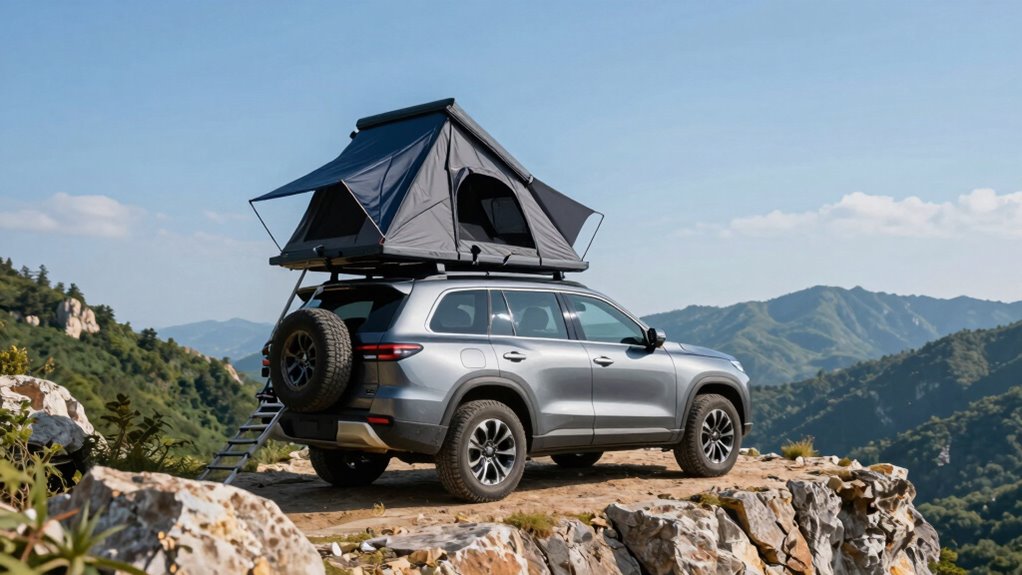

If you are searching for a roof tent for your car, the main choice is between quick-opening hard shells and roomier soft shells, with vehicle fit and weather protection narrowing the field. My best overall pick is the Naturnest Sirius 1, a hard-shell option sized for two to three people; the JOYINRUTE 4-season tent stands out for winter insulation, while the ARCTWONDER adds a solar panel for campers who want an integrated power feature. Hard shells generally favor faster setup and a compact profile, while soft shells can offer a different balance of space and packed size. Capacity claims, roof-load limits, mounting hardware, and wind exposure all affect whether a tent suits your car. Keep reading for the full breakdown and buying advice before choosing a rooftop setup.

Get business pricing on tech for your team
- Business-only prices and quantity discounts
- Tax-exempt purchasing
- Multiple users, one account, clear invoices
Key Takeaways
- The Naturnest Sirius 1 is the roundup’s best overall candidate for shoppers seeking a two-to-three-person hard shell, while its exact vehicle fit and roof-load compatibility still need checking.
- Cold-weather features distinguish a subset of the hard shells: JOYINRUTE, Jiadrooe, and the insulated aluminum pop-up models include winter-oriented details, but insulation alone does not prove suitability for severe conditions.
- Solar-equipped designs serve a narrower need. ARCTWONDER and the hard shell with a solar panel and thermal layer may appeal to campers planning onboard power, but buyers should verify panel output and wiring requirements.
- Soft-shell choices focus on a different setup tradeoff. Meedo’s two-person Apolle A86 M and three-person Apolle TNT L differ in capacity and opening style, making sleeping space and packed dimensions key decision points.
- Product names do not settle vehicle compatibility. Across all 15 options, buyers should confirm tent weight, dynamic roof-load rating, rack requirements, and mounting dimensions with both the tent maker and vehicle maker.
| JOYINRUTE Hard Shell Rooftop Tent with Winter Insulation, 2-Person, 4-Season |  | Best for Cold-Weather Couples | Occupancy: 2 people | Seasons: 4-season | Shell and fabric: Aircraft-grade aluminum alloy shell; 320 g polyester fabric | VIEW ON AMAZON | See Our Full Breakdown |
| WildFinder Hard-Shell Rooftop Tent for Jeep, SUV, Truck, and Van |  | Best for Three-Person Weather Protection | Capacity: 3 people | Season: 4-season | Shell and support materials: Aircraft-grade aluminum shell; stainless steel support rods | VIEW ON AMAZON | See Our Full Breakdown |
| HEYFUN Adventurer Pro Hard-Shell Rooftop Tent for 2–3 People |  | Best for Fast Setup and Storage | Occupancy: 2–3 people | Maximum load: 660 lb | Shell and fabric: Aircraft-grade aluminum shell; 320 g polyester fabric | VIEW ON AMAZON | See Our Full Breakdown |
| Meedo Apolle A86 M Soft Shell Rooftop Tent for 2 People, Waterproof with Rainfly, Clamshell Design, Army Green |  | Best for Ventilation and Soft-Shell Buyers | Occupancy: 2 people | Seasons: 4-season | Water resistance: Waterproof 4,000+ coating | VIEW ON AMAZON | See Our Full Breakdown |
| AvaaHazerl Hardshell Rooftop Tent for SUV, Truck, Jeep, and Van |  | Best for Longer Warranty Coverage | Occupancy: 3 people | Seasons: 4-season | Shell and fabric: Aluminum alloy shell; polyester fabric | VIEW ON AMAZON | See Our Full Breakdown |
| Jiadrooe Hard Shell 4-Season Rooftop Tent with Adjustable Crossbars |  | Best for Cold-Weather Versatility | Occupancy: Up to 3 people | Crossbar capacity: 150 lb | Dimensions: 77 × 64 × 40 in | VIEW ON AMAZON | See Our Full Breakdown |
| ARCTWONDER Hard-Shell Rooftop Tent with Solar Panel |  | Best for Built-In Solar Charging | Capacity: Described as 2 adults and 1 child or pet; listing also describes 2-person use | Shell and fabric: Aluminum shell; 320g polyester fabric | Solar panel: 12V, 216W | VIEW ON AMAZON | See Our Full Breakdown |
| Rooftop Tent Hard Shell with Winter Insulation, Aluminum Pop Up Roof Tent |  | Best for Sky-View Camping | Occupancy: 2 people | Shell material: Aluminum | Water resistance: Listed as 0–5000 mm | VIEW ON AMAZON | See Our Full Breakdown |
| Explorer Pro Rooftop Tent Hard Shell, 2-3 Person Aluminum Roof Top Tent |  | Best for Fast Setup | Capacity: 2–3 people | Closed dimensions: 83.86 × 51.57 × 7.00 in | Opened dimensions: 83.86 × 51.57 × 62.99 in | VIEW ON AMAZON | See Our Full Breakdown |
| Adventurer Pro Rooftop Tent Hard Shell, 2-3 Person Aluminum Roof Top Tent |  | Best for Organized Group Camping | Occupancy: 3 people | Water resistance: Listed as 0–5000 mm | Doors: 3 | VIEW ON AMAZON | See Our Full Breakdown |
| Meedo Designs Apolle TNT L Soft Shell Rooftop Tent for 3 People, Waterproof, Bi-Fold Design, Army Green |  | Best Soft-Shell Pick for Three | Occupancy: 3 people | Water resistance: 4000 mm | Main fabric: Waterproof-coated Oxford fabric | VIEW ON AMAZON | See Our Full Breakdown |
| Bayati Aluminum Rooftop Tent with Side Awning |  | Best for Covered Campsite Space | Shell: Aluminum alloy hard shell | Fabric: 310G polyester | Water resistance: 3000+ water pressure | VIEW ON AMAZON | See Our Full Breakdown |
| Naturnest Sirius 1 Hardshell Rooftop Tent for 2–3 People |  | Best for Fast Setup | Occupancy: Up to 3 people | Sleeping area: 82.6 × 63 inches | Headroom: 47.2 inches | VIEW ON AMAZON | See Our Full Breakdown |
| Aluminum Rooftop Tent Hard Shell, Pop Up Roof Tent Hardshell |  | Best Two-Person All-Weather Pick | Occupancy: 2 people | Water resistance: Up to 5000 mm | Shell material: Aircraft-grade aluminum | VIEW ON AMAZON | See Our Full Breakdown |
| Hard Shell Rooftop Tent with Solar Panel and Winter Thermal Layer |  | Best for Cold-Weather Power Needs | Shell material: Aluminum alloy | Fabric: 320g polyester | Thermal layer: Detachable | VIEW ON AMAZON | See Our Full Breakdown |
| roof tent car rooftop | Occupancy | Water resistance |
|---|---|---|
| JOYINRUTE Hard Shell Rooftop T | 2 people | Up to 5,000 mm |
| WildFinder Hard-Shell Rooftop | — | — |
| HEYFUN Adventurer Pro Hard-She | 2–3 people | Waterproof; 0–5,000 mm |
| Meedo Apolle A86 M Soft Shell | 2 people | Waterproof 4,000+ coating |
| AvaaHazerl Hardshell Rooftop T | 3 people | — |
| Jiadrooe Hard Shell 4-Season R | Up to 3 people | — |
| ARCTWONDER Hard-Shell Rooftop | — | — |
| Rooftop Tent Hard Shell with W | 2 people | Listed as 0–5000 mm |
| Explorer Pro Rooftop Tent Hard | — | — |
| Adventurer Pro Rooftop Tent Ha | 3 people | Listed as 0–5000 mm |
| Meedo Designs Apolle TNT L Sof | 3 people | 4000 mm |
| Bayati Aluminum Rooftop Tent w | — | 3000+ water pressure |
| Naturnest Sirius 1 Hardshell R | Up to 3 people | — |
| Aluminum Rooftop Tent Hard She | 2 people | Up to 5000 mm |
| Hard Shell Rooftop Tent with S | — | — |
More Details on Our Top Picks
JOYINRUTE Hard Shell Rooftop Tent with Winter Insulation, 2-Person, 4-Season
The JOYINRUTE is the clearest fit here for two-person trips in colder weather: its removable insulated liner adds seasonal flexibility without making the tent permanently specialized for winter. Four hydraulic support rods help simplify opening and closing, while the included mattress, condensation pad, and ladder cover several essentials that buyers otherwise need to source separately. Compared with the three-person WildFinder, this model gives up sleeping capacity but weighs less; at 178 lb, it is still a substantial roof load and a two-person installation job for many owners. Its four windows offer more ventilation openings than the WildFinder’s three, though the tent’s 78.74-by-47.29-inch floor is not meant for a roomy family setup. I’d shortlist it for couples who camp across seasons, but skip it if low weight or extra sleeping space matters most.
Pros:- Removable insulated liner supports cold-weather use while allowing warmer-season flexibility.
- Four hydraulic support rods make setup and pack-down more direct.
- Includes a mattress, condensation pad, ladder, LED strip, and storage accessories.
- Four windows with mesh and windproof layers provide ventilation options.
Cons:- At 178 lb, it can be difficult to install and puts a substantial load on the vehicle roof system.
- Two-person capacity leaves less room than the three-person WildFinder or AvaaHazerl.
- The one-year warranty is shorter than AvaaHazerl’s listed two-year warranty.
Best for: Couples who want a hard-shell rooftop tent with a removable liner for trips that include cold-weather camping.
Not ideal for: Families or groups needing more than two sleeping places, and solo owners who need a lighter tent that is easier to lift onto a vehicle.
- Occupancy:2 people
- Seasons:4-season
- Shell and fabric:Aircraft-grade aluminum alloy shell; 320 g polyester fabric
- Water resistance:Up to 5,000 mm
- Weight:178 lb
- Dimensions:83 x 51.8 x 39.4 in
- Windows and doors:4 windows; 2 doors
- Warranty:1 year
Our verdict“Choose the JOYINRUTE if you’re a couple seeking a hard shell with a removable winter liner and can accommodate its 178-pound weight.”
WildFinder Hard-Shell Rooftop Tent for Jeep, SUV, Truck, and Van
The WildFinder’s case rests on three-person capacity and stated weather protection. Its listed 5,000 mm rain protection, Level 6 wind resistance, and Level 4 heavy-snow protection make it a more weather-focused choice on paper than the soft-shell Meedo Apolle A86 M, which lists a 4,000+ waterproof coating but no equivalent wind or snow levels. The aluminum shell, stainless steel support rods, and supplied mattresses and organizers make this a well-equipped hard-shell package. The tradeoff is a substantial 89.81 kg weight, which can complicate installation and adds a major roof-load consideration. A luggage crossbar is not included, so buyers must account for the correct mounting hardware separately. I’d favor it over the two-person JOYINRUTE for a small family, but not for anyone prioritizing easy handling.
Pros:- Listed capacity of three gives it more sleeping room than the two-person JOYINRUTE.
- Provides stated 5,000 mm rain protection, Level 6 wind resistance, and Level 4 snow protection.
- Aluminum shell and stainless steel support rods form a durable hard-shell structure.
- Includes mattresses, a telescoping ladder, LED strip, organizers, and shoe organizers.
Cons:- At 89.81 kg, it is difficult to handle and requires careful confirmation of vehicle and rack capacity.
- Luggage crossbar is not included, adding a separate mounting requirement.
- Its three windows are fewer than the JOYINRUTE’s four ventilation openings.
Best for: Small families or three-person camping groups with a vehicle and roof system rated for a heavy hard-shell tent.
Not ideal for: Solo campers, frequent tent removers, or buyers whose vehicle roof limits and mounting setup cannot accommodate a very heavy tent.
- Capacity:3 people
- Season:4-season
- Shell and support materials:Aircraft-grade aluminum shell; stainless steel support rods
- Rain protection:5,000 mm
- Wind resistance:Level 6
- Snow protection:Level 4 heavy snow protection
- Weight:89.81 kg
- Dimensions:83 x 52 x 9 in
- Included mounting accessory:7.5 ft telescoping ladder; luggage crossbar not included
Our verdict“Pick the WildFinder for three-person capacity and stated rain, wind, and snow protection if your vehicle can safely support its weight.”
HEYFUN Adventurer Pro Hard-Shell Rooftop Tent for 2–3 People
The HEYFUN Adventurer Pro is the strongest match for campers who want quick deployment and useful interior organization. Its hydraulic pop-up is listed as opening in about five seconds, while 13 storage pockets, three doors, and three windows give occupants several ways to organize gear and move air through the tent. That makes it more access- and storage-focused than the WildFinder, whose listing emphasizes weather ratings and included accessories. The detachable side awning also adds a sheltered spot beside the vehicle. The main constraint is not the tent’s feature list but the vehicle setup: it requires crossbars rated for at least 165 lb, and assembly is listed separately from vehicle installation. Its 2–3-person capacity is more flexible than the two-person JOYINRUTE, but the listing does not provide a tent weight or specific wind-resistance rating.
Pros:- Hydraulic pop-up design is listed to open in about five seconds.
- Thirteen storage pockets help keep small camping items organized inside.
- Three doors and three windows offer more access points than the JOYINRUTE’s two doors.
- Includes a detachable side awning, LED strip, and shoe storage bags.
Cons:- Requires crossbars rated for at least 165 lb, which rules out some vehicle setups.
- The listing gives no tent weight, making roof-load planning less straightforward than with the JOYINRUTE or WildFinder.
- Assembly takes additional time beyond installation on the vehicle.
Best for: Overlanders who value fast pop-up setup, multiple access points, and organized storage, and whose vehicle has suitably rated crossbars.
Not ideal for: Buyers without crossbars rated for at least 165 lb, or those who need a confirmed tent weight and detailed wind-rating data before choosing.
- Occupancy:2–3 people
- Maximum load:660 lb
- Shell and fabric:Aircraft-grade aluminum shell; 320 g polyester fabric
- Closed dimensions:83.86 x 51.57 x 7.00 in
- Open dimensions:83.86 x 51.57 x 62.99 in
- Water resistance:Waterproof; 0–5,000 mm
- Doors and windows:3 doors; 3 windows
- Storage:13 interior pockets
- Crossbar requirement:Crossbars rated for at least 165 lb
Our verdict“Choose the HEYFUN if rapid pop-up setup and interior organization matter most and your crossbars meet its stated load requirement.”
Meedo Apolle A86 M Soft Shell Rooftop Tent for 2 People, Waterproof with Rainfly, Clamshell Design, Army Green
Unlike the aluminum hard shells in this group, the Meedo Apolle A86 M is a soft-shell clamshell option aimed at two-person overlanding and hunting trips. Its five windows give it the most listed window openings among these products, ahead of the three-window WildFinder and HEYFUN, which may appeal to campers who prioritize airflow and views. It also lists two doors and two rooms, while its waterproof 4,000+ coating and rainfly provide the stated weather protection. That specification is less precise than the JOYINRUTE’s 5,000 mm figure, and the Meedo listing does not give dimensions or a total assembled weight. The aluminum alloy frame and stainless steel support pole contribute structure, but the stated weight concern means setup may take help. Choose it for its soft-shell layout, not for the quickest or lightest handling.
Pros:- Five windows provide more listed ventilation openings than the other reviewed tents.
- Two doors and two rooms offer a distinct layout for a two-person tent.
- Includes a rainfly and lists a waterproof 4,000+ coating.
- Designed for vehicle-mounted use with an aluminum alloy frame and stainless steel support pole.
Cons:- Limited to two occupants, unlike the three-person WildFinder, HEYFUN, and AvaaHazerl.
- The product information gives no dimensions or numerical weight, making fit and handling harder to judge.
- Described as heavy when assembled and may require assistance during setup.
Best for: Two-person overlanders or hunters who want a soft-shell rooftop tent with many windows and a rainfly.
Not ideal for: Buyers who need a published tent weight and dimensions, or who prefer the simpler pop-up setup and defined rain rating of a hard-shell alternative.
- Occupancy:2 people
- Seasons:4-season
- Water resistance:Waterproof 4,000+ coating
- Frame and rainfly materials:Aluminum alloy frame; polyester rainfly
- Doors and windows:2 doors; 5 windows
- Rooms:2
- Pockets:2
- Support pole:Stainless steel
Our verdict“Consider the Meedo Apolle A86 M if you want a two-person soft-shell tent with generous window ventilation and can work around limited fit and weight details.”
AvaaHazerl Hardshell Rooftop Tent for SUV, Truck, Jeep, and Van
The AvaaHazerl combines three-person capacity, a pop-up hard shell, and a listed two-year warranty, giving it a practical advantage for buyers who want family-sized sleeping space with longer stated coverage than the one-year JOYINRUTE. Its aluminum shell, polyester fabric, gas struts, foam mattress, and condensation-control layer cover the basics for a four-season rooftop setup. Compared with the HEYFUN Adventurer Pro, the AvaaHazerl lists a tent weight and a warranty, but the HEYFUN provides more detailed information about doors, windows, storage, and crossbar load requirements. At 198 lb, the AvaaHazerl is the heaviest option in this set, so the three-person capacity comes with a serious handling and roof-load tradeoff. I’d only shortlist it after checking the vehicle and rack ratings carefully.
Pros:- Three-person capacity provides more sleeping room than the two-person JOYINRUTE and Meedo.
- Pop-up design with stainless steel gas struts supports easier opening.
- Includes a foam mattress, condensation-control layer, ladder, LED strip, and organizers.
- Listed two-year warranty is longer than the JOYINRUTE’s one-year warranty.
Cons:- At 198 lb, it is the heaviest of these five products and can be difficult to install.
- Requires a compatible vehicle roof rack, so fit and load capacity need careful checking.
- Its listing provides less detail about window and door counts than the HEYFUN Adventurer Pro.
Best for: Three-person camping households seeking a hard-shell tent with included sleep accessories and a stated two-year warranty.
Not ideal for: Owners of vehicles with limited roof-load capacity, or anyone who expects to install or remove the tent without help.
- Occupancy:3 people
- Seasons:4-season
- Shell and fabric:Aluminum alloy shell; polyester fabric
- Dimensions:83 x 52 x 9 in
- Weight:198 lb
- Installation:Vehicle-mounted rooftop; compatible roof rack required
- Included components:Telescoping ladder, organizer bags, LED strip, shoe organizers, mesh windows, and mattresses
- Warranty:2 years
Our verdict“Choose the AvaaHazerl for three-person hard-shell camping and a listed two-year warranty only if your vehicle and rack can safely support 198 lb.”
Jiadrooe Hard Shell 4-Season Rooftop Tent with Adjustable Crossbars
The Jiadrooe’s strongest case is its cold-weather comfort package: a thermal liner and anti-condensation mat address two common rooftop-camping annoyances, while the two-layer mattress adds padding. Its adjustable aluminum crossbars also give gear-hauling campers more flexibility than the Explorer Pro, which is presented primarily as a fast-opening shelter rather than a rack system. Hydraulic struts and a stated 15-minute assembly time make setup relatively approachable, and the USB hub and dual-mode lights add useful campsite convenience. The tradeoff is substantial roof weight at 80 kg, so vehicle roof limits, crossbar ratings, and help with installation deserve careful attention. I would also treat its rain protection cautiously: the description says 3000 mm, while the specifications say 5000 mm. That discrepancy makes it harder to compare confidently with the other all-weather options.
Pros:- Thermal liner and anti-condensation mat support more comfortable camping in variable conditions.
- Adjustable aluminum crossbars can help carry additional gear.
- Hydraulic pop-up system and stated 15-minute assembly time simplify setup.
- Built-in USB hub and dual-mode LED lights add practical campsite features.
Cons:- The 80 kg weight can make lifting and installation difficult.
- Waterproofing is listed as both 3000 mm and 5000 mm, leaving weather protection unclear.
- The 150 lb crossbar capacity needs to be checked against the intended gear load.
Best for: Campers who want a four-season rooftop tent with insulation, condensation control, and adjustable crossbars for carrying extra gear.
Not ideal for: Solo installers and owners of vehicles with limited roof-load capacity, because the tent weighs 80 kg and needs a suitable mounting setup.
- Occupancy:Up to 3 people
- Crossbar capacity:150 lb
- Dimensions:77 × 64 × 40 in
- Item weight:80 kg
- Shell and pole materials:ABS shell; aluminum poles
- Assembly time:15 minutes
- Warranty:2 years
Our verdict“Choose the Jiadrooe if insulation and extra gear-carrying flexibility matter more than easy handling or a clearly stated waterproof rating.”
ARCTWONDER Hard-Shell Rooftop Tent with Solar Panel
The ARCTWONDER stands apart from the Jiadrooe and Explorer Pro by pairing its hard shell with a 216W solar panel, giving campers a way to charge a power bank without adding a separate panel to the setup. Its gas-strut opening takes about 10 seconds, and the 7-inch closed height is useful for keeping the tent profile low when packed. Awning windows provide ventilation with some protection from sun and rain. The main compromise is its 198 lb weight, which makes mounting a serious two-person job and calls for careful attention to vehicle and crossbar limits. Capacity details also conflict: the listing describes two-person use as well as room for two adults and a child or pet. Compared with the Explorer Pro’s stated 660 lb maximum load, the ARCTWONDER gives less clarity around load information, so I would verify fit and capacity before buying.
Pros:- Integrated 216W solar panel can charge a mobile power bank.
- Gas-strut opening takes about 10 seconds.
- Seven-inch closed height keeps the packed profile low.
- Awning windows offer ventilation and shade or rain cover.
Cons:- At 198 lb, it is difficult to lift and mount without help.
- Capacity is described inconsistently as two people and as two adults plus a child or pet.
- The one-year warranty is shorter than the Jiadrooe’s stated two-year coverage.
Best for: Two-adult campers who want an integrated solar panel for charging mobile power banks and value a quick-opening hard shell.
Not ideal for: Solo campers or buyers who need unambiguous capacity details, since the tent weighs 198 lb and its sleeping-capacity descriptions conflict.
- Capacity:Described as 2 adults and 1 child or pet; listing also describes 2-person use
- Shell and fabric:Aluminum shell; 320g polyester fabric
- Solar panel:12V, 216W
- Interior dimensions:85 × 52 × 59 in
- Exterior dimensions:83 × 51 × 59 in
- Weight:198 lb
- Closed height:7 in
- Opening time:About 10 seconds
- Warranty:1 year
Our verdict“Pick the ARCTWONDER if integrated solar charging is a priority and your vehicle and helpers can manage its substantial weight.”
Rooftop Tent Hard Shell with Winter Insulation, Aluminum Pop Up Roof Tent
This aluminum-shell tent is the pick for campers who want four-season protection with a more open-feeling interior. Its sky-view window, three windows, and surrounding LED lighting make it distinct from the Jiadrooe, which puts more emphasis on insulation, an anti-condensation mat, and gear-carrying crossbars. An elevated rear is intended to add headroom and airflow, while the integrated luggage rack keeps some equipment outside the sleeping area. The listing also describes waterproofing up to 5000 mm and UV protection, though it does not provide dimensions or weight for checking vehicle fit. That missing information matters more here than on the Explorer Pro, whose folded dimensions and maximum load are specified. I would also expect the luggage rack, insulation, and multiple interior features to add bulk, but the product data gives no weight to confirm how demanding installation will be.
Pros:- Aluminum shell and stated four-season insulation suit varied weather use.
- Sky-view window, three windows, and LED lighting create a more feature-rich interior.
- Elevated rear is designed to add interior space and ventilation.
- Integrated luggage rack provides additional cargo-carrying capability.
Cons:- Tent weight and dimensions are not provided, complicating vehicle-fit checks.
- Multiple features and the luggage rack may add bulk, but the listing gives no weight to quantify it.
- The listing describes setup as complex for some users.
Best for: Two-person campers who want an aluminum hard shell, winter insulation, a sky-view window, and an integrated luggage rack.
Not ideal for: Buyers who need verified roof-load planning details before purchase, because the listing provides no tent weight or dimensions.
- Occupancy:2 people
- Shell material:Aluminum
- Water resistance:Listed as 0–5000 mm
- Windows:3
- Storage pockets:10
- Luggage rack:Integrated
- UV protection:Yes
Our verdict“Choose this model for its sky-view window and interior features, but skip it if you need clear weight and dimension data before selecting a rooftop tent.”
Explorer Pro Rooftop Tent Hard Shell, 2-3 Person Aluminum Roof Top Tent
The Explorer Pro earns its place through a clear, practical advantage: its hydraulic pop-up opens in about five seconds. That speed makes it a strong fit for frequent overnight stops, especially compared with the ARCTWONDER’s roughly 10-second opening and the Jiadrooe’s stated 15-minute assembly time. Its aluminum shell and all-season weather claims suit buyers who want a hard-sided shelter without the ARCTWONDER’s built-in solar system or the insulated Jiadrooe’s extra cold-weather layers. The tradeoff is that the vehicle setup needs attention before purchase: supporting crossbars must handle at least 165 lb. The maximum load is listed at 660 lb, but that figure does not replace checking the vehicle’s roof limits or the crossbar rating. Folded dimensions are also broad, so it may be awkward to store or transport off the vehicle.
Pros:- Hydraulic automatic pop-up opens in about five seconds.
- Aircraft-grade aluminum shell is paired with polyester materials.
- Listed for waterproof, sunproof, windproof, all-season use.
- Maximum load is specified at 660 lb.
Cons:- Requires supporting crossbars rated for at least 165 lb.
- Wide folded dimensions can make transport and storage awkward.
- No built-in solar panel or thermal liner is listed, unlike some other options in this lineup.
Best for: Campers who make frequent stops and want a hard-shell tent that opens quickly, with stated capacity for two or three people.
Not ideal for: Owners without crossbars rated for at least 165 lb, or buyers seeking built-in insulation or solar charging.
- Capacity:2–3 people
- Closed dimensions:83.86 × 51.57 × 7.00 in
- Opened dimensions:83.86 × 51.57 × 62.99 in
- Maximum load:660 lb
- Required crossbar support:At least 165 lb
- Materials:Aircraft-grade aluminum and polyester
- Setup:Hydraulic automatic pop-up; about 5 seconds
- Weather resistance:Waterproof, sunproof, windproof; all-season
Our verdict“Choose the Explorer Pro if rapid setup is your priority and your vehicle’s crossbars meet the stated load requirement.”
Adventurer Pro Rooftop Tent Hard Shell, 2-3 Person Aluminum Roof Top Tent
The Adventurer Pro is aimed at campers who want space for three and a well-organized interior, with 13 pockets and three doors listed. Its stated five-second hydraulic pop-up is as quick as the Explorer Pro’s, while the Adventurer adds more clearly listed interior storage and door details. Against the Jiadrooe, it does not list a thermal liner or anti-condensation mat, so its all-season claims should not be mistaken for the same cold-weather comfort package. The description emphasizes panoramic views, waterproofing, and UV resistance, but the specifications do not give a product weight or closed dimensions; that makes roof-fit planning harder than with the Explorer Pro. The listed 10-minute assembly time also sits alongside a five-second pop-up claim, so buyers should distinguish initial assembly from opening at camp. Crossbars need a stated minimum support of 165 lb.
Pros:- Hydraulic pop-up is listed as opening in about five seconds.
- Thirteen pockets provide storage for small camping items.
- Three doors and three windows offer multiple access and ventilation points.
- Waterproof, UV-resistant, windproof, and snowproof features are listed.
Cons:- Requires crossbars supporting at least 165 lb.
- Product weight and closed dimensions are not provided in the supplied specifications.
- No thermal liner or anti-condensation mat is listed, unlike the Jiadrooe.
Best for: Three-person camping groups who want quick pop-up setup, multiple doors, and plentiful interior pockets for organizing small gear.
Not ideal for: Buyers who need a listed tent weight and folded dimensions for roof-fit checks, or cold-weather campers who specifically want a thermal liner.
- Occupancy:3 people
- Water resistance:Listed as 0–5000 mm
- Doors:3
- Windows:3
- Storage pockets:13
- Setup:Hydraulic automatic pop-up; about 5 seconds; assembly time listed as 10 minutes
- Required crossbar support:At least 165 lb
- Color:Olive green
Our verdict“Pick the Adventurer Pro for a quick-opening, three-person layout with abundant storage, provided you can verify its fit and roof-load requirements.”
Meedo Designs Apolle TNT L Soft Shell Rooftop Tent for 3 People, Waterproof, Bi-Fold Design, Army Green
The Meedo Designs Apolle TNT L suits buyers who want space for three without choosing a hard-shell design. Its 4000 mm water resistance, wind-resistant build, and four-season positioning give it a stronger weather-protection case than the Bayati Aluminum Rooftop Tent’s stated 3000+ water pressure rating. Ventilation options and a skylight also make the sleeping space more adaptable when nights are mild.
The tradeoff is the soft-shell format: this tent is heavy when fully assembled, and its vehicle-agnostic mounting hardware does not remove the need for roof racks able to support the load. Unlike the Naturnest Sirius 1, it has no specified hydraulic setup time, so buyers should not assume the same quick-opening convenience. The included ladder, hardware, tools, and LED strip add useful kit, but the vehicle-mounted setup limits where it can be used.
Pros:- Sleeps up to three adults, giving it more stated capacity than the two-person aluminum hard shell
- 4000 mm waterproof rating and wind-resistant design support use across varied weather
- Includes ladder, mounting hardware, tools, and an LED light strip
- Ventilation options and a skylight offer airflow and views from the sleeping area
Cons:- Heavy when assembled and may require particularly capable roof racks
- Vehicle-mounted design cannot be used as a ground tent
- No specific setup time is provided, unlike the Naturnest Sirius 1’s roughly 30-second opening
Best for: Small families or groups of three with a roof-rack-equipped vehicle and a preference for a roomy soft-shell tent with included setup accessories
Not ideal for: Solo travelers prioritizing a compact hard shell, or drivers whose roof racks have limited load capacity
- Occupancy:3 people
- Water resistance:4000 mm
- Main fabric:Waterproof-coated Oxford fabric
- Frame and poles:Aluminum alloy frame; aluminum poles
- Rainfly:Polyester
- Color:Army Green
- Included items:Ladder, mounting hardware, LED light strip, and tools
Our verdict“Choose the Meedo Apolle TNT L if three-person capacity and included accessories matter more than a lighter, faster-opening hard shell.”
Bayati Aluminum Rooftop Tent with Side Awning
The Bayati stands out for buyers who want their roof tent to create a usable spot outside the vehicle as well as a place to sleep. Its included side awning adds shade at camp, while the aluminum alloy hard shell, large doors, and windows suit off-road trips where weather exposure and airflow matter. Compared with the Meedo Designs Apolle TNT L, Bayati emphasizes the hard-shell structure and sheltered outdoor area rather than a stated three-person soft-shell sleeping capacity.
That extra campsite utility comes with practical compromises. The tent is described as heavy and difficult to install without help, and its interior dimensions are not provided, making it harder to judge sleeping comfort against the Naturnest Sirius 1, which lists its sleeping area and headroom. The 1.97-inch mattress and removable crossbars add function, but buyers should confirm vehicle fit and capacity before choosing it.
Pros:- Aluminum alloy hard shell is suited to demanding outdoor use
- Side awning creates shaded space beside the vehicle
- Large doors and windows support ventilation and views
- Removable crossbars provide a stated 110 lb (50 kg) load capacity for accessories
Cons:- Heavy construction may make installation difficult without assistance
- Interior sleeping dimensions and occupancy are not specified
- Mattress is 1.97 inches thick, which may not suit buyers seeking a more substantial sleep surface
Best for: Off-road campers who want an aluminum hard-shell tent with an awning for shade and room to organize accessories at camp
Not ideal for: Solo installers, or buyers who need published sleeping dimensions and a clearly stated occupancy before purchasing
- Shell:Aluminum alloy hard shell
- Fabric:310G polyester
- Water resistance:3000+ water pressure
- UV protection:50+
- Crossbar load capacity:110 lb (50 kg)
- Mattress thickness:1.97 inches
- Included feature:Side awning
Our verdict“Pick the Bayati if an integrated awning and accessory-carrying crossbars matter more than having published interior dimensions.”
Naturnest Sirius 1 Hardshell Rooftop Tent for 2–3 People
The Naturnest Sirius 1 is the clearest choice here for campers who want to spend less time opening camp. Its hydraulic system sets up in about 30 seconds, and the listed sleeping area and headroom make it easier to check whether the space suits your group than with the Bayati, which gives no interior dimensions. The 5000 mm waterproof canopy, UV 50+ protection, and supplied anti-condensation mat also give it a practical all-weather feature set.
Although it is described as sleeping up to three, the 82.6-by-63-inch area is worth comparing with your group’s needs rather than assuming generous space. The single door may also be less convenient for multiple occupants than the two-door aluminum hard shell. A mattress, ladder, adjustable LED, shoe bags, and pockets come included, but the tent still needs a compatible roof rack and its care instructions call for hand washing.
Pros:- Hydraulic opening system is specified to set up in about 30 seconds
- 5000 mm waterproof rating and UV 50+ protection
- Sleeping area and headroom dimensions help buyers assess fit
- Includes foam mattress, anti-condensation mat, ladder, LED light, shoe bags, and storage pockets
Cons:- Only one door, which can limit access for a group
- Requires a compatible vehicle roof rack
- Hand-wash care instructions may be inconvenient after dusty or muddy trips
Best for: Frequent road-trippers who want a quick-opening hard shell, specified interior dimensions, and included sleeping and storage accessories
Not ideal for: Groups needing multiple entry points or buyers without a compatible vehicle roof rack
- Occupancy:Up to 3 people
- Sleeping area:82.6 × 63 inches
- Headroom:47.2 inches
- Setup time:About 30 seconds
- Doors and windows:1 door; 3 windows
- Shell and frame:ABS shell; aluminum alloy frame
- Mattress:1.2-inch foam
Our verdict“Choose the Naturnest Sirius 1 if rapid setup and clearly stated interior dimensions outweigh the convenience of a second door.”
Aluminum Rooftop Tent Hard Shell, Pop Up Roof Tent Hardshell
This hard shell is a straightforward fit for two-person trips where weather protection and access from either side matter more than sleeping capacity. The aircraft-grade aluminum construction, stated water resistance of up to 5000 mm, and four-season rating position it as a sturdier-weather option than the Bayati, whose listed water-pressure figure is 3000+. Two doors can also make getting in and out less awkward than the Naturnest Sirius 1’s single-door layout.
Its main limitation is clear: it is limited to two occupants, so the Meedo Designs Apolle TNT L or Naturnest Sirius 1 makes more sense for buyers considering a third sleeper. The durable materials may add weight, and installation still depends on a suitable roof rack. The product data lists a quick hydraulic opening and useful accessories, but gives no setup-time figure or sleeping-area dimensions, leaving fit and convenience less certain.
Pros:- Aircraft-grade aluminum shell is built for durability and load-bearing support
- Up to 5000 mm water resistance with rainproof, UV-protective, and windproof features
- Two doors give occupants more than one entry point
- Includes a ladder, mattress, and LED light strip
Cons:- Two-person capacity rules it out for groups needing a third sleeping spot
- Durable construction may be heavy and requires a suitable roof rack
- No sleeping-area dimensions or specific setup time are provided
Best for: Couples seeking a two-person hard-shell tent with two doors and strong stated water resistance for varied weather
Not ideal for: Families or groups of three, and buyers who need specified interior dimensions or a setup-time estimate
- Occupancy:2 people
- Water resistance:Up to 5000 mm
- Shell material:Aircraft-grade aluminum
- Doors:2
- Storage pockets:5
- Compatible vehicles:Car, minivan, pickup truck, SUV
- Color:Grey
Our verdict“Choose this aluminum hard shell for two-person, weather-minded trips, but look to the Naturnest or Meedo if you need room for three.”
Hard Shell Rooftop Tent with Solar Panel and Winter Thermal Layer
This model is the most specialized pick for campers who want cold-weather insulation and onboard charging options in one rooftop setup. Its detachable thermal layer gives it a seasonal advantage over the two-person aluminum hard shell, which lists four-season protection but no separate insulation layer. The included solar panel and 12V outlet add a way to connect compatible devices, while the approximately 10-second pop-up setup is faster on paper than the Naturnest Sirius 1’s roughly 30-second opening.
There is an important information gap: the product data does not state solar output or battery capacity, so buyers cannot estimate charging performance from the listing alone. It also requires a vehicle roof capable of carrying the tent and occupants. The 6 cm mattress, telescoping ladder, luggage poles, and storage bags make the kit practical, but shoppers focused on known water resistance should compare its unspecified rating with the Meedo Designs Apolle TNT L’s 4000 mm figure.
Pros:- Detachable thermal layer is aimed at colder-weather camping
- Includes a solar panel and 12V outlet for compatible charging setups
- Approximate 10-second setup time is the fastest stated in this group
- Includes a 6 cm mattress, ladder, luggage poles, LED strip, and storage bags
Cons:- Solar panel output and battery capacity are not specified
- No water-resistance rating is provided
- Vehicle roof must support the tent and occupants
Best for: Cold-season vehicle campers who want a removable thermal layer, a solar panel, and a fast pop-up design
Not ideal for: Buyers who need documented solar output, battery capacity, or a stated waterproof rating before choosing gear
- Shell material:Aluminum alloy
- Fabric:320g polyester
- Thermal layer:Detachable
- Solar and power:Solar panel included; 12V outlet
- Setup time:Approximately 10 seconds
- Closing height:7 inches
- Mattress:6 cm thick: 5 cm foam and 1 cm condensation pad
- Ladder:7.5-foot aluminum telescoping ladder
- Storage:10 storage bags and 2 waterproof shoe bags
Our verdict“Pick this tent for its thermal layer and charging features if you can accept the missing solar-output and waterproofing details.”

How We Picked
I compared these 15 rooftop tents by the details that shape ownership: shell style, stated sleeping capacity, weather-related features, setup approach, and vehicle fit information. I gave more weight to products with a clearly defined use case than to models whose names repeat broad claims without enough specification to distinguish them. The ranking also considers whether a feature solves a real buyer problem—for example, winter insulation for colder trips or a solar panel for planned power use—rather than treating extra features as automatic advantages.
Fit and usability set the order alongside feature relevance. A tent can be a poor choice even with appealing materials if its weight exceeds the vehicle’s roof limits or its mounting system is incompatible. Since the supplied product information does not establish verified performance, exact dimensions, or full specifications for every model, I treat claims such as four-season use, capacity, and weather protection as points to confirm before purchase. The picks are differentiated by intended buyer, not by assuming that similar product names mean identical construction.
Factors to Consider When Choosing Roof Tent Car Rooftop
Choosing a rooftop tent is a vehicle-and-trip decision as much as a tent decision. I would start with the car’s roof system and the trips you actually take, then compare opening style, usable sleeping space, and weather features. These checks can prevent a tempting feature list from leading to an awkward or incompatible setup.
Check Roof Load and Rack Compatibility Before Comparing Features
Start with the vehicle maker’s dynamic roof-load limit, which applies while driving, and check the tent’s weight plus the rack’s weight against it. The parked vehicle’s roof capacity may be different, so do not use a static figure as permission to drive with an overloaded setup. Confirm the rack type, crossbar spacing, mounting hardware, and tent footprint rather than relying on broad labels such as “for SUV” or “for Jeep.” A common mistake is to assume that a tent marketed for a vehicle category fits every model in that category. Ask the tent seller for measurements and installation requirements, then verify them against the rack manufacturer’s guidance. If the load or fit is uncertain, settle that question before choosing between insulation, solar, or other extras.
Choose Hard Shell or Soft Shell for Your Routine
Hard shells often suit frequent stops because their opening style can make setup and pack-down more direct, though the exact mechanism varies by model. Soft shells may suit buyers who prioritize a different balance of sleeping area and packed shape, but opening them can involve more steps and extra space around the vehicle. Compare closed dimensions as well as open dimensions: a low profile may matter in garages, while a wider deployed footprint can affect where you can camp. Think about how often you will move camps, not only how many people will sleep inside. Buyers sometimes choose by shell material alone and overlook ladder access, bedding storage, and the effort of closing the tent in wet weather. The right design is the one that fits both your parking constraints and your typical trip rhythm.
Treat Capacity as a Comfort Question, Not Just a Head Count
A stated capacity of two or three people does not describe how comfortably those people can sleep with bags, pillows, or bulky cold-weather bedding. Check the interior floor dimensions and compare them with the occupants’ heights and sleeping style. For a couple, a nominal two-person tent may work well, while a family or a couple with a child may need more room than the label suggests. Children’s growth, pets, and the space needed to change clothes can alter the calculation over the life of the tent. Ask whether the ladder and entry arrangement work for everyone who will use it. If the maker does not provide usable dimensions, treat the capacity claim as a starting point rather than a guarantee.
Match Weather Features to Conditions You Will Actually Face
Terms such as four-season, waterproof, rainfly, and winter insulation are not interchangeable guarantees of comfort in every climate. Check the materials, seams, ventilation, rainfly coverage, and any stated temperature guidance, then look for details on condensation control. Extra insulation may help in colder conditions, but it can add weight and may not address ventilation or moisture management. A solar panel is a separate feature: verify its output, controller, connectors, and whether it works with the devices you plan to power. For frequent wet-weather trips, a covered entry or practical place to store damp gear can matter as much as a headline waterproof claim. Match the tent to your expected conditions and carry appropriate ground and bedding gear rather than relying on a feature label alone.
Account for Storage, Access, and Daily Vehicle Use
A rooftop tent changes more than sleeping arrangements: it can affect garage clearance, fuel use, roof access, and the way you pack the vehicle. Compare closed height and overall weight, and check whether the tent can remain mounted when the car is used for everyday driving. A heavy tent may call for help during installation or removal, even if its opening mechanism is simple once mounted. Side awnings can provide useful shelter, but they add setup steps and may need room around the vehicle. Decide where the tent will be stored if you remove it between trips, and whether your household has the equipment or assistance needed to lift it safely. These practical details can make a lighter or simpler model a better fit than a feature-rich alternative.
Know When Paying More for Features Makes Sense
Extra features are useful when they solve a recurring problem, not just because they sound appealing. Winter insulation makes more sense for regular cold-weather camping than for occasional mild-season trips, while a solar panel has value when its output matches a real charging plan. An awning may reduce reliance on separate shelter, but it also adds bulk and setup considerations. Before paying for an upgrade, compare the tent’s included hardware, replacement-part availability, warranty terms, and care instructions. Ask how fabric, seals, and moving parts should be maintained, since difficult servicing can erode the benefit of a more elaborate setup. If a product listing leaves key specifications unclear, prioritize a model with verifiable fit and support over unconfirmed extras.
Frequently Asked Questions
Can I mount any of these rooftop tents on a sedan or crossover?
Not automatically. Compatibility depends on the vehicle’s roof-load limit, the rack’s rated capacity, bar spacing, mounting hardware, and the tent’s weight and footprint. A product title naming SUVs, trucks, or vans does not confirm fit for a particular sedan or crossover. Check the vehicle and rack manuals, then ask the tent seller for the exact mounting measurements and hardware requirements. If the vehicle maker does not approve a roof-mounted load of this kind, choose another camping setup.
Is a hard-shell tent the better choice if I camp in winter?
A hard shell can offer a convenient opening style, but shell type alone does not determine cold-weather comfort. Compare insulation, ventilation, fabric and seam details, mattress performance, and the maker’s stated weather guidance. The JOYINRUTE and Jiadrooe listings call out winter-related features, but buyers should confirm what those features include and what conditions they cover. Condensation management matters in cold weather, so look for ventilation details as well as insulation claims. Plan suitable bedding and safe heating practices separately from the tent choice.
How should I choose between a two-person and three-person rooftop tent?
Use interior dimensions and the people’s actual sleeping needs, not the capacity label by itself. Two adults who want room for bedding or a child may prefer more floor space, while a three-person rating can still feel tight depending on occupant size and gear. Compare the listed dimensions with your sleeping pads and consider where bags and clothing will go. The Meedo Apolle A86 M is described for two people, while the Apolle TNT L is listed for three, but their usable dimensions should be checked before deciding. If the listing omits measurements, request them rather than guessing from the advertised head count.
Does an integrated solar panel mean I can power camping equipment directly?
Not by itself. Check the panel’s output, voltage, charge controller, connectors, and whether a battery or separate power station is required. Confirm that the system can meet the needs of your devices and that its wiring is suitable for your intended setup. The ARCTWONDER and another listed hard shell include solar-panel wording, but the product name does not establish real-world charging capacity. Compare the included electrical components with a separate portable panel before deciding which arrangement fits your trip.
What should I verify before buying a tent marketed as waterproof or four-season?
Ask for concrete details: fabric ratings, seam construction, rainfly coverage, ventilation, insulation design, and any temperature or weather guidance. “Waterproof” and “four-season” can be used broadly, so those labels should not replace product specifications. Also check how the tent handles condensation and whether the maker gives care instructions for seals and fabric. For trips in exposed or severe conditions, confirm that the product is rated for the conditions you expect and carry appropriate backup shelter. If the seller cannot provide useful details, treat the claim cautiously.
Conclusion
My best overall pick is the Naturnest Sirius 1 for shoppers who want a hard-shell design listed for two to three people, subject to a close fit and load check. For best value, I would start by comparing the simpler hard-shell options, such as the WildFinder, against the exact hardware and support included rather than paying for features you will not use. The best premium direction is a feature-led choice: consider the ARCTWONDER or the solar-and-thermal-layer model if integrated power is part of your plan, and verify the electrical specifications first. For beginners, a straightforward hard shell with clear installation instructions, published dimensions, and compatible mounting hardware is a safer starting point than choosing by feature count. For cold-weather needs, investigate the JOYINRUTE or Jiadrooe insulation details; for more sleeping capacity, compare the Meedo Apolle TNT L with the two-to-three-person hard shells. I would make the final choice only after confirming vehicle compatibility, actual sleeping dimensions, and the product’s stated weather limits.