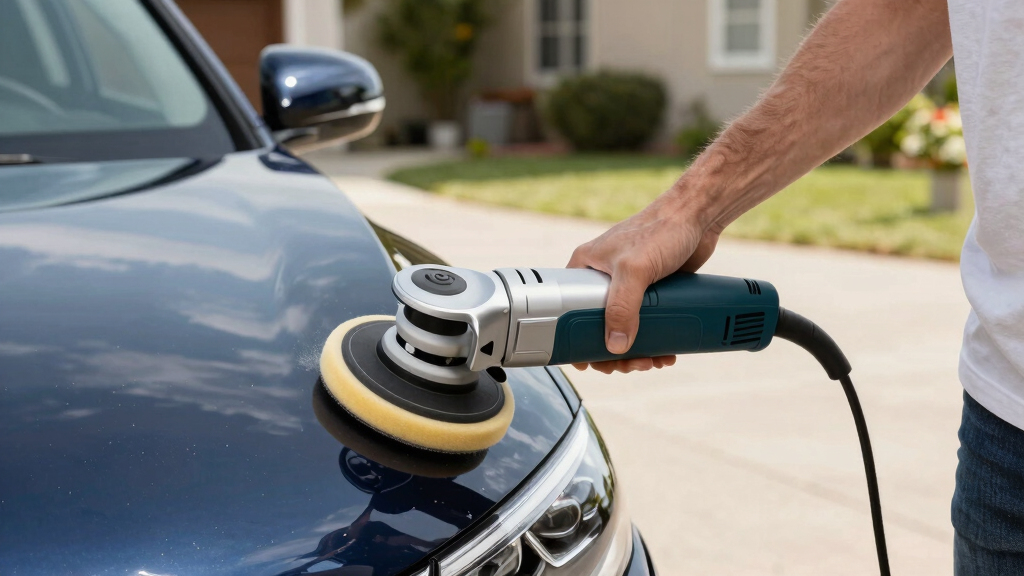

For most owners, I’d start with the Griot’s Garage G9, a corded dual-action polisher that balances usable power and control for common paint-correction jobs. The DEWALT DWP849X suits experienced detailers who need rotary-cutting power, while the PORTER-CABLE 7424XP is a more approachable choice for cautious beginners. The main tradeoff is between the safer, more forgiving action of a dual-action machine and the faster correction—but greater heat and paint-damage risk—of a rotary. Cordless models add freedom from an outlet but bring battery-runtime limits. Read on for the full breakdown of all 15 picks and how I’d match them to different jobs.

Get business pricing on tech for your team
- Business-only prices and quantity discounts
- Tax-exempt purchasing
- Multiple users, one account, clear invoices
Key Takeaways
- The Griot’s Garage G9 is my best overall pick because its corded dual-action format suits a wider range of paint-care tasks than a rotary-first tool.
- Rotary power is a specialist advantage, not an automatic upgrade: the DEWALT DWP849X can fit experienced users’ correction work, but it demands more technique than the dual-action options.
- Beginner-friendly choices are not interchangeable: the PORTER-CABLE 7424XP favors a straightforward, controlled approach, while kit-based picks such as the Chemical Guys TORQX bundle add accessories for getting started.
- Battery convenience has a work-session tradeoff: the DEWALT 20V MAX XR and Niusken cordless kit avoid managing a power cord, but buyers should plan around charge and runtime needs.
- Fit and accessory support matter alongside motor power: a smaller or more modest machine may suit careful, localized work better than a large-pad rotary or an entry-level waxer.


| car polisher | Weight | Power source | Polisher type |
|---|---|---|---|
| Chemical Guys TORQX Dual Actio | 2.95 kg | Corded electric | Dual-action random orbital |
| Meguiar’s MT300 Variable Speed | — | — | Dual-action |
| LDHTHOPI 1600W Rotary Buffer P | — | AC | Rotary buffer polisher |
| DEWALT DWP849X Variable-Speed | — | — | — |
| DEWALT 20V MAX* XR Cordless Ro | 4.8 lb | Battery powered | Cordless rotary |
| PORTER-CABLE 7424XP 6-Inch Var | 5.5 lbs | Corded electric | Random orbit |
| Adam’s Polishes Swirl Killer 1 | 4.17 kg | Corded electric | Orbital |
| Chemical Guys TORQX Random Orb | 4.7 lb | — | — |
| Chemical Guys TORQ 10FX Dual A | 5.5 lbs | — | — |
| Griot’s Garage G9 Random Orbit | 5.25 lbs | Corded electric | Random orbital / dual action |
| Adam’s Polishes 9mm Dual Actio | Under 5.5 pounds | — | Dual action |
| SPTA 5-Inch Dual Action Random | — | Corded electric | — |
| Niusken Cordless Dual-Action C | 3.3 lbs | — | — |
| AOBEN 6-Inch Dual Action Car B | 5.29 lb | Corded electric | — |
| BLACK+DECKER 6-Inch Random Orb | 0.93 kg | Corded electric | — |
More Details on Our Top Picks
Chemical Guys TORQX Dual Action Random Orbital Polisher for Cars
The TORQX’s 8mm dual-action orbit makes it the safer correction pick here for owners learning to remove swirls, light scratches, and oxidation without the direct cutting action of a rotary. Its 700W motor supports compounding, polishing, and finishing, while the stated 2.95-kilogram weight is lighter than the DEWALT DWP849X’s substantial rotary-style setup. That makes the TORQX a more approachable choice for working across a whole vehicle, though it is still a corded tool and requires managing the cable around the car.
Compared with the Meguiar’s MT300, the TORQX has a clearly specified orbit and power rating, while the Meguiar’s emphasizes soft start and speed management. The TORQX’s tradeoff is limited control information in the supplied specs, and its motor may be more than needed for very delicate finishes. I’d choose it for routine paint correction rather than maximum-speed work.
Pros:- Dual-action design helps reduce the risk of holograms and paint burns compared with rotary polishing.
- 8mm orbit and 700W motor suit compounding, polishing, and finishing tasks.
- Listed weight of 2.95 kilograms is lighter than the DEWALT DWP849X.
- Useful for correcting swirls, scratches, and oxidation across different vehicle types.
Cons:- Corded power limits mobility and requires managing a cable around the vehicle.
- The supplied specs do not detail an adjustable speed range.
- May be too aggressive for very delicate finishes without careful pad and product selection.
Best for: DIY detailers who want a dual-action polisher for correcting swirls and oxidation on cars, trucks, or SUVs, with a less aggressive approach than a rotary.
Not ideal for: Buyers who need cordless mobility, or experienced operators seeking the faster cutting action of a high-power rotary polisher.
- Polisher type:Dual-action random orbital
- Power source:Corded electric
- Maximum power:700 W
- Orbit:8 mm
- Speed:4,200 RPM
- Voltage:120 V
- Weight:2.95 kg
- Dimensions:20.1 × 8 × 8 in.
Our verdict“Choose the TORQX if you want a comparatively approachable corded dual-action polisher for general paint correction rather than rotary-level cutting power.”
Meguiar’s MT300 Variable Speed Dual Action Polisher
The MT300 is the control-focused choice in this group. Its soft start reduces the abrupt surge when switching on, while digital torque management is designed to keep performance more consistent as the tool works against the paint. Those features can make speed changes less jarring than on the Chemical Guys TORQX, whose supplied details do not specify comparable torque management. The multi-position D-handle also gives buyers more options for grip and working angle.
That emphasis on control comes with a learning curve: variable speed is useful only when the operator can match it to the pad, compound, and paint task. The listed billet counterweight is intended to smooth operation, but the product data also flags weight as a concern during longer sessions. Unlike the cordless DEWALT DCM849B, the MT300 is not presented as a battery-powered option. I’d favor it for deliberate compounding and polishing, not for buyers who want the lightest setup or a simple wax-only tool.
Pros:- Soft start helps avoid an abrupt motor surge at startup.
- Digital torque management is designed to maintain consistent performance.
- Multi-position D-handle supports different grips and working angles.
- Billet counterweight is intended to smooth operation during polishing.
Cons:- May feel heavy during extended polishing sessions.
- Requires operator skill to choose appropriate settings and achieve consistent results.
- The supplied product data does not state a speed range, orbit size, or power rating.
Best for: Detailers who already understand basic pad and compound pairing and want soft start, adjustable speed, and a multi-position grip for controlled paint work.
Not ideal for: Beginners seeking a simple, lightweight polisher, or buyers who need the freedom of a cordless tool.
- Polisher type:Dual-action
- Speed control:Variable speed
- Startup technology:Soft start
- Performance management:Digital torque management
- Counterweight:Billet
- Handle:Multi-position D-handle
- Stated uses:Compounding, polishing, and waxing
Our verdict“Pick the MT300 if controlled starts and torque management matter more to you than light weight or cordless convenience.”
LDHTHOPI 1600W Rotary Buffer Polisher, 6- and 7-Inch
The LDHTHOPI is the lineup’s accessory-heavy rotary option, supplied with 6- and 7-inch pad fittings, foam and wool pads, sandpaper, and three handle configurations. That breadth suits buyers who want one tool for vehicle polishing plus work on boats, furniture, floors, or other listed surfaces. Its seven settings from 1,000 to 3,500 RPM give more speed choices than the supplied details for the DEWALT DWP849X, although both are rotary-style tools that demand careful control.
The main drawback is a clear work-session limit: use it for 15 minutes, then allow five minutes to cool. That makes it less appealing for uninterrupted correction across a large vehicle than the dual-action TORQX. The instructions also warn against pressing hard on the head, so this is not a tool for forcing fast results. I’d choose it for varied surface jobs and included accessories, not for long, continuous detailing sessions.
Pros:- Seven speed settings cover a stated range of 1,000–3,500 RPM.
- Includes 6- and 7-inch pad fittings, foam pads, wool pads, and sanding accessories.
- Direct-use, D-handle, and side-handle configurations offer different grip options.
- Described for use on vehicles, boats, furniture, floors, marble, wood, and metal.
Cons:- Requires a five-minute cooling break after each 15-minute work session.
- Rotary action calls for careful pressure and speed control.
- AC power limits mobility compared with the cordless DEWALT DCM849B.
Best for: DIY users who want a rotary polisher with multiple pad sizes and included accessories for occasional work on vehicles and other surfaces.
Not ideal for: Detailers polishing large vehicles in long sessions, or beginners who may struggle to control a rotary tool and avoid excessive pressure.
- Polisher type:Rotary buffer polisher
- Power:1,600 W
- Power source:AC
- Pad sizes:6 and 7 in.
- Speed settings:7
- Speed range:1,000–3,500 RPM
- Handle options:Direct use, D-handle, or side handle
- Recommended work limit:15 minutes per session; cool for 5 minutes before continuing
- Included accessories:Foam and wool pads, sanding sheets, pad fittings, handles, cloth bag, carbon brushes, and hex wrench
Our verdict“Choose this LDHTHOPI if you value its broad accessory set and multi-surface use more than uninterrupted work time or beginner-friendly operation.”
DEWALT DWP849X Variable-Speed Buffer Polisher, 7–9 in., 12 Amp
The DWP849X is the heavy-duty corded rotary pick here, with a 12-amp motor, 7–9-inch pad range, and electronic speed control designed to maintain speed under load. Its variable-speed trigger and dial let experienced users adjust output for different applications, while the wool ingestion shield and rubber gearcase cover address practical concerns around wool fibers and handling. Compared with the LDHTHOPI 1600W rotary, the DWP849X highlights durable construction and under-load speed control rather than a broad included accessory bundle.
This power and pad size make it better suited to confident operators than to first-time paint correction: rotary results depend heavily on technique, product choice, and pressure. It also needs a corded outlet, so it cannot match the mobility of the DEWALT DCM849B. I’d select it for users who prioritize a substantial rotary tool and control under load, while choosing a dual-action polisher for a more forgiving route to routine paint care.
Pros:- 12-amp motor and 7–9-inch pad range suit substantial rotary polishing tasks.
- Electronic speed control is designed to maintain speed under load.
- Variable-speed trigger and dial provide two ways to adjust speed.
- Wool ingestion shield and rubber gearcase cover address fiber control and handling.
Cons:- Corded design requires access to an outlet and limits movement around a vehicle.
- Rotary polishing demands operator control to avoid unwanted paint damage.
- The supplied details do not include a stated weight, making handling comparisons harder.
Best for: Experienced detailers and vehicle-care users who want a corded rotary polisher with a large pad range and speed control for demanding polishing tasks.
Not ideal for: First-time polishers seeking a forgiving dual-action tool, or buyers who need cordless operation and easy movement around a vehicle.
- Tool type:Corded buffer/polisher
- Motor:12 A
- Pad size:7–9 in.
- Speed range:0–3,500 RPM
- Speed control:Variable-speed trigger and dial
- Speed regulation:Electronic speed control maintains speed under load
- Construction:Ball-bearing motor with precision-cut steel gears
- Included components:Hook-and-loop backing pad, bale handle, and straight side handle
- Warranty:3-year limited warranty
Our verdict“Choose the DWP849X if you have rotary experience and want a corded tool with speed control under load, rather than a beginner-focused dual-action polisher.”
DEWALT 20V MAX* XR Cordless Rotary Polisher, 7-Inch (DCM849B)
The DCM849B’s strongest case is cordless rotary mobility: its 20V battery platform frees the user from routing a cord around a vehicle, and its brushless motor is designed to support runtime. The 800–2,200 RPM variable-speed range is lower at its stated maximum than the DWP849X’s 3,500 RPM, so I’d favor the cordless model for controlled, portable polishing rather than the highest-speed rotary work. Its included 7-inch backing plate and trigger-and-dial controls cover a practical range of vehicle surfaces, including headlights, windshields, and fiberglass.
This is a tool-only purchase, so buyers without compatible batteries and a charger need to account for that separately. At 4.8 pounds, it is not especially light for extended overhead or whole-car work, and rotary operation still calls for careful technique. Compared with the dual-action TORQX, the DCM849B trades some forgiveness for cordless freedom and rotary action. It makes the most sense for existing DEWALT 20V users who value portability.
Pros:- Cordless 20V operation avoids managing a power cord around the vehicle.
- Brushless motor is designed to support efficient operation and runtime.
- Variable speed from 800 to 2,200 RPM supports different polishing applications.
- Includes a 7-inch backing plate and offers trigger-and-dial speed control.
Cons:- Sold without a battery, so buyers need a compatible battery to operate it.
- At 4.8 pounds, it may feel heavy during prolonged polishing.
- Rotary action is less forgiving than the dual-action Chemical Guys TORQX.
Best for: Existing DEWALT 20V MAX users who need a cordless rotary polisher for vehicle surfaces and value freedom from a power cord.
Not ideal for: Buyers without compatible batteries, beginners who want a more forgiving dual-action polisher, or anyone prioritizing a lighter tool for prolonged sessions.
- Polisher type:Cordless rotary
- Power source:Battery powered
- Voltage:20 V
- Motor:Brushless
- Speed range:800–2,200 RPM
- Backing plate:7 in.
- Weight:4.8 lb
- Dimensions:17.1 × 7.3 × 6 in.
- Battery inclusion:Tool only; battery not included
Our verdict“Pick the DCM849B if you already own DEWALT 20V batteries and want cordless rotary mobility more than beginner-friendly operation or high maximum speed.”
PORTER-CABLE 7424XP 6-Inch Variable-Speed Random Orbit Polisher
The PORTER-CABLE 7424XP suits buyers who want one corded random-orbit tool for both automotive polishing and broader sanding jobs. Its 2,500–6,800 OPM speed range gives more room to adjust the pace than the fixed maximum listed for Adam’s Polishes Swirl Killer 12mm, while the 6-inch pad format favors larger panels over tight spots. At 5.5 pounds, it is reasonably manageable, and the two-position handle offers another way to steady the tool during longer passes. The tradeoff is that its cord keeps work tied to an outlet, and its specified pad size may narrow accessory choices. I’d rank it for versatility, not maximum correction speed or cordless convenience.
Pros:- Variable speed from 2,500 to 6,800 OPM accommodates different polishing and sanding tasks
- Random-orbit action is designed for controlled, swirl-conscious work
- Two-position side handle supports different grip preferences
- Ball-and-roller bearing construction is suited to demanding workloads
Cons:- Corded operation limits movement and requires access to an outlet
- The 6-inch pad format may restrict accessory choices and access to tight areas
- At 5.5 pounds, it may feel tiring during extended overhead work
Best for: Car owners who want a corded polisher for paint work as well as occasional marine or general sanding projects
Not ideal for: Detailers who regularly work away from outlets or need a smaller pad for confined areas
- Polisher type:Random orbit
- Pad size:6 inches
- Motor:4.5 A
- Speed:2,500–6,800 OPM
- Power source:Corded electric
- Weight:5.5 lbs
- Spindle thread:5/16-24
- Included components:Polishing pad, side handle, wrench
Our verdict“Choose the PORTER-CABLE 7424XP if you want adjustable, corded random-orbit performance for polishing and sanding rather than a compact, cordless-focused tool.”
Adam’s Polishes Swirl Killer 12mm Orbital Polisher – Paint Correcting Buffer and Car Scratch Remover
The Adam’s Polishes Swirl Killer 12mm is the more focused correction pick here: its 12mm throw and 5,500 maximum speed are aimed at working through swirls and scratches, including smaller or harder-to-reach areas. That makes it a more correction-oriented choice than the Chemical Guys TORQX, whose 9mm throw is paired with a supplied multi-step kit. The Swirl Killer is corded and listed at 4.17 kilograms, though, so compact handling does not mean a light tool for long sessions. Its automotive focus also makes it less appealing if you want one polisher for varied workshop tasks. I’d choose it for targeted paint correction, not extended overhead polishing or cordless freedom.
Pros:- 12mm orbital throw supports focused paint correction
- Designed to work with microfiber and foam polishing pads
- Compact format can help with control in smaller or harder-to-reach areas
Cons:- Corded operation requires an outlet and limits mobility
- Listed weight of 4.17 kilograms may cause fatigue during prolonged use
- Automotive-focused design offers less versatility for other polishing tasks
Best for: Detailers correcting swirls and scratches in smaller automotive areas who have access to an outlet
Not ideal for: Buyers seeking a lightweight polisher for long sessions, cordless work, or tasks beyond automotive paint
- Polisher type:Orbital
- Orbital throw:12mm
- Maximum speed:Up to 5,500 OPM
- Power source:Corded electric
- Use:Automotive paint correction
- Compatible pad types:Microfiber and foam
- Material:Aluminum
- Weight:4.17 kg
Our verdict“Pick the Swirl Killer 12mm for targeted automotive defect removal if correction matters more to you than low weight or cordless convenience.”
Chemical Guys TORQX Random Orbital Car Polisher Kit, 9-Piece
The Chemical Guys TORQX 9-piece kit is the easiest of these five to start using as a polishing system because it includes a backing plate, foam pads, polishes, and compounds. Its dual-action random-orbit motion is designed to reduce the risk of paint burns and holograms, making it a more approachable option than a correction-focused tool such as Adam’s Polishes Swirl Killer 12mm. The 800W motor and 9mm throw suit routine correction and finishing, while the 4.7-pound weight should help during longer sessions. The shorter throw may be less appealing if faster correction is your priority, and the included kit means less freedom to choose every component from the outset. I’d rank it for a ready-to-go setup, rather than maximum throw or power.
Pros:- Nine-piece kit includes a backing plate, foam pads, polishes, and compounds
- Dual-action random-orbit motion helps reduce the risk of paint burns and holograms
- 800W motor supports correction, polishing, and finishing tasks
- 4.7-pound weight may be easier to manage over longer sessions
Cons:- 9mm orbital throw may be slower for users seeking faster correction
- Corded operation limits where the polisher can be used
- The included kit may offer less flexibility than buying preferred pads and compounds separately
Best for: Newer detailers who want a corded dual-action polisher with pads and compounds included for a range of paint-care steps
Not ideal for: Experienced users prioritizing a larger orbital throw or buyers who prefer to select every pad and compound separately
- Machine type:Random orbital dual action
- Motor power:800 W
- Orbital throw:9mm
- Speed:4,550 OPM
- Weight:4.7 lb
- Kit size:9 pieces
- Included components:Polisher, backing plate, foam pads, polishes, and compounds
Our verdict“Choose the TORQX kit if you want one approachable package for learning several paint-care steps without sourcing pads and compounds separately.”
Chemical Guys TORQ 10FX Dual Action Polisher, 700W, Digital Display, 8mm Orbit
The Chemical Guys TORQ 10FX makes sense for buyers who want its speed setting visible while working. Its digital display and 1,500–4,200 OPM range give more direct control over pace than the TORQX’s listed 4,550 OPM operating figure, although the TORQX is lighter and arrives with pads and compounds. The 10FX instead pairs a 700W motor and 8mm orbit with a 5-inch backing plate, a format that favors controlled work over covering broad panels quickly. At 5.5 pounds, it is not the lightest option for extended sessions. I’d choose it for adjustable, display-led operation, but skip it if an included starter kit or a larger pad matters more.
Pros:- Digital display makes the selected speed easy to monitor
- 1,500–4,200 OPM range allows adjustment across detailing tasks
- Dual-action/random-orbital design is intended for automotive paintwork
- 700W motor supports polishing and defect-removal work
Cons:- 5.5-pound weight may become tiring during prolonged use
- 5-inch backing plate limits pad size and panel coverage compared with larger-pad options
- The listed specifications do not include pads or compounds
Best for: Detailers who want a 5-inch dual-action polisher with a digital speed display for controlled paint and waxing work
Not ideal for: Buyers who want a lighter complete kit or need a larger backing plate to cover broad panels faster
- Machine type:Dual action / random orbital
- Power:700 W
- Orbital throw:8mm
- Speed range:1,500–4,200 OPM
- Backing plate size:5 inches
- Voltage:120 V
- Weight:5.5 lbs
Our verdict“Choose the TORQ 10FX if a visible speed setting and a 5-inch backing plate matter more than low weight or an included polishing kit.”
Griot’s Garage G9 Random Orbital Polisher 10901
The Griot’s Garage G9 stands out for its listed 1,000W maximum power, the highest motor-power figure among these five. That makes it the power-focused choice for buyers tackling scratches, swirls, or oxidation, while the Chemical Guys TORQX 9-piece kit is the more convenient pick if pads and compounds are needed in the same purchase. The G9’s variable-speed control supports different polishing stages, and its 5.25-pound weight is close to the heavier PORTER-CABLE 7424XP. One drawback is that the listed package includes no pads or other accessories. Converting it to a 5-inch pad system also requires an optional backing plate, so I’d favor it when power takes precedence over an out-of-box setup.
Pros:- 1,000W maximum power supports paint-correction work
- Variable speed allows adjustment for different polishing stages
- Designed for automotive polishing and waxing
- Can be converted to a 5-inch pad system with an optional backing plate
Cons:- No pads or other accessories are listed as included
- 5-inch pad conversion requires an optional backing plate
- At 5.25 pounds, it may feel heavy during prolonged use
Best for: Experienced car owners seeking a high-power corded random-orbit polisher for paint correction and willing to source pads and compounds separately
Not ideal for: Beginners who want a complete kit in the box or buyers who need 5-inch pad compatibility without purchasing an extra backing plate
- Polisher type:Random orbital / dual action
- Maximum power:1,000 W
- Amperage:8.5 A
- Voltage:120 V
- Speed:6,400 RPM
- Power source:Corded electric
- Weight:5.25 lbs
- 5-inch pad conversion:Requires optional backing plate
Our verdict“Choose the G9 if you prioritize a high-power motor and already have, or plan to source, the pads and backing plate you need.”
Adam’s Polishes 9mm Dual Action Car Polisher (Polishing Kit)
A 1000W motor and 9mm orbit make this Adam’s a correction-focused choice for owners who want to tackle swirls and paint defects, rather than only spread wax. At under 5.5 pounds, it is easier to guide across panels than a larger, heavier buffer, and its 16-foot cord gives useful reach around a vehicle. Compared with the SPTA 5-Inch Dual Action, it has a stated higher maximum speed, but the SPTA supplies a much broader accessory set and six speed settings. The 9mm orbit is a narrower fit than larger-orbit machines: it suits controlled work, but may take longer over wide panels. I’d choose it for correction-minded detailers comfortable managing a polisher; newcomers may find it less forgiving than a kit built around more explicit speed controls.
Pros:- 1000W motor is suited to paint-correction work.
- Under-5.5-pound weight helps with control across vehicle panels.
- 16-foot cord offers practical reach around a car.
- Can polish, remove scratches, and restore multiple surfaces.
Cons:- Requires experience for effective, controlled operation.
- The 9mm orbit may be less efficient on broad panels than larger-orbit options.
Best for: Detailers with some machine-polishing experience who want a lightweight, powerful tool for correcting swirls and paint defects.
Not ideal for: First-time users seeking a broad accessory kit or buyers who want a larger orbit for covering panels more quickly.
- Power:1000W
- Orbit size:9mm
- Maximum speed:6500 OPM
- Weight:Under 5.5 pounds
- Cord length:16 feet
- Polisher type:Dual action
Our verdict“Choose this Adam’s for a lightweight correction tool with a powerful motor, provided you have the experience to use it confidently.”
SPTA 5-Inch Dual Action Random Orbital Car Polisher Kit
The SPTA’s main advantage is its ready-to-work kit: it pairs six speed settings with polishing pads, compounds, sanding discs, and both side and D-shaped handles. That range makes it more adaptable out of the box than the BLACK+DECKER WP900, which is a simpler polisher-and-waxer with bonnet attachments. Its 5-inch backing plate is a familiar size for car detailing, while the 750W motor and 2,000–5,200 rpm range cover waxing, polishing, and defect removal. Constant speed control and a smooth start offer more control than a basic fixed-speed waxer. The tradeoff is a corded setup, so work depends on access to an outlet, and the plastic body may feel less substantial than a more robustly built machine. I’d pick it when accessory range matters more than cordless convenience.
Pros:- Six speed settings support different polishing and sanding tasks.
- Constant speed control and smooth start aid controlled operation.
- Includes side and D-shaped handles for alternative grips.
- Broad set of pads, compounds, sanding discs, and detailing accessories.
Cons:- Corded operation limits use where an outlet is unavailable.
- Plastic body may feel less substantial than more robustly built polishers.
Best for: Home detailers who want one corded tool and a broad selection of pads and sanding accessories for varied projects.
Not ideal for: Drivers who need to polish away from an outlet or buyers who prefer a simpler, lighter-duty waxer with fewer parts to manage.
- Model:DAPSET-US
- Power source:Corded electric
- Voltage:110V
- Maximum power:750W
- No-load speed:2,000–5,200 rpm
- Speed settings:6
- Backing plate:5 inches (125 mm)
- Included accessories:Compounds, polishing pads, wool pad, sanding discs, brushes, handles, wrench, towels, apron, glove, and storage bag
Our verdict“Pick the SPTA if you want a versatile corded kit with accessories included, rather than a compact or cordless polisher.”
Niusken Cordless Dual-Action Car Buffer Polisher Kit with Two 21V Batteries
Cordless freedom is the Niusken’s defining advantage: two 21V batteries let owners work without managing a cable around doors, mirrors, and other tight areas. At 3.3 pounds, it is lighter than the corded AOBEN 6-Inch Dual Action, and its LED display keeps speed and battery level visible while you work. The 8mm dual-action motion and six speed settings give it a broad polishing range, while the included pads and sanding discs add flexibility beyond paint care. The limits are tied to that portability: its batteries do not fit DeWalt tools, and sustained high-speed use may trigger a cooling shutoff after more than 20 minutes. I’d choose it for cable-free spot work and moderate sessions, not for uninterrupted high-speed correction across a full vehicle.
Pros:- Cordless operation avoids cable clutter around the vehicle.
- Two batteries and a fast charger support continued work while one battery charges.
- LED display shows speed and battery level.
- Lightweight 3.3-pound body with six speed settings.
Cons:- Battery system is not compatible with DeWalt batteries.
- May shut off to cool after more than 20 minutes of continuous high-speed use.
Best for: DIY detailers who want a lightweight cordless polisher for working around a vehicle without a power cable.
Not ideal for: Buyers who need long, uninterrupted high-speed sessions or want batteries compatible with their DeWalt tools.
- Model:PGJ-21V
- Motor:Pure copper brushed motor
- Orbital motion:8mm dual action
- Speed settings:6
- Speed range:2800–5800 RPM
- Backing plate:5 inches
- Batteries:2 × 21V 2000mAh rechargeable
- Weight:3.3 lbs
- Overheating protection:May shut off after more than 20 minutes of continuous high-speed use
Our verdict“Choose the Niusken for cable-free detailing and easy handling, but look elsewhere for extended high-speed sessions or shared DeWalt batteries.”
AOBEN 6-Inch Dual Action Car Buffer Polisher with Detachable Handle and 4 Buffing Pads
Detachable side and top handles give the AOBEN a practical ergonomic edge: buyers can change their grip to suit the panel or remove a handle to reduce fatigue. Its 6-inch plate covers more area per pass than the 5-inch SPTA, which can help with broad, relatively flat panels, while six speeds from 1,000 to 4,500 rpm give room to adjust for waxing and correction. The random-orbital action is aimed at swirl-conscious polishing, and the kit includes foam and synthetic wool pads. There are limits to that larger format: the cord restricts mobility compared with the cordless Niusken, and the tool may stop if pressed too hard at low speed. I’d favor it for users who value handle choice and panel coverage, not those who tend to lean heavily on a polisher.
Pros:- Detachable side and top handles allow different grip configurations.
- Six variable speeds suit waxing and paint-correction tasks.
- 6-inch disc covers more area per pass than a 5-inch plate.
- Includes foam and synthetic wool pads for different applications.
Cons:- Corded design limits mobility compared with the cordless Niusken.
- May stop automatically when excessive pressure is applied at low speed.
Best for: Car and boat owners who want a corded 6-inch machine with adjustable handles for working across larger panels.
Not ideal for: Buyers who need cordless mobility or tend to apply heavy pressure while polishing at low speeds.
- Model:AT3501
- Power source:Corded electric
- Voltage:120V, 60Hz
- Wattage:700W
- Speed range:1,000–4,500 RPM
- Disc size:6 inches
- Weight:5.29 lb
- Warranty:12 months
Our verdict“Choose the AOBEN for a corded 6-inch polisher with flexible handle options, as long as you can work with a light touch.”
BLACK+DECKER 6-Inch Random Orbit Car Polisher and Waxer (WP900)
The WP900 keeps the job straightforward: its 6-inch random-orbit format, two-handle design, and foam and wool bonnets suit routine waxing and buffing without the broader correction-focused setup of the Adam’s Polishes 9mm Dual Action. Its listed 4,400 RPM speed and 10-foot cord make it a simple corded option for cars, boats, and other projects, though the shorter reach may require repositioning or an extension cord on larger vehicles. Unlike the adjustable-speed SPTA, the product data does not list multiple speed settings, so it offers less flexibility for users who want to tailor operation to different paint-correction tasks. I’d choose it for basic maintenance and bonnet-based application, but skip it if removing stubborn defects or managing speed precisely is the priority.
Pros:- 6-inch random-orbit format suits routine waxing and buffing.
- Two-handle design provides a comfortable grip.
- Includes foam and wool bonnet attachments.
- Can be used on cars, boats, and other projects.
Cons:- Product data lists a single speed rather than adjustable speed settings.
- 10-foot cord offers less reach than the 16-foot cord on Adam’s 9mm polisher.
Best for: Owners who mainly want a simple polisher for applying wax and buffing cars or boats with included bonnet attachments.
Not ideal for: Detailers seeking variable speed control, extended cord reach, or a tool aimed at demanding paint correction.
- Model:WP900
- Power source:Corded electric
- Speed:4400 RPM
- Voltage:120V
- Orbit size:6 inches
- Cord length:10 feet
- Weight:0.93 kg
- Included attachments:Foam and wool bonnets
Our verdict“Pick the WP900 for straightforward waxing and buffing, not for detailed speed control or demanding paint correction.”

How We Picked
I compared these 15 polishers by the qualities that shape real detailing work: machine type and control, power and speed adjustment, pad size and handling, corded versus cordless operation, and the accessories included. I also weighed how well each format fits its likely buyer, from someone applying wax at home to a detailer correcting defects. A high-power rotary does not automatically outrank a dual-action machine; its faster cutting potential comes with a steeper learning curve and greater responsibility for heat management.
The ranking favors versatility and manageable control for the broadest group of car owners, then gives specialized picks their place where their design answers a distinct need. Kit contents and convenience can improve a product’s fit, but they do not erase limitations in power source, machine type, or intended workload. I distinguish dedicated polishers from simpler waxers so buyers do not mistake an easy-to-handle tool for a paint-correction machine.
| car polisher | Power source |
|---|---|
| Chemical Guys TORQX Dual Actio | Corded electric |
| Meguiar’s MT300 Variable Speed | — |
| LDHTHOPI 1600W Rotary Buffer P | AC |
| DEWALT DWP849X Variable-Speed | — |
| DEWALT 20V MAX* XR Cordless Ro | Battery powered |
| PORTER-CABLE 7424XP 6-Inch Var | Corded electric |
| Adam’s Polishes Swirl Killer 1 | Corded electric |
| Chemical Guys TORQX Random Orb | — |
| Chemical Guys TORQ 10FX Dual A | — |
| Griot’s Garage G9 Random Orbit | Corded electric |
| Adam’s Polishes 9mm Dual Actio | — |
| SPTA 5-Inch Dual Action Random | Corded electric |
| Niusken Cordless Dual-Action C | — |
| AOBEN 6-Inch Dual Action Car B | Corded electric |
| BLACK+DECKER 6-Inch Random Orb | Corded electric |
Factors to Consider When Choosing Best Car Polishers
Before choosing a model, match the tool to the finish you want and the work you expect to do. A polisher’s machine action, pad setup, power source, and handling affect not just speed but also how much control you have over the paint.
Choose the Machine Action for Your Experience and Goal
Dual-action polishers move the pad in an orbit as it rotates, making them a common fit for home users who want to polish or correct paint with a more forgiving tool. A rotary spins directly, which can remove defects faster in skilled hands but can also build heat quickly if the pad stays in one place or the user applies too much pressure. Do not choose a rotary solely because its motor sounds more powerful. First decide whether your task is routine gloss improvement, moderate correction, or demanding defect removal. If you are new to polishing, practice on a test panel or an inconspicuous area before working on visible paint. Technique and product choice still matter; no machine makes careless work risk-free.
Match Pad Size to the Panels You Need to Reach
Large pads can cover broad, flat panels efficiently, but they may feel awkward around mirrors, body lines, bumpers, and narrow spaces. Smaller pads offer more precise access, though they cover less area per pass and may make a whole-car job slower. The included pad diameter is only part of the fit: backing-plate compatibility affects which pads you can use later. Check the manufacturer’s supported pad sizes before buying replacement accessories. Avoid forcing a large pad across a sharp edge or into a tight corner; hand polishing or a smaller compatible setup may give you better control. Choose for the car’s shape and your actual work areas, not just the largest coverage figure.
Decide Whether Cordless Freedom Is Worth Planning Around
A corded machine can keep working without a battery swap, which is helpful for longer sessions and whole-vehicle jobs. Its cable, however, can drag across paint or catch on wheels and mirrors unless you manage it carefully. Cordless polishers remove that tether and are useful in driveways or locations with limited outlet access, but the usable session depends on battery capacity, charge time, and how hard the machine is working. Check whether batteries and a charger are included rather than assuming a cordless tool is ready for an uninterrupted job. For larger projects, a spare battery or a charging plan can matter more than a small difference in motor specifications. Weigh freedom of movement against the practical limits of your work session.
Treat Speed Control and Handling as Part of the Safety Setup
Variable speed gives you more control over how a tool behaves with different pads and compounds, but a high speed range alone does not make a polisher easier to use. A comfortable grip and useful handle arrangement help you keep the pad level and maintain steady movement across a panel. Before starting, read the instructions for the machine and the polishing products you plan to use, then begin at a conservative setting. Keep the pad moving and avoid leaning heavily on the machine, especially near edges and raised body lines. A digital display can make settings easier to read, yet it cannot replace steady technique. If a tool feels difficult to control, pause and adjust your grip, speed, or pad setup rather than pressing harder.
Look Beyond the Included Kit and Plan for Upkeep
A bundle can save setup effort by including pads or other accessories, but the useful value depends on whether those items suit your paintwork and polishing products. Compare the pad types and sizes with the machine’s backing plate, and check whether replacement pads are easy to source. Pads collect compound and paint residue, so they need cleaning during use and proper care afterward. A kit does not remove the need to choose an appropriate polish, work method, and clean pad for each stage. Also check the tool’s stated care instructions and what the package actually includes, since accessory lists can differ between versions. Paying more makes sense when it buys a better fit for your workload, handling needs, or accessory compatibility—not simply a longer list of parts.
Set Expectations for Correction Before You Buy
A polisher can improve the appearance of swirls and light defects, but it cannot safely remove every scratch. A scratch that catches a fingernail or appears to reach through the clear coat may need professional assessment or paint repair rather than more polishing. Start with the least aggressive combination that can address the issue, then increase cutting only if needed. More aggressive pads and compounds can remove paint, so repeated correction reduces the material available for future care. If your main goal is spreading wax or sealant, a simpler, easier-to-handle option may suit you better than a correction-focused machine. Choose around the finish you want to maintain, not an assumption that every visible mark should be polished away.
Frequently Asked Questions
Should I buy a dual-action polisher or a rotary buffer for my first car polisher?
I’d choose a dual-action model for a first machine unless you already have experience controlling a rotary. Dual-action polishers are generally more forgiving for routine paint care and light-to-moderate correction, while rotary machines can cut defects faster but need closer attention to pad movement and heat. That difference is why this roundup gives the Griot’s Garage G9 the broad-use lead and positions the DEWALT DWP849X for a more specialized, experienced user. Start with a test area and conservative technique whichever machine you choose. A more powerful tool cannot make up for an unsuitable pad or compound.
Can a car polisher remove deep scratches?
Not every scratch is a polishing defect. A polisher may improve the look of light swirls and shallow marks, but a deep scratch can pass through the clear coat into the paint or primer. Applying more pressure or using a more aggressive compound in that case can remove additional finish without fixing the underlying damage. If the mark catches a fingernail, exposes a different color, or has sharp edges, I’d seek a paint professional’s advice before attempting correction. Treat polishing as surface refinement, not a substitute for repainting.
Is a cordless polisher practical for polishing a whole car?
It can be, if the battery setup supports the length of your work sessions. Cordless models such as the DEWALT 20V MAX XR and Niusken kit make it easier to move around a vehicle without managing a cord, but runtime, charge time, and the batteries included affect how much work you can complete. A corded model is often more convenient for extended sessions near an outlet. Before choosing cordless, check the package contents and whether compatible spare batteries are available to you. For occasional spot work, the freedom from a cord may matter more than uninterrupted runtime.
Do I need a polisher kit, or should I buy the machine by itself?
A kit can make setup easier when it includes pads that fit the machine and match the work you plan to do. It does not guarantee that every included accessory is useful for your paint, and you may still need suitable compounds, cleaning supplies, or replacement pads. A machine-only purchase can make more sense if you already own compatible accessories or want to choose each pad yourself. Check the backing-plate size and the exact package contents before deciding, since similar product names can refer to different bundles. I’d prioritize compatibility and pad quality over the sheer number of included pieces.
What should I prioritize if I mainly want to apply wax rather than correct paint?
For waxing, prioritize comfortable handling, a suitable pad, and straightforward operation over maximum cutting power. A rotary designed for defect removal may add complexity you do not need for spreading wax, while a simpler random-orbit waxer can suit light maintenance. The BLACK+DECKER WP900 fills that simpler-use role in this roundup, though it is not the same choice as a more versatile correction-focused dual-action machine. Follow the wax maker’s directions and use a clean pad to avoid carrying grit across the finish. If you might want to correct swirls later, choose a more capable dual-action polisher instead of buying only for waxing.
Conclusion
For the broadest mix of paint-care jobs, I recommend the Griot’s Garage G9 as best overall, with the PORTER-CABLE 7424XP as my beginner-friendly alternative for buyers who want a controlled dual-action format. For a value-minded choice, compare the SPTA 5-Inch Dual Action Kit and the Chemical Guys TORQX 9-Piece Kit by checking which included pads and accessories you will actually use. The DEWALT DWP849X is my premium-style pick for experienced rotary users, not a default upgrade for first-timers. Choose the DEWALT cordless rotary or Niusken cordless kit when freedom from a power cord matters most, and the BLACK+DECKER WP900 if your goal is simpler wax application rather than paint correction. The right pick depends on matching machine action and handling to your skill, workload, and finish goals.