AI data analysis tools can mean hands-on software workflows, coding instruction, or guidance for applying AI to business data, so the right choice depends on what you need to do. I’d name Data Analysis with LLMs the best overall starting point for readers focused on using language models in analysis, while Python for AI and Data Analysis stands out for practical coding skills and Learning Generative AI Tools for Excel for spreadsheet-first work. The main tradeoff is between getting quick results with familiar tools and building deeper, more reusable technical skills. These picks are books and guides, not standalone analysis software, so buyers should match each title to their learning goal. Continue reading for the full breakdown and a guide to choosing among them.

Get business pricing on tech for your team
- Business-only prices and quantity discounts
- Tax-exempt purchasing
- Multiple users, one account, clear invoices
Key Takeaways
- Data Analysis with LLMs is the clearest broad match for readers who want to learn how language models fit into analytical work, while the Python and Excel titles serve more specific workflows.
- Python for AI and Data Analysis emphasizes durable, hands-on skills with Pandas, NumPy, and Matplotlib; that technical depth asks more of beginners than spreadsheet-led guides do.
- Learning Generative AI Tools for Excel and From Excel to AI Tools both start from spreadsheets, but the former foregrounds Excel and familiar assistants while the latter links spreadsheet work with reports and automation.
- Several titles focus on adjacent specialties rather than general analysis: Claude and financial modeling, statistical methods in R and Python, academic research, data readiness, and trading research.
- The roundup consists of learning resources, not software subscriptions or platforms; readers seeking a tool to upload data into and analyze immediately should check each title’s scope before buying.





| AI data analysis tool | Format |
|---|---|
| AI Tools That Complement ChatG | Not specified |
| Python for AI and Data Analysi | Book |
| Claude AI for Data Analysis an | Not specified |
| Claude AI for Data Analysis Bi | Not specified |
| AI-Assisted Statistics for Dat | — |
| Learning Generative AI Tools f | Book |
| Data Analysis with LLMs | Book |
| AI for Data Analytics: A Pract | Book |
| The Ultimate AI Research Toolk | Book |
| AI-Ready Data Blueprints: From | Book |
| The No-BS Guide to AI for Trad | — |
| From Excel to AI Tools: Use AI | — |
More Details on Our Top Picks
AI Tools That Complement ChatGPT: A Practical Guide to Research, Content Creation, Automation, Data Analysis, Digital Marketing, and Business Growth
This guide earns a place for readers who want to see where data analysis fits alongside other business uses of AI. Its coverage connects research, automation, and data analysis with content creation and digital marketing, making it broader than Claude AI for Data Analysis and Financial Modeling, which focuses on analyst and finance workflows. That range is useful when a buyer is deciding which tasks to hand to AI before choosing a specialized method. The tradeoff is that breadth may mean less step-by-step depth on any one analysis workflow; the supplied description does not name particular tools, techniques, or datasets. Compared with Python for AI and Data Analysis, this is better suited to mapping practical use cases than learning a specific technical stack.
Pros:- Connects data analysis with research, content, automation, and marketing use cases
- Offers a broad view of how AI tools can support business workflows
- May help readers identify which tasks merit a dedicated analysis tool or method
Cons:- The supplied description does not identify specific data-analysis techniques or tools
- Broad coverage may provide less depth on analysis than the Python or Claude-focused guides
Best for: Small-business owners and cross-functional teams exploring how AI analysis could fit alongside research, marketing, and automation tasks
Not ideal for: Readers seeking detailed Python instruction, named analysis libraries, or advanced financial modeling workflows
- Format:Not specified
- Primary focus:AI tools used alongside ChatGPT
- Topics:Research, content creation, automation, data analysis, digital marketing, and business growth
- Data-analysis coverage:Included among broader AI applications
- Named programming languages:Not specified
- Named analysis libraries:Not specified
Our verdict“Choose this guide for a wide-angle view of AI-enabled business tasks, but pick a more specialized book for hands-on analysis instruction.”
Python for AI and Data Analysis: The Hands-On Guide to Data Wrangling, Machine Learning, and Automation with Pandas, NumPy, and Matplotlib
For readers who want to build repeatable analysis skills rather than rely mainly on conversational prompts, this is the most clearly code-centered choice in the group. It covers data wrangling, machine learning, and automation with Pandas, NumPy, and Matplotlib, tying the subject to tools used for manipulating data and producing visualizations. Compared with AI Tools That Complement ChatGPT, it offers a more defined technical path; compared with Claude AI for Data Analysis and Financial Modeling, it is less tied to finance and a single assistant. That flexibility is its main advantage, but the scope spans several libraries and topics, so learners seeking a thorough treatment of just one package may want a narrower resource. The supplied information also does not establish how deeply advanced machine-learning material is covered.
Pros:- Centers instruction on practical Python data tasks
- Covers Pandas, NumPy, and Matplotlib in one guide
- Connects data wrangling with machine learning and automation
- Provides a more concrete coding focus than broad AI-workflow guides
Cons:- The range of topics may leave less room for deep coverage of any one library
- The supplied details do not specify the depth of advanced machine-learning instruction
Best for: Learners and working analysts who want practical Python foundations across data preparation, visualization, machine learning, and automation
Not ideal for: Complete beginners who need a slow introduction to one library, or advanced practitioners seeking a clearly specified treatment of specialized machine-learning methods
- Publisher:Rheinwerk Computing
- ASIN:1493228927
- Format:Book
- Programming language:Python
- Topics:Data wrangling, machine learning, and automation
- Libraries:Pandas, NumPy, and Matplotlib
Our verdict“Pick this book if you want a code-based route into several core data workflows, rather than guidance focused mainly on prompting an AI assistant.”
Claude AI for Data Analysis and Financial Modeling
This is the most specialized pick here: it applies Claude AI to data extraction, SQL generation, market research, and financial modeling for analysts and quant researchers. That focus can suit professionals who already understand financial models and want to speed up supporting research or query-writing work. It is a narrower alternative to Claude AI for Data Analysis Bible, whose stated coverage includes Excel, CSV, visualization, research, and reporting; this title points more directly toward finance workflows. The specialization also limits its audience. Buyers without financial-modeling background may find the subject matter a poor fit, and the description does not specify programming languages, datasets, or the exact scope of its SQL instruction. Readers seeking general-purpose data skills are better served by Python for AI and Data Analysis.
Pros:- Targets data extraction and SQL generation workflows
- Connects AI assistance to market research and financial modeling
- Names analysts and quant researchers as its intended audience
Cons:- Its finance-centered scope will not suit many general data-analysis learners
- Assumes familiarity with financial modeling concepts
- The supplied description does not identify languages, datasets, or SQL depth
Best for: Financial analysts and quant researchers who want Claude-centered support for extraction, SQL, market research, and modeling tasks
Not ideal for: Beginners in data analysis, readers outside finance, or buyers seeking broad Excel, CSV, and visualization instruction
- ASIN:B0HG1BTSKT
- Target audience:Analysts and quant researchers
- Primary tool:Claude AI
- Primary use cases:Data extraction, SQL generation, market research, and financial modeling
- Financial modeling background:Required according to the product information
- Format:Not specified
Our verdict“Choose this guide if financial research is your main use case and you already have the modeling background to apply its workflow focus.”
Claude AI for Data Analysis Bible: Master Data Analysis, Visualization, Excel, CSV, Research, Reporting, and AI-Powered Insights with Claude
This guide is aimed at readers who want to use Claude across a familiar analysis cycle: working with Excel and CSV data, exploring visualization, conducting research, and preparing reports. Its stated coverage is more oriented toward everyday file-based analysis and communication than Claude AI for Data Analysis and Financial Modeling, which targets finance and quant workflows. That makes this a more natural fit for people who need to turn tabular information into findings they can share, rather than build financial models. The description does not specify the book’s format or length, and it gives few details about particular methods or example datasets, so buyers cannot gauge instructional depth from the supplied information. For readers seeking code-first practice, Python for AI and Data Analysis names a clearer technical stack.
Pros:- Covers Excel and CSV workflows alongside analysis
- Includes visualization, research, and reporting tasks
- Focuses on using Claude to generate insights from data
Cons:- The supplied product data does not state format or length
- Specific analytical methods and example datasets are not identified
- Less clearly suited to code-first learning than the Python guide
Best for: Analysts, researchers, and office professionals who work with Excel or CSV files and want Claude to assist with analysis and reporting
Not ideal for: Python learners seeking library-based coding instruction, or finance specialists looking for a dedicated modeling workflow
- ASIN:B0HG6T5F9B
- Primary tool:Claude
- Topic:AI-powered data analysis
- Data formats:Excel and CSV
- Coverage:Data analysis, visualization, research, and reporting
- Format:Not specified
- Length:Not specified
Our verdict“Choose this title for Claude-assisted spreadsheet analysis and reporting, while opting for the Python guide if coding skills are your priority.”
AI-Assisted Statistics for Data Scientists: 50+ Essential Concepts Using R and Python
This guide takes a different route from assistant-specific titles: it centers on more than 50 statistical concepts, with examples in both R and Python and AI assistance presented as a learning aid. That makes it a stronger match for data scientists who need to interpret methods and results, rather than mainly automate spreadsheet tasks. Compared with Python for AI and Data Analysis, its emphasis is statistics across two languages instead of a wider mix of wrangling, machine learning, and automation in Python. The dual-language approach can help readers connect concepts across tools, but it also asks them to follow material spanning two programming environments. The supplied details warn that it may be too advanced for complete beginners, and AI-specific workflows may change as tools develop.
Pros:- Covers more than 50 statistical concepts
- Uses examples in both R and Python
- Frames AI assistance as part of learning statistical material
- Offers a statistics-centered complement to broader Python workflow guides
Cons:- May be too advanced for readers new to data science
- Working across R and Python may not suit learners seeking one-language instruction
- Some AI-assisted workflows may date as tools change
Best for: Data scientists with some quantitative grounding who want to study statistical concepts through examples in both R and Python
Not ideal for: Complete beginners who need introductory programming or readers seeking a guide focused on one AI assistant’s current interface
- ASIN:B0GK713BRM
- Language:English
- Programming languages:R and Python
- Topic:Statistics, data science, and AI
- Content volume:50+ concepts
- Learning approach:AI-assisted learning
Our verdict“Choose this guide if your priority is statistical understanding across R and Python, not a general tutorial on prompting an AI tool.”
Learning Generative AI Tools for Excel: Speed Up Your Everyday Tasks with Microsoft Excel, Copilot, ChatGPT, and Beyond
Excel-focused AI learning is the clearest reason to choose this book: its title connects Microsoft Excel with Copilot and ChatGPT, framing AI around everyday spreadsheet tasks rather than data science in general. That makes it a more targeted fit than AI for Data Analytics, which covers machine learning and generative AI at a broader decision-making level. The tradeoff is scope: readers seeking Python-based analysis, statistical methods, or a detailed survey of analytics platforms may find this narrower approach limiting. The available product information does not specify chapter contents, technical depth, or examples, so I would choose it for its stated Excel-and-assistant focus rather than assume a particular level of instruction. It is most relevant when spreadsheet work is the starting point for using AI in analysis.
Pros:- Explicitly centers Microsoft Excel alongside Copilot and ChatGPT
- Connects generative AI to everyday spreadsheet tasks
- Offers a more focused Excel angle than broad analytics guides
Cons:- Available product information does not describe the specific lessons or examples
- The stated focus may be too narrow for readers seeking coding or wider data-science coverage
Best for: Excel users who want a book centered on applying Copilot and ChatGPT to routine spreadsheet tasks
Not ideal for: Readers seeking verified details on advanced analytics instruction, coding, or statistical methods; the available information does not establish that coverage
- Format:Book
- Primary subject:Generative AI tools for Excel
- Named tool:Microsoft Excel
- Named AI tool:Copilot
- Named AI tool:ChatGPT
- Stated focus:Speeding up everyday tasks
Our verdict“Choose this if your main goal is learning how generative AI fits into everyday Excel work rather than studying analytics across multiple methods.”
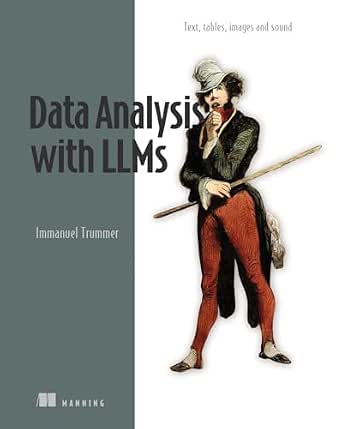
Data Analysis with LLMs
Large language models and data analysis are the only subjects confirmed by this title, giving the book a distinct place beside the more specific spreadsheet and academic-research options in this roundup. Compared with Learning Generative AI Tools for Excel, it is not framed around Excel, Copilot, or a named workflow; compared with The Ultimate AI Research Toolkit, it does not advertise a collection of tools or research stages. That narrow, direct framing may appeal to readers who want to investigate the relationship between LLMs and analysis. The main tradeoff is substantial uncertainty: there is no description or product detail to establish its audience, methods, examples, or technical level. I would treat it as a title-led option, not as a verified practical manual, until more information is available.
Pros:- Directly names both data analysis and large language models
- Has a focused subject compared with broad AI research toolkits
- May suit readers seeking material centered on LLMs rather than a named spreadsheet product
Cons:- No description or product details are available to confirm its scope
- Examples, methods, and intended audience are unspecified
- Cannot be confidently compared by technical depth with better-described guides
Best for: Readers specifically exploring how large language models relate to data analysis who are comfortable checking the book’s contents before relying on it
Not ideal for: Buyers who need confirmed coverage, a known technical level, or a clearly described step-by-step analytics workflow
- Format:Book
- Stated subject:Data analysis with large language models
- Named technology:LLMs
- Product description:Not provided
- Product details:Not provided
- Technical level:Not specified
Our verdict“Consider it only if the LLM-and-analysis focus matches your needs and you can verify the contents before purchase.”
AI for Data Analytics: A Practical Guide to Applying Machine Learning and Generative AI for Better Decisions
This guide has the broadest explicitly stated analytical scope among these five: it pairs machine learning with generative AI and ties both to better decisions. That makes it a stronger match for readers thinking beyond spreadsheet assistance, unlike Learning Generative AI Tools for Excel, whose title centers everyday Excel tasks. Its practical framing also gives it a clearer decision-making purpose than the title-only Data Analysis with LLMs. The tradeoff is that the supplied description does not identify tools, datasets, methods, or the depth of instruction, so “practical” cannot be taken as proof of a particular hands-on format. Readers wanting a focused academic-research toolkit may also prefer The Ultimate AI Research Toolkit, which names literature reviews and scientific discovery as intended uses.
Pros:- Covers both machine learning and generative AI
- Connects analytics methods with decision-making
- Has a broader stated scope than an Excel-only AI guide
Cons:- The available description does not name specific tools or platforms
- Depth, exercises, and technical prerequisites are not specified
- Its broad scope may be less targeted than specialist research or spreadsheet guides
Best for: Analysts and decision-makers looking for an introduction to applying both machine learning and generative AI to analytics questions
Not ideal for: Readers who need confirmed software tutorials, detailed exercises, or a specialized Excel or academic-research workflow
- Format:Book
- Primary subject:AI for data analytics
- Approach:Practical guide
- Covered method:Machine learning
- Covered method:Generative AI
- Stated outcome:Better decisions
Our verdict“Pick this for a broad, decision-focused introduction to machine learning and generative AI in analytics, while verifying the level of practical detail first.”
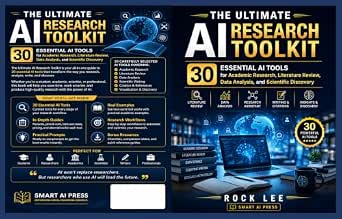
The Ultimate AI Research Toolkit: 30 Tools for Academic Research
Research workflow breadth distinguishes this toolkit from the other books here: its stated 30 AI tools cover academic research, literature reviews, data analysis, and scientific discovery. That makes it more relevant to researchers moving between evidence gathering and analysis than AI for Data Analytics, which is framed around applying machine learning and generative AI to decisions. It also promises a wider tool selection than the narrowly Excel-centered Learning Generative AI Tools for Excel. The important tradeoff is that the available details do not identify the tools, explain how they are evaluated, or show how much attention data analysis receives relative to the other research tasks. I would favor it for a multi-stage academic workflow, but not as a substitute for a well-specified technical analytics textbook.
Pros:- States coverage across literature reviews, data analysis, and scientific discovery
- Lists 30 AI tools, offering a multi-tool research angle
- Fits academic workflows more directly than general analytics guides
Cons:- The individual tools are not identified in the supplied details
- The depth devoted specifically to data analysis is unclear
- No tool-selection criteria or technical instruction details are provided
Best for: Students, academics, and research teams who want one guide spanning literature reviews, data analysis, and scientific discovery
Not ideal for: Analysts seeking a detailed tutorial for a specific data-analysis platform or confirmed explanations of particular AI tools
- Format:Book
- Number of tools:30
- Intended use:Academic research
- Intended use:Literature review
- Intended use:Data analysis
- Intended use:Scientific discovery
Our verdict“Choose this if you need an academic research toolkit spanning several stages, not a verified deep guide to one analytics method.”
AI-Ready Data Blueprints: From Raw Data to AI-Driven Innovation
Preparing raw data for AI is this book’s stated focus, giving it a different role from guides centered on using AI to analyze an existing dataset. That upstream emphasis can matter to teams whose data needs preparation before AI-driven work can begin. Compared with AI for Data Analytics, which explicitly covers machine learning and generative AI for decision-making, this title points toward readiness and the path from raw data to innovation rather than named analytical methods. The tradeoff is limited evidence: no description explains its processes, tools, examples, or intended technical level. I would choose it when data preparation is the problem to solve, but not assume it teaches a complete analysis workflow or specific AI platform techniques from the title alone.
Pros:- Focuses on the preparatory step from raw data toward AI use
- Addresses a different need from guides focused on analysis methods
- Frames data preparation in relation to AI-driven innovation
Cons:- No specific preparation methods or tools are described
- The technical level and intended audience are not provided
- The available information does not confirm coverage of data analysis itself
Best for: Data and operations teams seeking a guide focused on preparing raw data for AI-driven projects
Not ideal for: Readers looking for confirmed tutorials in machine learning, generative AI tools, or hands-on data analysis techniques
- Format:Book
- Primary subject:AI-ready data
- Stated starting point:Raw data
- Stated focus:Preparing data for AI-driven innovation
- Specific tools:Not provided
- Technical level:Not specified
Our verdict“Choose this if your primary challenge is getting raw data ready for AI, and look elsewhere for confirmed analysis tutorials.”
The No-BS Guide to AI for Trading & Market Research
This guide has a defined niche: applying ChatGPT, Claude, and other AI tools to market analysis, stock research, and data-driven trading. That focus makes it a closer fit for readers examining financial information than From Excel to AI Tools, which is framed around spreadsheet analysis, reporting, and workflow automation. It also offers a market-specific alternative to broader titles such as AI for Data Analytics. The tradeoff is that the supplied description does not say how the book teaches these tasks: buyers cannot gauge its format, length, or the specific research methods covered. Nor does the description establish whether it focuses on verification or risk controls, topics readers should seek when using AI for market decisions. I’d choose it for its subject focus, not for any unverified promise of trading results.
Pros:- Covers multiple AI tools, including ChatGPT and Claude.
- Targets market analysis and stock research rather than general-purpose data work.
- Connects AI use with data-driven trading.
- Part of a named playbook series, giving the book a clear place in that collection.
Cons:- The supplied description gives no detail about specific techniques or examples.
- Format and length are not provided, making the depth difficult to judge.
- The description does not specify how the book addresses checking AI-generated market analysis.
Best for: Readers who want to explore ChatGPT and Claude for stock research, market analysis, and data-informed trading workflows.
Not ideal for: Readers seeking a detailed, verifiable account of specific analytical methods, book length, or format before buying; those needs are not covered in the supplied product details.
- Series:The No-BS AI Playbooks
- Book number:3
- Named AI tools:ChatGPT and Claude
- Primary subject:AI for trading and market research
- Research focus:Market analysis and stock research
- Trading focus:Data-driven trading
Our verdict“Choose this guide if your main interest is using AI for market and stock research, but look elsewhere if you need confirmed methodological depth or format details.”
From Excel to AI Tools: Use AI to Analyze Data, Write Reports, and Automate Your Workflow (From Spreadsheets to Code Series, Book 6)
From Excel to AI Tools is the more workflow-oriented pick here: its stated scope connects data analysis with report writing and automation, making it relevant to spreadsheet users who want AI to support several stages of routine work. Compared with The No-BS Guide to AI for Trading & Market Research, it is not tied to financial research or trading; its stated applications are broader, while less tailored to any one field. That breadth could suit readers moving from spreadsheets toward code, as signaled by its series title. The main limitation is how little the product details establish: they name no AI tools, examples, skill level, or specific methods. I’d treat the stated use cases as a starting point, not proof of detailed instruction.
Pros:- Covers three practical work areas: data analysis, report writing, and workflow automation.
- The spreadsheet-to-code series framing points to a bridge between spreadsheet work and broader technical workflows.
- Addresses general business data tasks rather than limiting its scope to market research.
- Identified as the sixth book in a specific series.
Cons:- The supplied description names no AI tools or platforms.
- No methods, examples, format, or length are specified.
- The details do not establish its intended skill level or technical depth.
Best for: Spreadsheet users who want a guide framed around AI-assisted data analysis, report writing, and workflow automation.
Not ideal for: Readers who need confirmed tool-by-tool instructions, a specified technical level, or concrete examples before choosing a book.
- Series:From Spreadsheets to Code
- Book number:6
- Primary subject:Using AI tools with spreadsheet workflows
- Analysis focus:AI-assisted data analysis
- Reporting focus:Writing reports
- Automation focus:Automating workflows
Our verdict“Pick this book if you want a spreadsheet-centered guide spanning analysis, reports, and automation, but seek more product detail if you need confirmed tools or technical depth.”

How We Picked
I ranked these titles by how directly they address AI-assisted data analysis, how clearly their stated scope maps to a buyer’s task, and whether the subject matter points toward practical skills or a distinct specialty. Broad analysis guides rank ahead of narrower books because they can serve more readers; focused titles move up when their audience and use case are clear, such as Python workflows, Excel, or statistical analysis.
I also weighed the likely learning curve and the difference between general guidance and specialized instruction. A book about AI research or data readiness can be valuable, but it is a less direct fit for someone who wants to analyze a spreadsheet with an LLM. These are books and guides rather than executable software products, so the ranking reflects their stated learning focus—not unverified claims about software features, accuracy, or performance.
| AI data analysis tool | Format |
|---|---|
| AI Tools That Complement ChatG | Not specified |
| Python for AI and Data Analysi | Book |
| Claude AI for Data Analysis an | Not specified |
| Claude AI for Data Analysis Bi | Not specified |
| AI-Assisted Statistics for Dat | — |
| Learning Generative AI Tools f | Book |
| Data Analysis with LLMs | Book |
| AI for Data Analytics: A Pract | Book |
| The Ultimate AI Research Toolk | Book |
| AI-Ready Data Blueprints: From | Book |
| The No-BS Guide to AI for Trad | — |
| From Excel to AI Tools: Use AI | — |
Factors to Consider When Choosing AI Data Analysis Tools
Before choosing among these AI data analysis guides, pin down the task you want to handle and the tools you already use. A broad title may introduce more concepts, but a focused guide can be more useful when you need a specific workflow or subject area.
Match the format to the work you want to do
Start with a concrete task: exploring a CSV, building a financial model, checking statistical assumptions, or preparing research evidence. Those jobs call for different instruction, even when each involves AI. A common mistake is choosing a title because its cover mentions AI without checking whether it addresses your actual data format and outcome. If you work mostly in spreadsheets, a book centered on Excel is likely a more direct fit than a Python-first text. If your work involves repeatable analysis or larger datasets, coding instruction may offer skills that transfer beyond a single workbook. Choose the guide whose examples and workflow resemble the work you expect to repeat.
Decide how much technical depth you want
AI can make analysis feel easier, but it does not remove the need to understand what a method or result means. Spreadsheet-based learning can lower the initial barrier, while Python and R resources ask readers to engage with code and statistical concepts. Paying for more technical depth makes sense when you need reproducible workflows, want to inspect how results are produced, or plan to build on the material. It may be a poor fit if your immediate goal is to complete occasional, simple analysis without learning a programming environment. Avoid treating beginner-friendly as a synonym for shallow: clear explanations of data quality and interpretation can matter more than advanced code. Pick a level that challenges you without making the guide hard to apply.
Check the role of AI in the workflow
Some learning resources focus on using a particular assistant, while others place AI within a broader analytics process. That distinction affects how useful the material may be if your preferred tool changes or your organization restricts access to certain services. Before choosing, check whether the guide teaches transferable practices such as validating outputs, documenting prompts, and checking calculations, or concentrates on tool-specific steps. Tool-specific instruction can speed up a familiar task, but it may need updating as products change. Broader methods can take longer to learn yet remain useful across platforms. Choose based on whether you need immediate help with one workflow or skills that can travel.
Treat data quality and privacy as part of the choice
A polished AI-generated summary cannot repair missing values, inconsistent labels, or a biased sample. Readers often focus on prompting and overlook the preparation required before asking a model to interpret data. Look for guidance that helps you inspect source data and verify findings, especially when decisions depend on the output. Privacy deserves equal attention: workplace, financial, health, or personal data may not belong in a public AI service. A guide can explain analytical habits, but it does not replace your employer’s data rules or a platform’s current privacy terms. Favor a workflow that lets you analyze responsibly, even if it takes extra preparation.
Consider how you will verify and reuse results
AI can produce a convincing explanation that contains a wrong calculation or an unsupported conclusion, so plan how you will check the work. For consequential analysis, prefer a learning path that encourages comparisons with known results, code or formula inspection, and clear records of assumptions. One-off question answering is convenient, but reusable analysis benefits from documented steps and consistent inputs. This is where a coding or statistics-focused resource may justify more effort than a quick-start guide. For reports, also ask whether you need traceable sources and a way to reproduce charts or tables later. The best fit is the one that supports the level of auditability your decisions require.
Separate a learning resource from a working tool
These roundup entries are books and guides, not standalone platforms that process your files. That distinction matters if you expected to subscribe, connect a database, or upload a spreadsheet and receive analysis immediately. A guide can teach a workflow, but you may still need access to Excel, Python, an AI assistant, or another application to put it into practice. Check the title’s stated examples and prerequisites before buying, including whether it assumes particular software or prior knowledge. If your main need is immediate analysis rather than learning, first identify the actual software and data-handling requirements. If your goal is to build capability, choose the guide that teaches the process you want to own.
Frequently Asked Questions
Are these AI data analysis tools software products I can use to analyze a file?
No. The entries in this roundup are books and learning guides, not software subscriptions or analysis platforms. They can help you learn workflows involving AI, spreadsheets, coding, research, or statistics, but you may need separate applications to follow along. If you need a tool that accepts a file and returns charts or answers, shop for software that explicitly supports that task. Check both file compatibility and your organization’s rules for sending data to an AI service.
Which guide should I choose if I do not know how to code?
If you work in spreadsheets already, an Excel-centered guide is the most natural place to start. The titles focused on Excel and spreadsheet-to-AI workflows are more directly aligned with that starting point than the Python guide. You do not need to avoid coding forever, though: Python can open up repeatable analysis once you are ready to learn it. Before choosing, check each book’s stated prerequisites and examples. A beginner-friendly workflow is useful only if it matches the kind of data you handle.
Should I choose a Claude-specific guide or a broader LLM analysis guide?
Choose a Claude-focused title if your task is closely tied to that assistant, such as financial modeling or analysis workflows described for Claude. A broader LLM guide is a better match if you want concepts that may apply across several language-model tools. Tool-specific material can give you a more focused path, but details may age as interfaces and capabilities change. Broader instruction may be less tailored to one application while giving you more transferable habits. For important analysis, prioritize learning how to check outputs over relying on any assistant’s confident wording.
Is a Python or statistics guide worth the extra learning effort?
It can be, if you need to repeat analyses, work with data beyond a simple spreadsheet, or understand how a result was produced. Python instruction supports programmable workflows, while statistics-focused material can help you judge whether an interpretation is justified. Neither is automatically better for every buyer: occasional descriptive analysis may be easier to handle through familiar spreadsheet tools. The added effort pays off when reproducibility and sound interpretation matter to your work. Check your time, current skill level, and expected tasks before committing to a technical path.
How can I tell whether an AI-generated analysis is reliable enough to use?
Do not treat an AI explanation as proof that its calculations or conclusions are correct. Recheck totals, formulas, sample sizes, data filters, and any assumptions that affect the result. For consequential work, compare the output with an independent calculation or a method you can inspect, and keep a record of the data and steps used. Also verify whether the source data is complete and appropriate for the question. If errors could cause financial, legal, health, or operational harm, involve a qualified reviewer rather than relying on a model alone.
Conclusion
For the broadest fit, I recommend Data Analysis with LLMs as the best overall choice because its subject aligns directly with AI-assisted analytical workflows. For best value in learning durable technical skills, choose Python for AI and Data Analysis if you are ready to work with code; spreadsheet-first beginners are better served by Learning Generative AI Tools for Excel. My best premium-style pick for a focused specialist is Claude AI for Data Analysis and Financial Modeling, provided that Claude and financial work match your needs. For specific needs, turn to AI-Assisted Statistics for Data Scientists for statistical practice, The Ultimate AI Research Toolkit for academic research, or The No-BS Guide to AI for Trading & Market Research for trading research. Choose by the task you need to learn—not the broad AI label—and remember that every pick here is a guide, not analysis software.