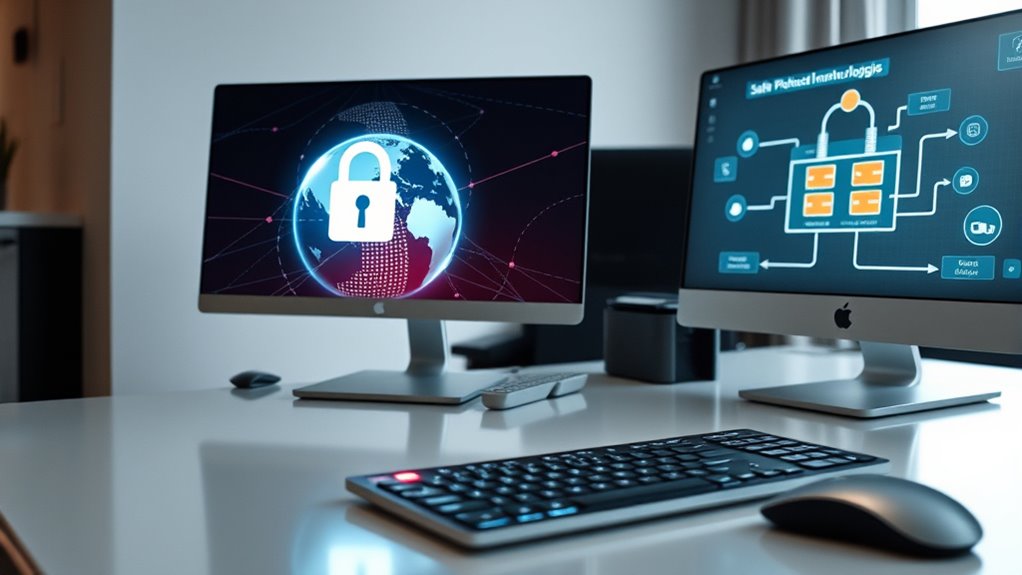

To secure your blog, start with an SSL certificate to encrypt data and build trust with visitors. Install a reliable firewall to block harmful traffic and use security plugins to find vulnerabilities. Keep everything updated—software, plugins, and themes—to patch security gaps. Use strong, unique passwords and enable two-factor authentication for added protection. Regular backups are essential to recover quickly from issues. Continue to explore these strategies for a safer, more resilient site.
Key Takeaways
- Implement SSL certificates to encrypt data and protect user information on your blog.
- Use firewalls to monitor and filter incoming traffic, blocking malicious requests.
- Keep all software, plugins, and security patches updated regularly to fix vulnerabilities.
- Utilize security plugins to detect threats and enhance your blog’s defenses.
- Regularly back up your site and store copies securely to ensure quick recovery from attacks.
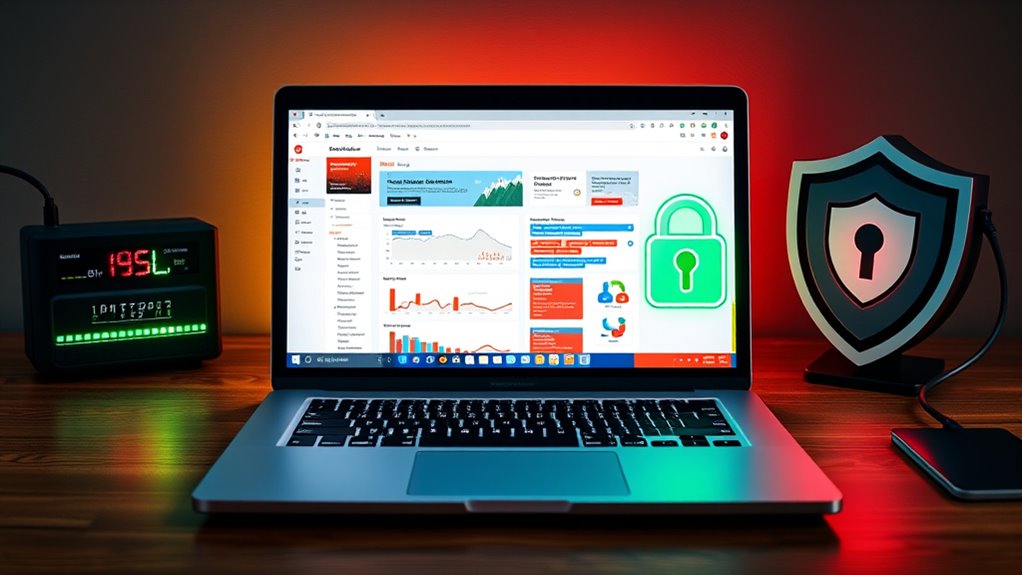
Are you doing enough to protect your blog from cyber threats? Many bloggers overlook essential security measures, leaving themselves vulnerable to attacks, data loss, and unauthorized access. To stay ahead of potential threats, you need a thorough approach that includes proper password protection and solid backup strategies. These foundational steps can make a vital difference in safeguarding your content and personal information.
Start with password protection. It might seem simple, but using strong, unique passwords for your admin accounts, hosting services, and email addresses is essential. Avoid common passwords like “password123” or “admin,” which are easy for hackers to guess. Instead, create complex combinations of letters, numbers, and symbols, and consider using a password manager to keep track of them securely. Two-factor authentication adds an extra layer of security, making it harder for intruders to access your blog even if they crack your password.
Use strong, unique passwords and enable two-factor authentication to protect your blog from intruders.
Regularly updating your passwords is equally important, especially if you suspect any compromise or after a security breach. Remember, your passwords are your first line of defense.
In addition to protecting access, you must implement effective backup strategies. No matter how secure your passwords are, vulnerabilities can still exist. Backup strategies ensure that your blog data remains safe and recoverable in case of hacking, server failure, or accidental deletion.
Regularly backing up your site, including databases, themes, plugins, and media files, helps you restore your content quickly without losing valuable work. Automate backups whenever possible, choosing a reliable service that stores copies securely off your server or in the cloud. Keep multiple backup copies and rotate them regularly, so if one gets corrupted or compromised, you still have a clean backup available.
This proactive approach minimizes downtime and protects your hard work from unforeseen disasters.
Furthermore, combining password protection and backup strategies with other security measures like SSL certificates and firewalls creates a layered defense system. SSL encrypts data transmitted between your site and visitors, preventing data interception. Firewalls help monitor and filter incoming traffic to block malicious requests before they reach your server.
Staying updated with the latest software patches and security plugins also keeps vulnerabilities at bay.
Ultimately, securing your blog is an ongoing process. By focusing on strong password protection, maintaining robust backup strategies, and layering your defenses with SSL and firewalls, you greatly reduce your risk of cyber threats. It’s about being proactive rather than reactive.
Protecting your digital presence ensures your hard work remains safe and your audience’s trust is maintained. Don’t wait until it’s too late—take these steps today to keep your blog secure and resilient against cyber attacks.
Top picks for "secur blog firewall"
Open Amazon search results for this keyword.
As an affiliate, we earn on qualifying purchases.
Frequently Asked Questions
How Often Should I Update My Blog’s Security Measures?
You should update your blog’s security measures regularly, ideally every month or after any significant changes. Keep your password management strong by changing passwords periodically, and make certain all plugins are up-to-date to patch vulnerabilities.
Regular updates help protect your site from new threats. Don’t forget to review your security settings and backup your data frequently, so you’re prepared for any potential cyber threats that may arise.
Can I Use Free SSL Certificates for My Blog?
Like a shield forged in trust, you can definitely use free SSL certificates for your blog. These certificates, issued by reputable certificate authorities, encrypt your data and protect visitors.
While they may lack some premium features, they still serve as a crucial barrier against cyber threats. Opting for free SSLs offers a reliable, cost-effective way to secure your blog, symbolizing your commitment to your audience’s safety without sacrificing security quality.
What Are Common Signs My Blog Has Been Hacked?
If your blog has been hacked, you might notice signs like phishing attacks appearing on your site or unfamiliar content showing up. Unauthorized access could mean strange login activity or changes to your admin settings.
Keep an eye out for slow performance or strange errors. These signs suggest someone gained unauthorized access, so act quickly by changing passwords, checking for malicious code, and enhancing your security to prevent future attacks.
How Do I Choose the Right Firewall for My Blog?
Choosing the right firewall for your blog feels like guarding a treasure chest—you want the strongest armor without hindering your flow.
Focus on firewall configurations that suit your blog’s size and traffic, ensuring compatibility with your security protocols.
Look for features like customizable rules, real-time monitoring, and ease of updates.
Ultimately, a well-chosen firewall keeps your content safe while letting your passion shine through securely.
Is It Necessary to Backup My Blog Regularly?
Yes, you should back up your blog regularly. Regular backups protect your content management system and user authentication data from unexpected issues like hacking or server failures.
Conclusion
Secure your site with simple strategies to stay safe and strong. By implementing SSL, setting firewalls, and staying vigilant, you’ll build a buffer against breaches and bugs. Don’t delay—deploy defenses today to protect your posts, preserve your privacy, and promote peace of mind. Stay savvy, stay secure, and keep your blog’s brand shining bright. Remember, safeguarding your site isn’t just smart—it’s essential for success!