📊 Full opportunity report: A Real-Time Index For GLP-1 Stock And Cash-Pay Prices on IdeaNavigator AI — validation score, market gap, and execution plan.

Get business pricing on tech for your team
- Business-only prices and quantity discounts
- Tax-exempt purchasing
- Multiple users, one account, clear invoices
TL;DR
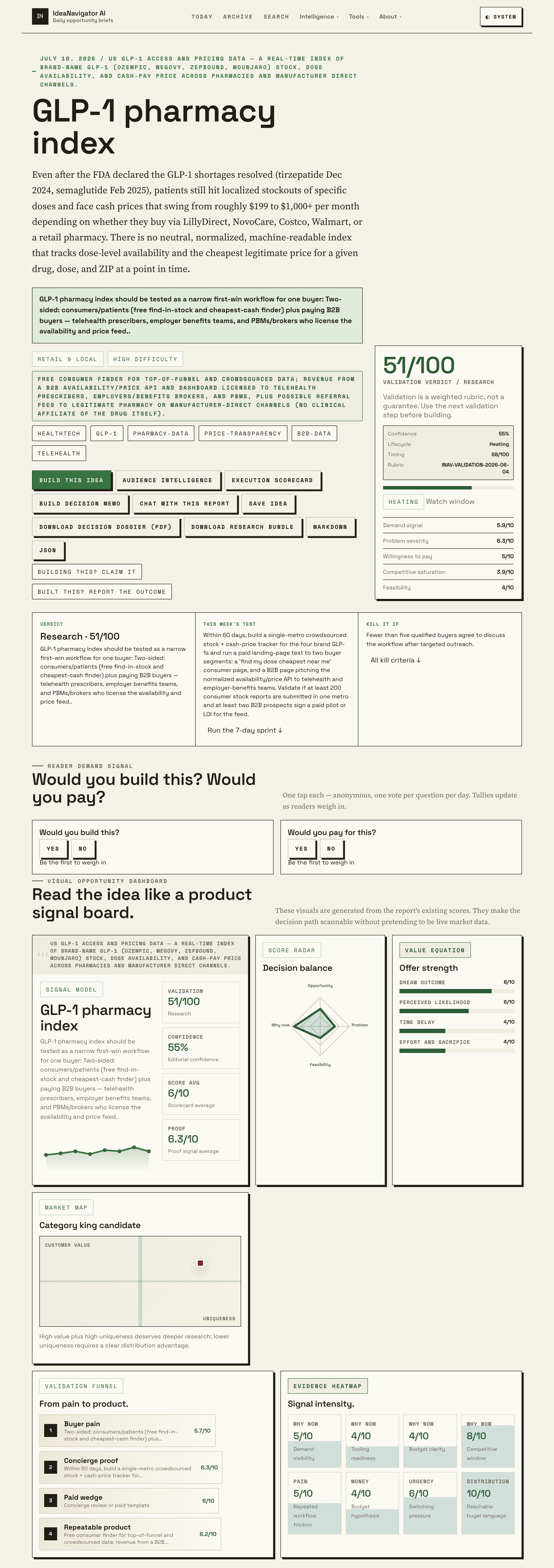
IdeaNavigator AI has outlined a proposed index to track cash prices and dose-level availability for four brand-name GLP-1 drugs by ZIP code. The concept would pair a free consumer search tool with a paid data feed for health-care buyers; it remains a proposal, with no reported launch or confirmed customers.
IdeaNavigator AI has proposed a real-time index of cash prices and dose availability for four brand-name GLP-1 drugs, aimed at helping patients find medication and giving health-care buyers a normalized data feed. The concept responds to a market where prices and local stock can vary, but it is still a proposed product: no operating index, launch date, or paying customer is identified.
The proposed index would cover Ozempic, Wegovy, Zepbound and Mounjaro, allowing users to search by drug, dose and ZIP code. Its free consumer tool would show reported availability and compare cash prices across manufacturer-direct programs, retail channels and a discount-price layer. The plan names LillyDirect and NovoCare, as well as Costco and Walmart, among the channels whose public prices could be normalized.
The proposal describes a two-sided business. Patients and consumers would use a free “find it in stock” and cheapest-cash-price search, while telehealth prescribers, employer benefits teams, pharmacy benefit managers and brokers could license an availability and price feed or dashboard. Potential referral fees are also mentioned for legitimate pharmacy or manufacturer-direct channels; the proposal rules out clinical affiliate fees tied to the drugs themselves.
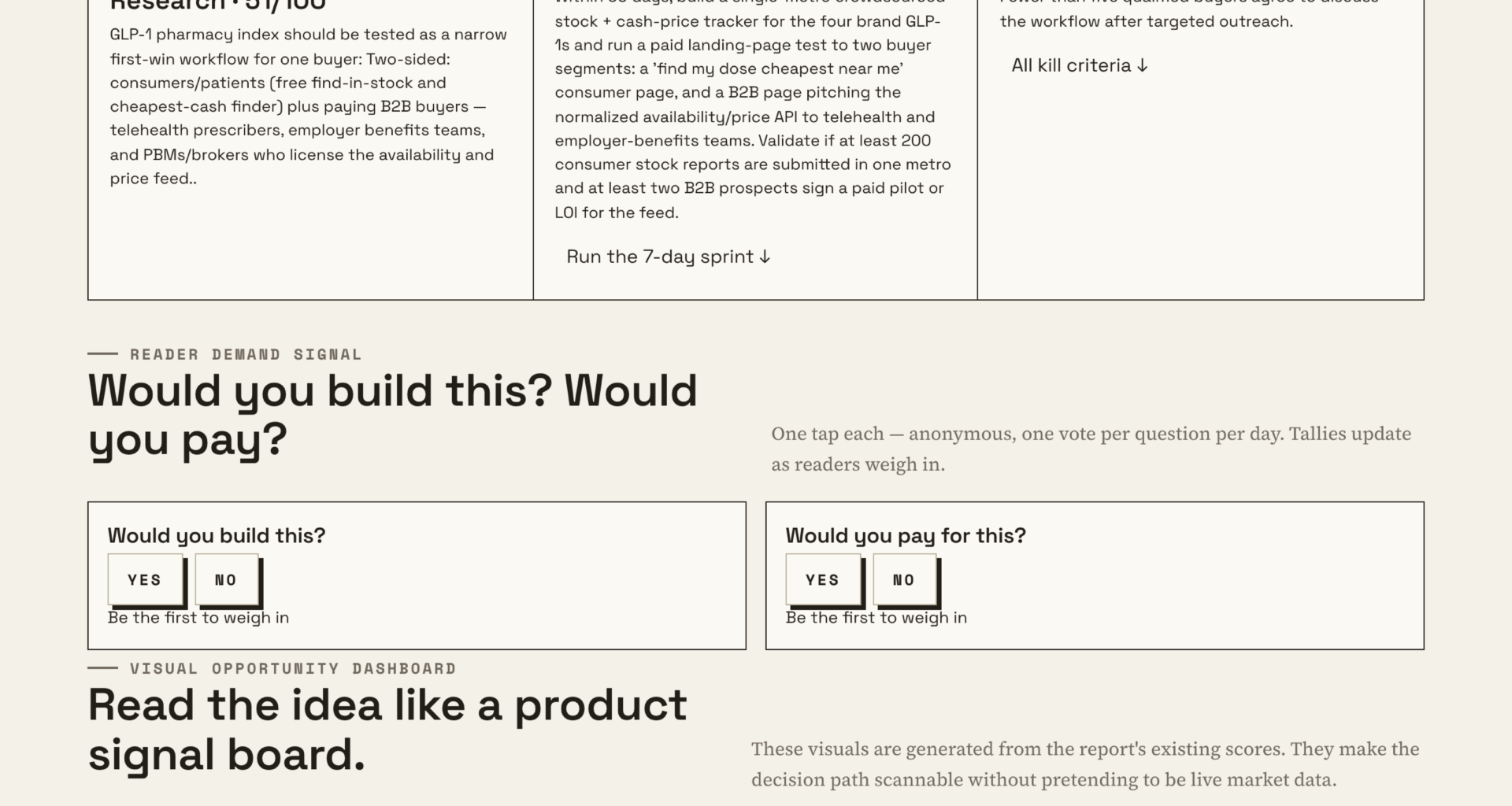
For an initial test, the proposal recommends building a tracker in one US metro within 60 days, using crowdsourced stock reports alongside public price information. It sets two proposed validation targets: at least 200 consumer stock reports in that metro, and paid pilots or letters of intent from at least two business prospects. These are suggested thresholds, not results already achieved.
A Search Tool for Fragmented Prices
If built, a dose- and location-specific index could let patients compare cash-pay options and view reported availability at nearby pharmacies. For employers and telehealth practices, a normalized feed could provide price and availability information across channels. The proposal does not establish whether the data would be complete, how often it would be updated, or whether using it would reduce costs.
The proposal describes local availability and channel-specific pricing as issues that could persist after broader shortage concerns. An advertised price may not indicate whether a particular dose is reported in stock nearby or whether the price applies to a patient’s circumstances. The proposed index would need to distinguish those details and show the age and source of stock reports.
The proposal identifies data quality as an operational challenge. Crowdsourced reports can become outdated, and cash prices can vary by channel and eligibility. Inaccurate or stale information could affect patient searches and comparisons made by institutional buyers. The proposal outlines a workflow but provides no evidence that these issues have been resolved.
From Shortages to Local Supply Gaps
The proposal says the FDA declared the tirzepatide shortage resolved in December 2024 and the semaglutide shortage resolved in February 2025. It argues that those changes did not remove all access problems: patients may still encounter local stockouts for specific doses, while cash prices can vary substantially among direct and retail channels.
It estimates that monthly cash prices range from roughly $199 to more than $1,000, depending on the drug and purchase channel. That range is presented as an approximate market observation; the proposal does not specify a date, a dose-by-dose breakdown, or a common comparison basis for the prices. It also says that compounding deadlines and the launch of competing direct cash-pay channels have added to the number of places patients may need to check.
The plan points to employer cost pressures as another reason buyers may want price data, stating that employers report GLP-1 drugs account for roughly 20% of pharmacy spend. It does not name the employers, describe the survey or measurement period, or provide a method for comparing spending across benefit plans.
Data Quality and Buyer Demand
No launch, funding, development team, pharmacy agreements or live data feed is identified. It is also unclear how the proposed index would verify stock reports, refresh them, handle inaccurate or expired listings, and define a “cheapest” price when eligibility or purchase terms vary. The plan does not provide specific price observations with dates, doses and comparable terms.
The proposal’s commercial demand remains untested in the information provided. It names potential buyer groups but does not identify prospects or report signed pilots, letters of intent, consumer submissions or measured savings. The proposed 200 reports and two buyer commitments are future validation goals, not existing traction.
A Single-Metro Pilot Test
The next step described in the proposal is a 60-day single-metro test pairing a consumer search page with a business-facing pitch for the normalized data feed. The test would assess whether enough users submit stock reports and whether telehealth or employer-benefits buyers will pay for access, with the stated targets of 200 reports and two paid pilots or letters of intent.
Whether that test proceeds, which metro it would cover, and how the index would verify and timestamp pharmacy availability have not been announced. Those details would determine how useful the results are for patients and prospective business customers.
Source: IdeaNavigator AI
Key Questions
Has the GLP-1 pharmacy index launched?
No launch is reported. The index is described as a proposed product with a suggested pilot and validation plan.
Which drugs would the index track?
The proposed coverage includes Ozempic, Wegovy, Zepbound and Mounjaro, with searches by dose and ZIP code.
Who would use the service?
Consumers and patients would get a free stock and cash-price finder. Telehealth prescribers, employer benefits teams, pharmacy benefit managers and brokers are named as potential paying users of a data feed or dashboard.
What would the pilot need to show?
The proposal sets targets of at least 200 consumer stock reports in one metro and at least two business prospects signing a paid pilot or letter of intent within 60 days. These are goals, not reported results.
Source: IdeaNavigator AI
Fall Picks
fall essentials
As an affiliate, we earn on qualifying purchases.