
Auto-generated content can raise plagiarism concerns because AI tools may unintentionally produce material similar to existing works, risking duplication and ethical issues. While AI doesn’t create with intent, its responses can closely resemble copyrighted sources, making originality hard to guarantee. Relying solely on these outputs without reviewing them can lead to unintentional plagiarism and legal complications. To better understand how to manage these risks responsibly, keep exploring the best practices in ethical content creation.
Key Takeaways
- AI-generated content may unintentionally resemble existing works, risking unintentional plagiarism.
- Without proper oversight, auto-generated content can duplicate copyrighted material.
- Transparency about AI involvement is essential to address ethical and legal concerns.
- Users are responsible for verifying AI outputs to prevent unintentional copying.
- Relying solely on AI without review may undermine originality and violate intellectual property rights.
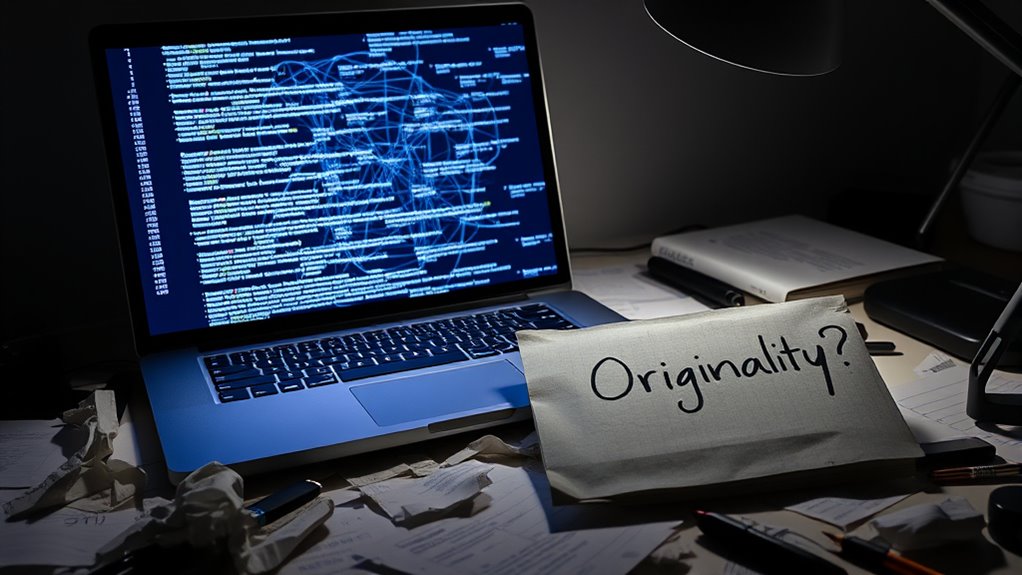
As auto-generated content becomes more common, concerns about plagiarism are increasingly coming to the forefront. When you rely on AI to produce articles, essays, or other written material, questions about AI originality quickly arise. You might wonder whether the content generated by these algorithms is truly original or if it inadvertently copies from existing sources. This is a crucial issue because AI models learn from vast amounts of data, which can include copyrighted material.
Relying on AI for content raises questions about originality and potential unintentional copying from copyrighted sources.
While AI tools aim to create fresh, unique content, the line between originality and duplication can sometimes blur, raising ethical implications that you need to consider carefully.
Understanding AI originality is key to navigating this landscape. When you use AI-generated content, it’s tempting to assume the output is entirely new. However, these models generate responses based on patterns and information from their training data. They don’t possess true creativity or consciousness, so their “originality” is derived from recombining existing ideas rather than inventing something entirely new.
This can lead to situations where the generated content unintentionally resembles existing works, sparking concerns about plagiarism, even if it’s not deliberate. Ensuring that AI tools produce truly original work requires additional scrutiny, verifying that the content isn’t a close paraphrase or direct copy of existing sources.
The ethical implications of auto-generated content extend beyond just originality. When you publish AI-created material without proper attribution, questions about intellectual property rights come into play. Is it fair to present AI-generated work as your own? Should you disclose that a human or machine authored the content?
These ethical considerations challenge your responsibility to maintain transparency and uphold academic or professional integrity. Additionally, there’s the risk of perpetuating misinformation if the AI produces inaccurate or biased content, which you might unknowingly distribute.
These issues emphasize the importance of critically reviewing AI outputs before sharing them publicly, not just for originality but also for ethical compliance.
Moreover, the use of auto-generated content raises broader questions about accountability. If AI produces plagiarized or unethical material, who’s responsible? You, as the user, must be vigilant in ensuring that the content aligns with legal and moral standards.
This involves understanding that AI tools are assistants, not autonomous creators, and that you bear the ultimate responsibility for the material you publish. Balancing the convenience and efficiency of AI with ethical considerations demands careful oversight.
In the end, fostering a culture of transparency and originality in AI-generated content is essential to address the ethical implications and to maintain trust with your audience.
Frequently Asked Questions
How Can Auto-Generated Content Be Legally Distinguished From Original Work?
You can distinguish auto-generated content from original work by conducting thorough originality verification, such as using plagiarism detection tools to identify similarities.
Confirm your content meets copyright issues by documenting the creation process and citing sources properly.
Keep records of your work’s development, and compare it to existing content.
This proactive approach helps establish the uniqueness of your content, making it easier to demonstrate its originality and avoid copyright issues.
What Are the Ethical Implications of Using AI for Content Creation?
Using AI for content creation raises ethical questions about authenticity, copyright issues, and transparency. You need to contemplate whether your work genuinely reflects your voice, respects intellectual property rights, and honestly discloses AI assistance.
Balancing innovation with integrity, you should avoid misleading your audience, ensure proper attribution, and prioritize originality. By doing so, you uphold ethical standards, foster trust, and contribute to responsible AI use in content creation.
Can Auto-Generated Content Harm a Website’s Search Engine Ranking?
Auto-generated content can harm your website’s search engine ranking if it lacks content originality, making it appear spammy or low-quality to search engines.
Poorly crafted auto-generated content can negatively impact your SEO, as search engines prioritize unique, valuable information.
To protect your ranking, make sure that your auto-generated content is original, relevant, and adds value, rather than relying solely on automation that may compromise quality and SEO impact.
Are There Specific Industries More Vulnerable to Plagiarism From AI Content?
You’re more vulnerable to AI plagiarism in industries like academic publishing and creative arts.
In academic publishing, AI can generate or copy research, risking originality and credibility.
Similarly, in creative arts, AI-produced content can be plagiarized or pass off as original work.
You need to monitor AI use carefully, implement strict originality checks, and stay informed about AI’s evolving role to protect your industry’s integrity.
How Can Authors Ensure Their Ai-Generated Content Remains Plagiarism-Free?
Ironically, your best defense against AI plagiarism is to trust your instincts. To keep your content original, you should regularly perform source verification and use originality tracking tools.
These methods help you spot unintentional overlaps and guarantee your work remains authentic. By actively monitoring and verifying your sources, you maintain integrity and prevent plagiarism.
Proving that even in AI-generated content, diligence is your strongest safeguard.
Conclusion
As you navigate the digital ocean, remember that auto-generated content is like a mirror—reflecting not just your ideas, but also the shadows of others’. Plagiarism lurks beneath the surface, ready to tarnish your journey. Stay vigilant, chart your course with integrity, and let originality be your guiding star. Only then can your creative ship sail freely, leaving behind a trail of genuine brilliance rather than echoes of borrowed voices.