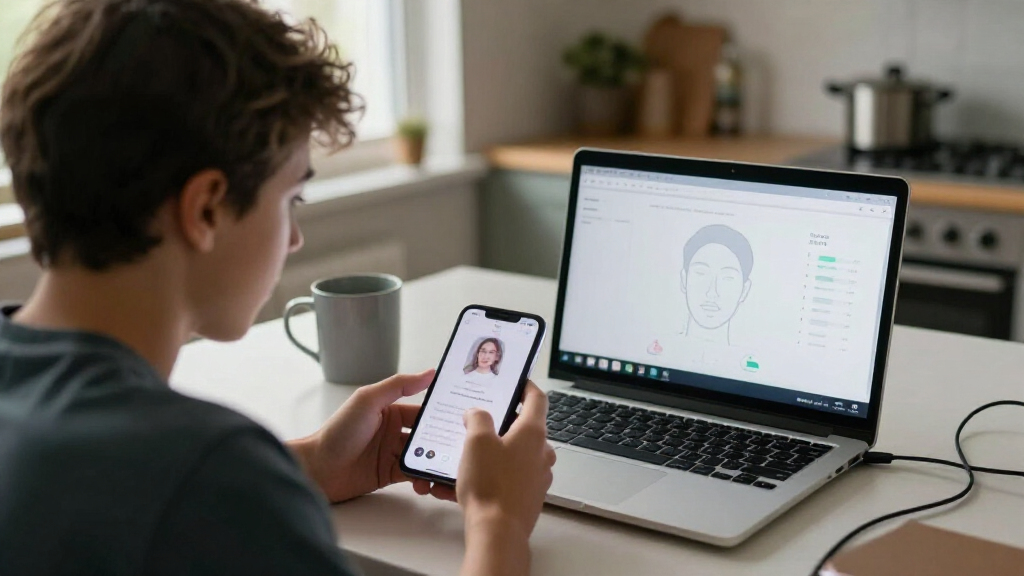

🔍 Read the full analysis: Instagram Uses AI To Identify Teens Worldwide. How Accurate Is It? on ThorstenMeyerAI.com

Get business pricing on tech for your team
- Business-only prices and quantity discounts
- Tax-exempt purchasing
- Multiple users, one account, clear invoices
TL;DR
Meta said on November 9 that Instagram is expanding AI age estimation worldwide to identify suspected users aged 13 to 17, including people who entered an adult birthday, and place them in Teen Account protections. Meta has not published the system’s error rate or detailed the appeal process for adults wrongly identified as teens.
Meta said on November 9, 2026, that Instagram is expanding its AI age-estimation system worldwide, using it to identify users it suspects are 13 to 17—even if they entered an adult birthday—and place them in Teen Account protections. The company has not disclosed how often the system misidentifies adults or provided an error rate for the global rollout.
Meta described the expansion as an extension of technology already used in a number of countries. It said it expects the change to place “millions more teens” under restrictions that limit who can contact them, the content they see and the time they spend on Meta apps. The company says users under 16 need a parent’s or guardian’s approval to change certain Teen Account settings.
Meta’s earlier explanations say the system can examine profile context, including references to birthday celebrations, school grades, posts, comments, bios and captions. In select countries, it also uses visual analysis of photos and videos to look for general age-related patterns. Meta says that visual analysis is not facial recognition and does not use biometric data or identify people in images.
The November announcement also covered related measures. In Australia, Meta says it voluntarily uses an Apple age-range signal when available. It is rolling the technology out on Facebook and said similar technology would come to Threads later in 2026. In the United States, parents are due to receive an Instagram in-feed video this month explaining the process and how to check whether their teen’s age is accurate.
Instagram Uses AI to Identify Teens How Accurate Is It?
Meta is expanding Instagram’s AI age estimation worldwide to identify suspected 13-to-17-year-olds and place them in Teen Account protections. The company has not disclosed how often adults are wrongly identified.
How the system works
Meta says it looks for signs that an account belongs to a teen, even when the birthday lists an adult age.
Signals may include profile details, posts, comments, bios, captions and references to school or birthdays.
In select countries, Meta also analyzes general age-related patterns in photos and videos. It says this is not facial recognition.
Suspected teens may receive stricter contact, content and time settings.
What changes for users
The same automated decision can extend protections to teens and restrict adults who are misidentified.
- Teens who entered an adult birthday may still receive Teen Account protections.
- Protections limit who can contact teens, the content they see and their time on Meta apps.
- Adults wrongly placed in Teen Accounts may face stricter settings.
- Meta has not published misclassification figures or a full global appeal process.
What is still unknown
Meta says it is encouraged by results in countries where the system was already used, but provides no figures to assess performance.
No measured error rate
There are no published figures for adults misidentified or accuracy across countries and user groups.
Correction details are limited
Meta has not clarified which review options apply in every case or how long a review takes.
No country-by-country plan
The Instagram expansion is underway worldwide, but Meta has not provided a completion schedule.
Related measures
Meta’s announcement also covers parent guidance and age-estimation technology across its apps.
When an AI Guess Changes Account Rules
The system makes age estimates consequential for users: a person the AI suspects is a teen may receive stricter contact, content and time settings, even if their account lists an adult birthday. That may extend protections to teenagers who entered inaccurate birth dates, but it also makes the reliability and correction process important for adults who are mistakenly placed in the restricted category.
Meta’s public descriptions do not quantify that trade-off. The company says it is encouraged by results in countries where the technology was already in use, but has not published the number or share of adults misclassified, the system’s accuracy across different users, or figures showing how often a placement is reversed. Without those details, users and outside observers cannot independently assess how frequently the measure works as intended or how much disruption mistaken estimates may cause.
The rollout also matters because age checks are increasingly part of debates over platform safety and children’s access to social media. Automated estimation can be applied at scale, but broad deployment raises questions about transparency, oversight and meaningful recourse when a platform’s judgment affects an account.
Products Worth Considering

Samsung Galaxy Tab S7 11-inch Android Tablet 128GB Wi‑Fi with S Pen Mystic Black

Samsung Galaxy Tab A9+ 11-Inch Android Tablet, 64GB, Graphite

DJI Osmo Mobile 7P Gimbal Stabilizer with Mic Mini Transmitter, Infinity Black
As an affiliate, we earn on qualifying purchases.
Teen Protections and Age Checks
Instagram’s Teen Accounts are designed for users under 18. Meta says the accounts automatically restrict who can contact teens, the content they encounter and their time on the app. The company has said users under 16 need a parent’s or guardian’s approval to loosen some settings. The age-estimation expansion addresses one problem Meta identifies: teens may claim to be older when registering.
The global rollout described on November 9 concerns suspected 13-to-17-year-olds who claim to be adults. It is separate from Meta’s process for accounts it believes belong to children under 13, who are not allowed on Instagram. Meta says it deactivates accounts it believes belong to under-13s and gives account holders a way to prove their age. The two processes should not be confused: the announcement does not say the under-13 enforcement process itself is what is going global.
Meta’s public explanations have developed over time. In April 2025, it described testing age estimation in the United States and said users could change their settings if the company made a mistake. In May 2026, it described analyzing profile clues and visual patterns; a July correction said the visual system does not use biometric data or create facial fingerprints. The November 2026 announcement extended teen placement globally.
The rollout comes amid legal and regulatory scrutiny. The source material says Meta announced an agreement with 52 U.S. attorneys general and that the European Commission issued a preliminary finding in April 2026 that Meta was doing too little to keep under-13s off Instagram and Facebook. Those developments provide context for the company’s safety efforts, but do not establish that the AI system is accurate.
““expanding our AI age-estimation technology globally””
— Meta, in its November 9, 2026 announcement
Accuracy and Appeals Remain Undisclosed
Meta has not released an error rate for the age-estimation system, a count of adults it has mistakenly placed in Teen Accounts, or accuracy results broken down by country or user group. Its statement that it is encouraged by earlier results does not include figures or a defined comparison baseline, so the scale of any improvement cannot be assessed from the information provided.
The correction process is also not fully described for the global expansion. Meta previously said people could change settings if it made a mistake. It has also said that someone changing a birthday from under 18 to over 18 must verify their age with an ID or Yoti’s facial age-estimation tools. The company has not explained whether those methods apply in every case, what other appeal options exist, or how long a review takes.
Meta says its visual analysis is available only in select countries, but the November announcement does not specify where it will be used as the rollout proceeds. It is also not clear which signals carry the most weight in an individual decision or how the Apple age-range signal in Australia interacts with Meta’s own estimates.
Global Rollout and Parent Notices
Meta says the Instagram expansion is underway worldwide. In the United States, the company said parents would see an in-feed video during November explaining its age-assurance approach and how to help confirm a teen’s age. Meta has not announced a public schedule for completing the Instagram rollout or supplied a country-by-country deployment plan.
The company said it is bringing the technology to Facebook and plans to begin launching similar technology globally on Threads later in 2026. Further details from Meta about accuracy, false placements, appeal procedures and the rollout’s reach would help clarify how the system performs beyond the company’s own characterization.
Key Questions
What did Instagram announce?
Meta said on November 9, 2026, that it is expanding AI age estimation worldwide on Instagram. It is intended to identify suspected users aged 13 to 17, including those who entered an adult birthday, and place them in Teen Account protections.
How accurate is Instagram’s age-estimation AI?
Meta has not published an error rate or other figures that would let the public measure the system’s accuracy. It said it was encouraged by results in countries where the system had already run, but did not provide numbers or a comparison baseline.
What information does the system use?
Meta has described analyzing profile context such as references to birthdays or school grades in posts, comments, bios and captions. In select countries, it also uses visual analysis for general age-related patterns in photos and videos. Meta says this visual analysis is not facial recognition and does not use biometric data.
What happens if an adult is incorrectly placed in a Teen Account?
Meta has previously said people can change settings if it makes a mistake, but the company has not detailed the appeal process for this global expansion. It has said that changing a birthday from under 18 to over 18 may require an ID or Yoti facial age estimation.
Does the announcement change Instagram’s under-13 enforcement?
The announced global expansion concerns suspected 13-to-17-year-olds being placed in Teen Accounts. Meta describes its response to suspected under-13 accounts as a separate process, involving deactivation and an opportunity to prove age.
Source: ThorstenMeyerAI.com