
Fair use lets you legally incorporate excerpts and content without permission if your use adds new meaning, purpose, or commentary. To stay within the rules, consider factors like whether your use is transformative, how much of the original you use, and if your use could affect the original’s market value. Remember, fair use isn’t automatic—it’s a defense you can raise if challenged. Keep exploring to understand how you can confidently use content while respecting copyright laws.
Key Takeaways
- Using excerpts is more likely to be fair use if the content is transformed with new purpose or meaning.
- Limit the amount of content used; smaller excerpts reduce the risk of infringement.
- Ensure the use adds commentary, criticism, or educational value to qualify as fair use.
- Consider the commercial or non-commercial nature of the use and its potential market impact.
- When in doubt, seek legal advice or obtain licensing to ensure legal compliance.
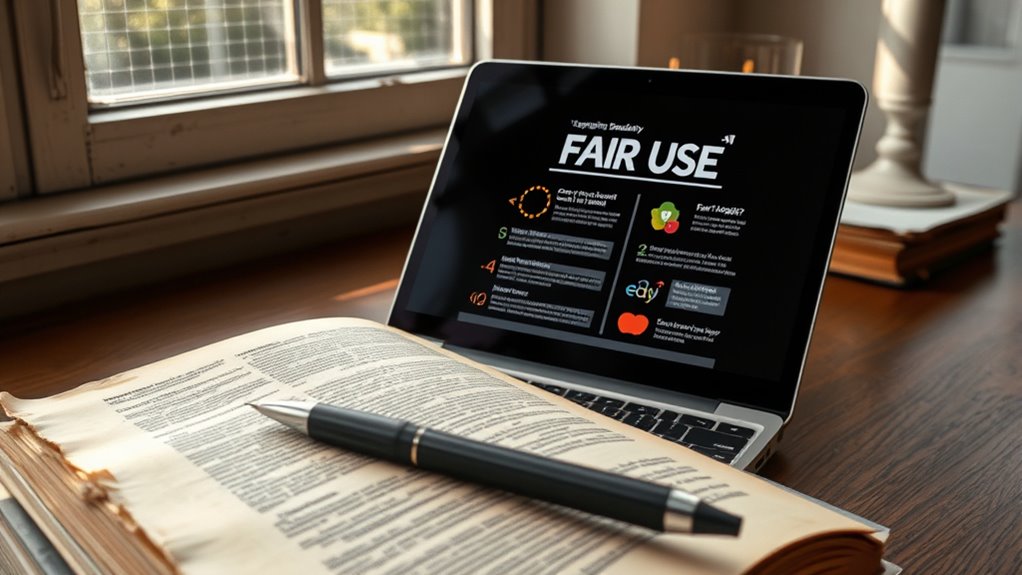
Have you ever wondered when it’s okay to use someone else’s work without permission? That’s where the concept of fair use comes into play. Fair use is a legal doctrine that allows you to use portions of copyrighted content without getting the owner’s explicit consent, but only under certain circumstances. It’s a nuanced area of copyright law, and understanding when your use qualifies can help you avoid legal trouble.
One key factor in determining fair use is whether your use is transformative. Transformative use means you’re adding something new, changing the original work’s purpose, or giving it a different context, rather than just copying it for the same reason. For example, if you take a short clip from a movie and use it in a parody or critique, you’re more likely to have a strong copyright defense because your work transforms the original. This transformation can often be enough to tip the scales in your favor, especially if your use doesn’t harm the market value of the original.
Transformative use adds new purpose or meaning, strengthening your fair use defense.
When you invoke fair use, you’re fundamentally claiming a copyright defense. This means if someone challenges your use, you can argue that your use falls within the boundaries of fair use, protecting you from infringement claims. The courts look at several factors to decide if your use is fair: the purpose and character of your use, the nature of the copyrighted work, the amount you used, and the effect on the market.
If your purpose is educational, commentary, criticism, or news reporting, you’re more likely to be protected. Similarly, using a small excerpt rather than the entire work and ensuring your use doesn’t compete with the original’s market value strengthens your case.
It’s vital to remember that fair use isn’t a free pass. It’s a defense you can raise if you’re sued, but it’s not a right to use copyrighted material freely. Courts will weigh all the factors carefully, and what qualifies as fair use in one case mightn’t in another.
When you’re considering using someone else’s work, ask yourself if your use is transformative — does it add new meaning or purpose? If it does, you may have a solid copyright defense. Always consider the context and purpose of your use, and when in doubt, seek legal advice or consider licensing the content. Additionally, understanding the scope of music therapy integration and sound healing science can help ensure your use of related materials aligns with fair use principles, especially when sharing educational or critique-based content.
Frequently Asked Questions
How Can I Determine if My Use Qualifies as Fair Use?
You can determine if your use qualifies as fair use by evaluating if your work is transformative, meaning it adds new meaning or message.
Think about whether your use could cause copyright infringement or impact the original market.
If your use is for commentary, criticism, or parody and transforms the content, it’s more likely to be fair use.
Always consider these factors to avoid copyright infringement issues.
What Are Common Mistakes to Avoid With Fair Use?
Like a knight in shining armor, avoid misinterpretation pitfalls and citation errors when using fair use. You might think you’re safe, but misunderstandings about what qualifies as fair use can lead to legal trouble.
Don’t assume all content is fair game; always accurately cite sources and understand the purpose of your use. By staying precise and informed, you protect yourself from common mistakes that could undermine your work.
Does Fair Use Apply to Digital and Online Content?
Yes, fair use applies to digital and online content. You need to understand digital rights and online protections when sharing or using material online.
Fair use allows you to incorporate excerpts for commentary, criticism, or educational purposes, but you must assess factors like purpose and amount used.
Be cautious, as misuse can lead to copyright issues, even in the digital domain. Always evaluate your content carefully to stay within fair use boundaries.
How Does Fair Use Differ Across Countries?
Imagine fair use as a passport, granting you access to content across borders. You’ll find international variations in how fair use is defined, with some countries adopting more flexible rules and others strict laws.
Legal enforcement differs too, making it essential to understand each nation’s specific standards. So, when using content globally, you must navigate these legal landscapes carefully to avoid crossing into infringement, respecting each country’s unique approach.
Can Fair Use Be Claimed for Commercial Purposes?
Yes, you can claim fair use for commercial purposes, but it’s more challenging.
Commercial use often faces stricter fair use limitations because courts see it as less transformative and more profit-driven.
To succeed, you need to prove your use adds new meaning or value.
Keep in mind that fair use isn’t a guarantee, especially in commercial contexts, so weigh the risks and consider alternative options.
Conclusion
Remember, knowledge is power, but with power comes responsibility. Fair use lets you share and learn from content without crossing legal lines, as long as you use it wisely. Respect the original creators and understand the limits. When you play it by the rules, you protect yourself and promote fair, ethical sharing. After all, a little caution now can save you from trouble later—better safe than sorry.