
🔍 Read the full analysis: 9 Best Wi-Fi 7 Routers For A More Flexible Home Network In 2027 on ThorstenMeyerAI.com

Get business pricing on tech for your team
- Business-only prices and quantity discounts
- Tax-exempt purchasing
- Multiple users, one account, clear invoices
TL;DR
A comparison of nine Wi-Fi 7 routers places the TP-Link Archer BE550 first for its balance of tri-band capacity and wired connections. The ASUS ROG Rapture GT-BE98 Pro targets demanding gaming setups, while several dual-band models offer simpler alternatives. Actual benefits depend on compatible devices, home layout, wired equipment and internet service.
A buyer’s guide from ThorstenMeyerAI.com ranks nine Wi-Fi 7 routers for different home-network needs, naming the TP-Link Archer BE550 its best overall choice for its tri-band design and mix of wired connections. The comparison also points to the ASUS ROG Rapture GT-BE98 Pro for households seeking quad-band capacity and gaming controls, and to dual-band models for simpler setups.
The list includes the TP-Link Archer BE550, Archer BE230, Archer BE400 and BE600; the ASUS ROG Rapture GT-BE98 Pro and RT-BE82U; and the NETGEAR BE9300, RS90 and RS140, alongside other Wi-Fi 7 router options. The guide assesses them by their two-, three- or four-band configurations, wired ports and feature sets, rather than treating advertised speed as a reliable prediction of household performance.
The BE550 gets the broad-use recommendation, while the GT-BE98 Pro is framed as a premium, more specialized option. The guide describes the BE230, BE400, RT-BE82U, RS90 and RS140 as dual-band choices for more straightforward networks, similar to other Wi-Fi 7 routers suited to home offices. It identifies the tri-band BE9300 and BE600 as alternatives to compare against the BE550, depending on a buyer’s client load, layout and wired requirements.
Those rankings are editorial assessments from the guide, not reported results from a controlled performance test. The source says it considered practical feature differences and the complexity of setting up and planning each network. It cautions that results vary with router placement, building materials, client hardware and internet service, and treats manufacturers’ advertised capabilities as selection clues rather than performance guarantees.
The 9 picks
- 1
 ASUS ROG Rapture GT-BE98 Pro Quad-Band WiFi 7 Gaming RouterView on Amazon →
- 2
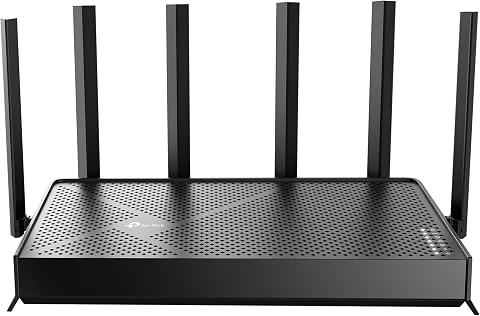 TP-Link Archer BE600 Tri-Band Wi-Fi 7 RouterView on Amazon →
- 3
 NETGEAR Nighthawk BE9300 Tri-Band WiFi 7 RouterView on Amazon →
- 4
 TP-Link Archer BE550 Tri-Band Wi-Fi 7 RouterView on Amazon →
- 5
 NETGEAR Nighthawk RS140 Dual-Band WiFi 7 RouterView on Amazon →
- 6
 ASUS RT-BE82U Dual-Band Wi-Fi 7 RouterView on Amazon →
- 7
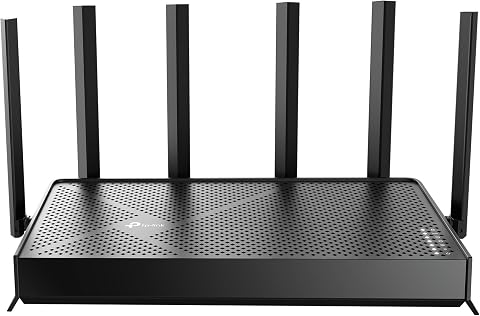 TP-Link Archer BE400 BE6500 Dual-Band Wi-Fi 7 RouterView on Amazon →
- 8
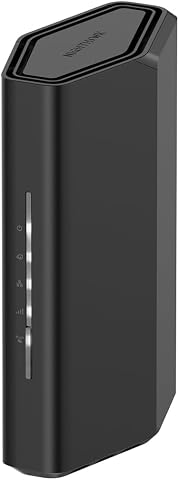 NETGEAR Nighthawk RS90 WiFi 7 Dual-Band RouterView on Amazon →
- 9
 TP-Link Archer BE230 Dual-Band Wi-Fi 7 RouterView on Amazon →
Choosing Bands for Your Household
The comparison matters because the Wi-Fi 7 label alone does not tell shoppers whether a router fits their home. Band count, wired ports and compatible clients can affect whether an upgrade provides useful capacity or adds features a household will not use. A tri-band router may suit a busy home with many active connections, while a smaller network may be better served by a dual-band model.
Wi-Fi 7 equipment can still connect older devices, according to the guide, but those clients do not gain every Wi-Fi 7 capability. Buyers with older phones and laptops may see less immediate benefit than households with compatible devices. And if a problem is weak coverage in a distant room, a higher-capacity router may not solve it: walls, floors and placement remain relevant, and mesh or access-point expansion may need consideration.
Products Worth Considering

LG UltraGear 32GX850A-B 32-inch 4K UHD Glossy OLED Gaming Monitor

LG UltraGear 34GX90SA-W 34-inch WQHD Curved OLED Gaming Monitor

LG UltraGear 32GS60QC-B 32-inch Curved QHD Gaming Monitor (180Hz, 1ms, 1000R, AMD FreeSync, HDR10)
As an affiliate, we earn on qualifying purchases.
How the Nine Models Differ
The guide organizes the options around a central tradeoff: more bands and features can offer greater flexibility but may bring extra cost, setup and planning. The BE550’s tri-band configuration is presented as a middle ground; the quad-band GT-BE98 Pro is aimed at a narrower set of demanding users. Dual-band models are not ranked as universally inferior: the guide positions them as potential fits for less complex networks.
It also advises checking port types and speeds against the actual internet plan and equipment, including computers, storage devices, consoles and switches. A fast wireless specification cannot remove a bottleneck in the wired connection. Before buying, users should check which devices support Wi-Fi 7, map wired connections and consider where the router can be placed. The source does not provide detailed benchmark figures, prices or testing conditions in the supplied material.
“The central tradeoff is whether you need extra bands and ports for busy households or can save space and complexity with a dual-band router.”
— ThorstenMeyerAI.com buyer’s guide
What the Rankings Cannot Establish
The source material does not give prices, test measurements, firmware versions or a detailed methodology for comparing real-world throughput. It is not possible from the supplied information to establish how the nine routers perform against one another in a controlled test or which is the best value at current prices. The ranking should be read as a feature-based recommendation, not a guarantee of speed or coverage.
Individual results will also depend on the devices connected, network congestion, home construction and service speed. The guide does not specify how much improvement a Wi-Fi 7 router would deliver in any particular home, nor whether every listed model supports the same expansion options. Buyers should verify current specifications and compatibility before purchase.
Check Your Network Before Buying
For shoppers, the next step is to compare the router’s current price and verified specifications with a short inventory of active wireless devices, wired equipment and coverage gaps. Check which devices support Wi-Fi 7 and whether the router’s ports match the internet plan and home gear. If the main issue is poor signal in one area, review mesh or access-point options rather than assuming a more expensive standalone router will fix it.
The supplied guide does not announce a follow-up test or a future product release. Its recommendations may change as prices, firmware and available devices change, so the models’ current specifications and availability should be checked at the point of purchase.
Key Questions
Which Wi-Fi 7 router does the guide rank first?
The guide names the TP-Link Archer BE550 its best overall pick, citing its tri-band design and practical mix of wired connections. This is the guide’s assessment, not a guarantee that it will perform best in every home.
Is a quad-band router necessary for most homes?
The guide presents the ASUS ROG Rapture GT-BE98 Pro as a specialist choice for demanding setups, with quad-band capacity and gaming-focused controls. It says many households may not need that scale or added complexity.
Will older devices benefit from a Wi-Fi 7 router?
Older Wi-Fi devices can connect, but they do not gain every Wi-Fi 7 feature. The immediate benefit depends on the capabilities of the devices that use the network.
Does a router with more bands guarantee better coverage?
No. Band count can help distribute wireless traffic, but it does not remove obstacles or guarantee a strong signal in every room. Placement, walls and floors affect coverage; mesh or access-point expansion may be worth comparing if a dead zone is the main problem.
What should shoppers check before choosing a model?
Check whether the router’s bands and ports suit your active devices, internet plan and wired equipment. Also confirm current pricing, device compatibility and any coverage-expansion options; the supplied comparison does not include detailed benchmark data or prices.
Source: ThorstenMeyerAI.com