
🔍 Read the full analysis: Tesla’s Cybertruck Shift: Making Space For Robotaxis on ThorstenMeyerAI.com

Get business pricing on tech for your team
- Business-only prices and quantity discounts
- Tax-exempt purchasing
- Multiple users, one account, clear invoices
TL;DR
Elon Musk said Tesla plans to wind down Cybertruck production at Gigafactory Texas around mid-2027 to make room for more Cybercab production. The post does not say whether the truck will be built elsewhere or what will happen to workers, buyers or open orders. Tesla’s reported deliveries for its group of “other models,” which includes the Cybertruck, fell to 8,295 in the third quarter of 2026.
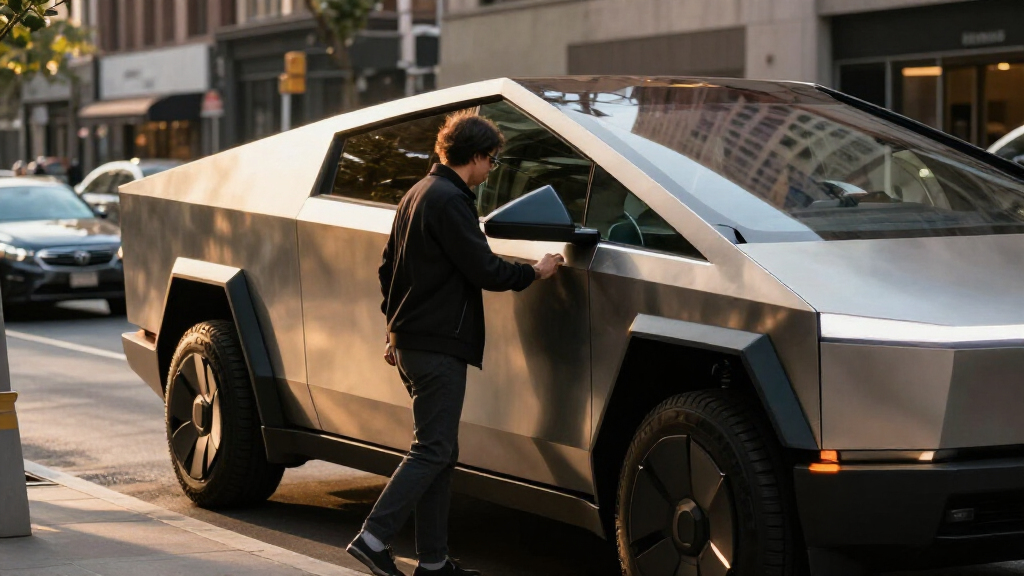
Tesla plans to wind down Cybertruck production at Gigafactory Texas around mid-2027 to make room for increased Cybercab production, CEO Elon Musk said in a November 6 post on X. The statement identifies a planned change at the Texas factory, but does not say the Cybertruck model will be discontinued or explain what will happen to customers, open orders or workers.
Musk wrote that Tesla would be “winding down production of the Cybertruck at Gigafactory Texas around the middle of next year to make room for increased Cybercab production.” The post was published at 06:30 UTC on November 6, or 00:30 in Austin. It was the announcement’s central source; the supplied account says Tesla issued no accompanying press release and made no Cybertruck-specific SEC filing that day.
Later that morning, Musk replied “True, but the Cybertruck fleet will be around for a long time” to a user describing the vehicle as discontinued. That response suggests existing vehicles will remain in use, but it does not clarify future production or sales. Tesla has not said whether it could build the truck at another plant. The Financial Times characterized the move as Tesla preparing to “axe” the truck, while the wording Musk used was narrower: winding down production at one facility.
Tesla does not publish Cybertruck deliveries separately. Its “other models” category combines the truck with the Model S and Model X. That group recorded 8,295 deliveries in the third quarter of 2026, down from 15,933 in the same quarter a year earlier, a 48% year-over-year decline. Tesla reported 7,004 vehicles produced in the category in the third quarter. Those figures cannot establish the Cybertruck’s individual sales or production totals.
Infographic 01 · From car lines to robot lines
Two car lines make room for robots and robotaxis
Tesla's own numbers: a truck line built for far more than it sold, and factory space that now goes to machines that drive or work on their own.
“Other models” deliveries in the third quarter of 2026, down 48% from 15,933 a year earlier. The group includes the Cybertruck, Model S and Model X. Tesla lists Cybertruck capacity of more than 125,000 a year.
“Other models” deliveries per quarter
Cybertruck, Model S and Model X together; Tesla does not report the truck alone
Q3 2026 production of “other models”: 7,004, a yearly pace of about 28,000.
Sources: Tesla Q3 2026 Update · Tesla 10-Q, Q3 2026 · Q1 2026 Update · Q2 2026 Update · Q3 2025 Update · Q3 2024 Update · Elon Musk on X, 6 Nov 2026.
Powered by Thorsten Meyer AI
Texas Factory Space Shifts to Robotaxis
The announcement places the Cybertruck’s factory space in the path of Tesla’s planned expansion of Cybercab production. It is a concrete sign of competing priorities at the Texas plant: capacity devoted to a pickup will be reduced as the company makes room for a vehicle intended for its robotaxi plans. How much space or production capacity will change has not been specified.
The shift also matters to Cybertruck buyers and the company’s manufacturing strategy. Tesla lists installed Cybertruck capacity at Gigafactory Texas of more than 125,000 vehicles a year, but that is a capacity figure, not actual output or sales. The company’s combined “other models” results show a much smaller overall delivery total, although they cannot be used to calculate Cybertruck demand on their own. If the Texas line is the only source of new trucks, as the supplied account says is currently known, a wind-down there could affect future availability. Tesla has not confirmed whether another production site is planned.
The move fits a broader reallocation of factory lines toward robotics. Tesla’s supplied updates say production of the Model S and Model X ended in Fremont in 2026, with the space used for Optimus, its humanoid robot. The Cybertruck decision would direct Texas capacity toward Cybercab instead. That is a shift in what Tesla’s factories are being asked to build, not proof that robotaxi or robot production will meet any particular output or revenue target.
Products Worth Considering

Kindle Paperwhite Signature Edition 32GB (2024) – Auto-adjusting front light, wireless charging, weeks of battery life – Metallic Black

Bose Lifestyle Ultra Wireless Home Speaker

Samsung Galaxy Tab A7 Lite 8.7-Inch 32GB Wi-Fi Tablet, Gray
As an affiliate, we earn on qualifying purchases.
Tesla’s Changing Factory Plans
Tesla’s own quarterly reporting groups the Cybertruck with the Model S and Model X, making the truck’s standalone performance difficult to assess from company data. The group’s third-quarter 2026 delivery figure of 8,295 was its lowest value in the quarterly series provided, but it includes models other than the Cybertruck. Tesla has listed annual Cybertruck capacity above 125,000 at the Texas factory since its fourth-quarter 2023 update. Capacity describes what a line is designed to produce, not how many vehicles it has built or sold.
The announcement follows other changes in Tesla’s production footprint. According to the supplied source, the Model S and Model X lines in Fremont were decommissioned in 2026, with Optimus production beginning at the site. Tesla also began Cybercab production in 2026, while its robotaxi pilot in Austin began in June 2025. Those developments provide context for Musk’s stated reason for the Texas change: making room for more Cybercab production.
Tesla’s track record on the timing of its programs has been mixed, according to the same account. The Cybertruck arrived about two years later than originally expected. The Austin robotaxi pilot began in June 2025 as planned, and Cybercab production began in 2026 as planned. Tesla had said Optimus robots would perform useful work “across our factories” in 2025; the source reports that the company announced its first production-quality robots in October 2026. These examples offer context for interpreting future schedules, but do not establish whether the mid-2027 Cybertruck plan will proceed on time.
“Tesla will be winding down production of the Cybertruck at Gigafactory Texas around the middle of next year to make room for increased Cybercab production”
— Elon Musk, in a November 6 post on X
The Truck’s Future Beyond Texas
Tesla has not said whether Cybertruck production will stop entirely, move to another plant or continue at a different scale. Musk’s reference to the fleet remaining “around for a long time” concerns the vehicles already in service and does not answer whether new trucks will be built. The company also has not provided a detailed timetable beyond “around the middle” of 2027.
There is no company breakdown in the supplied material for Cybertruck orders, deliveries, production costs or current inventory. Tesla has not addressed the effect on open orders, future customer deliveries, employees assigned to the line or supplier contracts. The combined “other models” figures cannot fill those gaps because they include the Model S and Model X for much of the reported period, and Tesla does not separately report Cybertruck totals.
The amount of Texas factory space to be reassigned, the planned Cybercab production rate and the timing of any operational changes also remain unspecified. Tesla did not provide further comment in the account supplied; Reuters reported that the company did not immediately respond to a request for comment.
Details Expected Before Mid-2027
The stated target is a wind-down at Gigafactory Texas around mid-2027. Tesla has not published a more detailed schedule, so the next signs of progress are likely to come through further company statements, production updates or regulatory disclosures. The supplied account says Tesla had not filed a Cybertruck-specific SEC notice on November 6.
Readers and prospective buyers will need clarification from Tesla on whether the model will continue at another site, how existing orders will be handled and what the change means for production workers. Future quarterly reports may provide information about the broader vehicle business, but unless Tesla changes its reporting, the “other models” category will not show Cybertruck sales separately.
The key development to watch is whether Tesla follows through on the factory change and expands Cybercab production in the space it frees. The company has not stated a production target for the Cybercab or supplied details that would show how quickly the Texas line will be repurposed.
Key Questions
Is Tesla discontinuing the Cybertruck?
That has not been confirmed. Musk said production at Gigafactory Texas would wind down around mid-2027. He did not say whether production would end everywhere or move to another site.
When is the Texas production change planned?
Musk said it would happen around the middle of 2027. Tesla has not given a more precise date or a step-by-step schedule.
Why is Tesla changing the Texas line?
Musk said the factory space would be used for increased Cybercab production. Tesla has not specified the amount of space being reassigned or a Cybercab production target.
How many Cybertrucks did Tesla sell in the third quarter of 2026?
Tesla does not report Cybertruck deliveries separately in the supplied figures. It reported 8,295 deliveries for “other models” in the quarter, a category that includes the Cybertruck, Model S and Model X.
What has Tesla said about current Cybertruck owners?
Musk said the “Cybertruck fleet will be around for a long time.” The statement refers to the fleet but does not explain future parts support, open orders or whether new vehicles will be produced.
Source: ThorstenMeyerAI.com