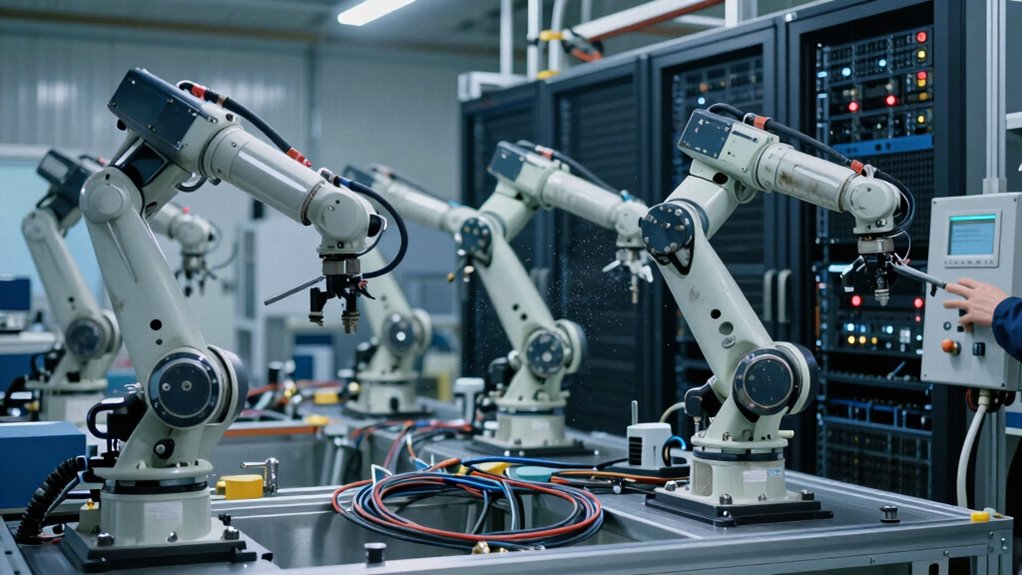

Most automation setups break at scale because managing complex workflows becomes increasingly difficult as organizations grow. Small glitches, overlooked details, or failed error handling can escalate into big problems without proper oversight. Without resilient and adaptable systems, failures spread easily and cause downtime. Poor documentation and lack of continuous monitoring make troubleshooting harder. Keep in mind, understanding how to prevent these issues can help you keep your automations running smoothly as your organization expands.
Key Takeaways
- Increased complexity and interconnectedness of workflows make automation harder to manage and prone to overlooked issues.
- Small glitches or failures can cascade, causing significant disruptions without robust error handling.
- Lack of proper documentation, version control, and centralized monitoring hampers troubleshooting and maintenance.
- Automation systems often lack resilience, making them vulnerable to network issues, data errors, or unexpected changes.
- Underestimating manual oversight leads to unnoticed problems that escalate, compromising system stability at scale.

As organizations grow, managing automation setups at scale becomes increasingly complex but also essential for maintaining efficiency. When you scale up automation, it’s tempting to rely heavily on pre-set workflows and scripts, but this often leads to overlooked details that can cause failures. Manual oversight becomes a critical factor—if you don’t continuously monitor and adjust your systems, small issues can snowball into major disruptions. Automation at scale isn’t just about deploying tools; it’s about ensuring those tools work seamlessly together over time. Without proper oversight, you risk missing errors or misconfigurations that can halt operations unexpectedly. Incorporating feedback loops into your processes can help identify issues early and facilitate ongoing improvements.
Error handling is another area where many setups falter at scale. When your automation grows, the number of potential failure points multiplies exponentially. Small glitches—like incorrect data input, network hiccups, or unexpected input formats—can bring entire workflows to a halt if your error handling isn’t robust enough. Many teams set up automation to run passively, assuming everything will work flawlessly, but this assumption is risky. You need a proactive approach that catches errors early and recovers gracefully. If your error handling isn’t well-designed, your system might crash or produce inaccurate results, which could have serious consequences. Additionally, system resilience is crucial to prevent failures from cascading across interconnected systems, especially at larger scales. Regularly reviewing and updating your automation strategies helps ensure they remain effective as conditions evolve. Building in adaptive controls can further help systems respond dynamically to unexpected changes, reducing manual intervention needs.
Additionally, scaling automation without proper documentation and version control often leads to chaos. When multiple teams or individuals tweak workflows without clear documentation, it becomes difficult to troubleshoot issues or understand how different parts of the system interact. This lack of clarity hampers error handling and increases the manual oversight needed to keep everything running smoothly. Over time, small misalignments can cause systemic failures, especially if you don’t have a centralized way to monitor and manage your automation assets. Furthermore, neglecting to incorporate continuous monitoring and maintenance can cause small issues to escalate unnoticed, ultimately leading to system failures. In essence, most automation setups break at scale because they underestimate the importance of continuous manual oversight and robust error handling. As your automation expands, so do the complexities, and without proactive strategies to manage these challenges, failures are inevitable. To succeed at scale, you need to anticipate issues, build resilient workflows, and maintain vigilant oversight—otherwise, the very automation meant to streamline your processes ends up becoming a source of instability.

Mastering Python Networking: Utilize Python packages and frameworks for network automation, monitoring, cloud, and management
As an affiliate, we earn on qualifying purchases.
As an affiliate, we earn on qualifying purchases.
Frequently Asked Questions
How Can I Prevent Automation Failures During Scale-Up?
To prevent automation failures during scale-up, you should prioritize strong automation governance, ensuring clear guidelines and accountability. Regularly monitor scalability metrics to identify potential bottlenecks early. Automate testing and validation processes to catch issues before they escalate. Additionally, involve cross-functional teams throughout the process to adapt and optimize workflows. By maintaining governance and tracking metrics, you create a resilient system that scales smoothly and reduces failure risks.
What Are Common Signs of Automation Breakdown at Scale?
You notice errors creeping in, despite smooth operations earlier. Automation breakdown signs often include increased error rates, inconsistent outputs, and delays. You’ll spot failures in error tracking and process optimization, revealing that your system struggles under scale. These signs indicate that your processes aren’t adapting well, highlighting the need for more robust error detection and continuous process improvement to maintain efficiency as you grow.
How Does Team Size Impact Automation Stability?
As your team size grows, automation stability can suffer if team communication isn’t clear and process standardization isn’t maintained. Larger teams often introduce more variables and potential points of failure, making it harder to keep everyone aligned. Without consistent processes, automation scripts may become outdated or misaligned, leading to breakdowns. To prevent this, prioritize clear communication channels and standardized procedures, ensuring everyone understands and follows the same protocols at scale.
What Tools Help Maintain Automation at Large Scale?
You should use tools like cloud integration platforms and real-time monitoring systems to keep automation stable at large scale. Cloud integration simplifies connecting various services and scales effortlessly, while real-time monitoring helps you spot issues early before they escalate. These tools guarantee your automation remains reliable, adaptable, and efficient, even as your team and infrastructure grow. Implementing them minimizes downtime and maintains seamless operations.
How to Prioritize Automation Tasks for Scalable Success?
To prioritize automation tasks for scalable success, you should first develop a clear automation strategy that aligns with your business goals. Focus on process optimization by identifying repetitive, time-consuming tasks that yield the greatest impact. Use data-driven insights to rank these tasks based on potential efficiency gains. Start small, measure results, and iterate, ensuring each automation step adds value and supports long-term growth.

Command-Line Rust: A Hands-On Guide to Modern CLI Engineering, Workflow Automation, and Cross-Platform Tooling
As an affiliate, we earn on qualifying purchases.
As an affiliate, we earn on qualifying purchases.
Conclusion
As you scale your automation, you might expect simplicity to persist, but instead, complexity often takes hold. While automation promises efficiency, it can become a tangled web of broken links and overlooked errors. You’re caught between the allure of seamless processes and the reality of fragile systems. Embrace that tension—because only by understanding where automation falters at scale can you build resilient, adaptable setups that stand the test of growth.

Git Workflow Fundamentals: A Practical Guide to Version Control, Branching Strategies, Collaboration, and Code Management for Modern Software Development
As an affiliate, we earn on qualifying purchases.
As an affiliate, we earn on qualifying purchases.
Incident Management for Industrial Control Systems: Safeguard industrial control systems by mastering critical infrastructure cybersecurity
As an affiliate, we earn on qualifying purchases.
As an affiliate, we earn on qualifying purchases.