🔍 Read the full analysis: The AI Idea Behind A Twilight Dial For Noctilucent Clouds on ThorstenMeyerAI.com

Get business pricing on tech for your team
- Business-only prices and quantity discounts
- Tax-exempt purchasing
- Multiple users, one account, clear invoices
TL;DR
ThorstenMeyerAI.com describes “Noctilucent — NLC Watch at 83 km,” an AI-built exhibition website built around an interactive solar-depression dial. The site is a fictional field journal, not a live observing service; its subject, high-altitude noctilucent clouds, is real.
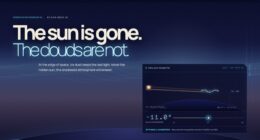
ThorstenMeyerAI.com has presented “Noctilucent — NLC Watch at 83 km,” an AI-built exhibition website that uses an interactive twilight dial to show how high-altitude clouds can remain illuminated after the ground below is dark. The page is a fictional field journal, not a real research project or live scientific service, though the clouds it depicts are real.
The site’s central control represents the Sun’s position six to 16 degrees below the horizon. As a visitor moves the dial, the page changes several visual elements together, including sky brightness, shadow, cloud glow, ambient color, grain and the flare at the horizon. The source describes the effect as a shared lighting model, rather than a control that changes only one decorative feature.
Procedural graphics build the scene in the browser. Canvas generates the twilight sky, stars and layered wave paths, while cloud forms are drawn with different patterns for billows, whirls and bands. Inline SVG supplies diagrams and an altitude illustration; CSS adds details such as instrument edges and light rays. The source says the work uses no image assets.
A later interaction asks visitors to hold a control while ground-level haze fades and the cloud band at 83 kilometres becomes clearer. Releasing the control early makes the sighting fade. The described interaction supports pointer, keyboard and touch-like key input. The page also includes sections on cloud forms, ice crystals, seasonal observing and fictional station logs.
Room 162 / 175 · Interactive design study
The AI Idea Behind a Twilight Dial for Noctilucent Clouds
A browser-built field journal turns one scientific variable—the Sun’s position below the horizon—into a page-wide lighting model. Its clouds are real; its observing network and journal are fictional.
01 / The idea
Turn twilight into an instrument
Noctilucent clouds can remain sunlit after sunset at ground level. The dial makes that contrast visible by linking the sky illustration and supporting details to the same changing solar angle.
Sun below the horizon
The control represents solar depression from six to sixteen degrees, turning an abstract angle into a visual sequence.
Page-wide illumination
Sky brightness, ambient color, shadow, cloud glow, grain and horizon flare respond as parts of one lighting model.
Explain, not observe
The scene offers a visual explanation of the phenomenon. It does not provide forecasts, verified sightings or scientific measurements.
02 / A shared lighting model
As sunlight recedes, the scene changes
The interaction connects ground-level darkness with lingering illumination in the high cloud layer. The range below is the control’s conceptual sweep, not an observing scale.
Low below, lit above. The ground darkens while high-altitude ice can still catch sunlight, setting luminous clouds against a deepening sky.
The design account describes this as a single meaningful variable influencing the whole experience, rather than a dial that changes only the hero artwork.
“The central lesson is to make one meaningful variable influence the whole experience, not just the hero artwork.” ThorstenMeyerAI.com project description
03 / Built in the browser
Procedural graphics shape the sky
The project description says the page uses no image assets. Canvas, inline SVG and CSS construct its sky, cloud forms, diagrams and instrument-like details.
Sky & stars
Canvas generates the twilight sky, star field and layered wave paths.
Cloud forms
Billows, whirls and bands use distinct procedural drawing patterns.
Diagrams
Inline SVG supplies diagrams and an illustration of the featured altitude.
Final details
CSS contributes instrument edges, light rays and the journal-like finish.
04 / The patient interaction
Hold, wait, reveal
A later interaction asks visitors to hold a control while ground haze fades and the cloud band becomes clearer. Releasing early lets the sighting fade, making patience part of the experience.
“Patience becomes part of the interface rather than just a subject in the text.” ThorstenMeyerAI.com project description
05 / Read the claims carefully
What the demo does—and does not—verify
The source describes intended design behavior and a fictional observing journal. It supplies no independent validation, usability results or live observation records.
| Topic | What the description says | Evidence boundary |
|---|---|---|
| Cloud subject | ✓ Noctilucent clouds are real, high-altitude ice clouds. | General subject matter; no observations are presented. |
| Stations & logs | ~ The journal network and station logs are fictional. | Not records of verified sightings or real stations. |
| Accessibility | ~ Reduced motion and hidden-tab pausing are described. | No independent accessibility or performance test results supplied. |
| Live service | ✕ The project says it is not a live scientific service. | No forecasts, measurements or current conditions. |
| Visitor data | ~ Collection practices are not stated in the supplied material. | Whether interaction data is collected remains unclear. |
06 / Fictional watch · real clouds
Art direction frames the field journal
The exhibition blends real mesospheric science with invented stations and logs, including fictional locations described as adjacent to Kiruna and the Shetland Islands.
Electric blue to near-black
Ice catching sunlight meets violet night tones below; a cream-colored log section shifts the mood toward a paper journal.
Field notes & coordinates
The project account names Manrope for reading text and Major Mono Display for coordinates and measurements.
Three creative passes
The design account describes page building, a clarity and interaction critique, then an art-direction review.
07 / Key questions
Quick answers
Is NLC Watch a real observing service?
No. The project describes a fictional field journal, not a live service or real company.
Are noctilucent clouds real?
Yes. They are high-altitude ice clouds that can remain sunlit after the ground enters darkness.
What does the dial change?
It represents the Sun six to sixteen degrees below the horizon and links that position to light, color, shadow and cloud glow.
Does it show actual sightings?
No verified sightings or live measurements are reported. The stations and logs are fictional.
How was the scene made?
The source describes Canvas-generated skies and cloud forms, inline SVG diagrams and CSS details, with no image assets.
Can the claims be independently checked?
The supplied material provides no external scientific references, independent testing or evidence that the fictional logs represent real data.
Turning Twilight Into an Instrument
The design’s news value is its attempt to make a scientific relationship legible through interaction. Noctilucent clouds can remain sunlit after sunset at ground level; changing the dial lets visitors see that contrast represented across an entire page. The idea is not simply to explain the phenomenon in text, but to make solar depression the variable that connects the sky illustration, diagrams and supporting copy.
That approach may help visitors understand why the clouds appear against a darkening sky without mistaking the website for an observation tool. The distinction matters: the project offers a visual explanation and design exercise, not verified sightings, forecasts or scientific measurements. Its fictional journal framing provides atmosphere, but also makes clear that the named observing network and stations are invented.
The source also describes accessibility and performance choices, including animation that stops when the page is hidden and a still state for people who prefer reduced motion. Those are implementation claims made in the project description; no independent usability or performance evaluation is supplied.
As an affiliate, we earn on qualifying purchases.
A Fictional Watch, Real Clouds
The project identifies itself as room 162 of 175 in a series on ThorstenMeyerAI.com. Its title, “NLC Watch at 83 km,” refers to the approximate altitude featured in the design brief. The brief calls the observing network fictional and pairs real mesospheric science with invented stations and logs, including locations described as adjacent to Kiruna and the Shetland Islands.
The page’s art direction uses electric blue for ice catching sunlight, violet and near-black for the night below, and a cream-colored field-log section for a shift toward a paper-journal mood. Manrope is named for the reading text and Major Mono Display for coordinates and measurements. The accompanying design account says the work was developed in three passes: building the page, critiquing it for clarity and interaction, then reviewing it from an art-direction perspective.
The source presents this as a creative web-design project, rather than a report of a new scientific discovery. It provides a construction guide and implementation notes, but the supplied material does not include external scientific references, independent testing, or evidence that the fictional observations correspond to real data.
““A fictional field journal for a fictional observing project, not a real company or live scientific service.””
— ThorstenMeyerAI.com project description
As an affiliate, we earn on qualifying purchases.
What the Demo Does Not Verify
The supplied material does not state when the page was published or provide independent confirmation of its implementation, accessibility or frame-rate performance. It describes intended behavior, including reduced-motion support and pausing animation when a browser tab is hidden, but does not report test results.
It is also unclear whether any live version remains available or whether the page collects visitor interaction data. The source refers readers to a live site and a design guide, but the material provided here does not include links or operational details. No observation records, measurement methods or scientific validation are presented; the station logs and network are identified as fictional.
astronomy binoculars for star gazing
As an affiliate, we earn on qualifying purchases.
As an affiliate, we earn on qualifying purchases.
The Design Guide and Live Page
The project description points readers to the rendered room and an accompanying design guide covering the lighting model, procedural graphics and animation behavior. The next step for readers seeking to inspect the work is to visit those materials, if available, and distinguish the interactive illustration from a scientific monitoring service.
No further release, research milestone or independent review is announced in the supplied source. Any claims about real cloud sightings or current observing conditions would require separate, attributable scientific or observational sources.
As an affiliate, we earn on qualifying purchases.
Key Questions
Is NLC Watch a real cloud-observing service?
No. The project describes NLC Watch as a fictional field journal and says it is not a live scientific service or real company.
Are noctilucent clouds real?
Yes. The project’s subject is real: noctilucent clouds are high-altitude ice clouds that can remain sunlit after the ground has entered darkness.
What does the twilight dial change?
It represents the Sun between six and 16 degrees below the horizon and updates elements such as sky light, cloud glow, shadows, color and horizon flare.
Does the page show actual cloud observations?
The source presents the site as an interactive illustration with fictional stations and logs. It does not say that the page displays verified sightings or live measurements.
How was the visual scene made?
The project description says the sky and cloud forms are generated with Canvas, diagrams use inline SVG, and CSS supplies additional visual details. It says the page does not use image assets.
Source: ThorstenMeyerAI.com
Halloween Picks
halloween
As an affiliate, we earn on qualifying purchases.