
📊 Full opportunity report: SpaceX Owns Every Layer of AI Now. The Model Is Still the Weak Link. on ThorstenMeyerAI.com — validation score, market gap, and execution plan.
TL;DR
SpaceX has completed its acquisition of Cursor, owning every layer of the AI stack from hardware to applications. Despite this, the core AI model remains a weak link, highlighting ongoing challenges in AI development.
SpaceX has finalized its $60 billion all-stock acquisition of Cursor, a profitable AI coding application, giving the company control over every layer of the AI stack—hardware, data centers, research, models, and applications. This move positions SpaceX as a uniquely integrated AI conglomerate, but the AI model itself remains a weak link, highlighting ongoing challenges in AI development.
On June 16, SpaceX announced the completion of its acquisition of Cursor, a leading AI coding platform founded in 2022. The deal consolidates SpaceX’s control over the entire AI infrastructure, including hardware, data centers, research labs, and a profitable application used by major tech firms. The transaction is all-stock, with the deal expected to close in the third quarter of 2026, after which Cursor becomes a wholly owned subsidiary.
Cursor, which generated approximately $4 billion in annual revenue, had previously resisted offers from OpenAI and Microsoft, emphasizing independence. The company trained its latest model on tens of thousands of xAI chips, and some of its engineers have moved to Elon Musk’s xAI team, signaling close integration.
While owning every layer of AI infrastructure is rare and gives SpaceX a formidable position, the company’s core AI model—Grok—remains underwhelming in performance. Industry insiders note that despite its hardware and data assets, the model’s weak performance is a bottleneck, and the company continues to face challenges in developing a truly competitive AI model.
SpaceX owns every layer
of AI now
The $60B Cursor buy completes the stack: power, compute, research, model, app, distribution. But owning every layer isn’t winning every layer — and the model is the weak one.
(Anysphere)
You can buy a coding app and a model team. You can’t buy the research lead that makes your foundation model the one everyone else builds on — which is why Anthropic pays Musk $1.25B/month, not the other way around. Owning every layer bought SpaceX the right to attempt the hard thing. It hasn’t done it yet.
Implications of SpaceX’s AI Infrastructure Control
This acquisition signifies a major shift in the AI industry, with SpaceX establishing itself as the most vertically integrated AI company in the West. Controlling hardware, data centers, research, and applications provides a strategic advantage, particularly in the race for AI dominance.
However, the persistent weakness of the core AI model underscores a critical bottleneck. Despite owning the infrastructure, SpaceX’s AI capabilities still lag behind leading competitors like OpenAI and Google, which have more mature models. This highlights that hardware and data alone are insufficient without advanced, reliable AI models to deliver real-world value.
For the broader industry, this move could accelerate consolidation and intensify competition, but it also exposes the ongoing challenge of developing robust AI models that can fully leverage infrastructure investments.

ELECROW CrowPi 3 AI Learning & Development Station with Raspberry Pi 5 16GB
- Complete Raspberry Pi 5 16GB Kit: Includes Raspberry Pi 5 and CrowPi 3 for AI projects
- Touchscreen and Camera: 4.3-inch touch display with 2MP camera and microphone
- AI Interaction Capabilities: Supports visual and voice recognition for interactive learning
As an affiliate, we earn on qualifying purchases.
As an affiliate, we earn on qualifying purchases.
Background on SpaceX’s AI Infrastructure and Cursor Acquisition
In June 2026, SpaceX announced its intention to acquire Cursor, a profitable AI coding platform, for $60 billion in all-stock. The deal followed a period of rapid expansion in AI infrastructure, including the deployment of the Colossus supercomputers in Memphis, which now run approximately 555,000 Nvidia GPUs with a capacity near 2 gigawatts. SpaceX’s ambition includes deploying AI satellites as orbital data centers, integrating compute, power, research, and application layers into a single ecosystem.
Prior to the acquisition, Cursor had trained its models on tens of thousands of xAI chips and had attracted interest from tech giants like Microsoft and Google. It was also operating its hardware at low utilization, prompting a shift to leasing excess compute to other labs, including Anthropic and Google, generating substantial revenue from renting out its infrastructure.
With this acquisition, SpaceX aims to unify hardware, research, and application layers under its control, creating a vertically integrated AI ecosystem. However, despite this extensive control, the core AI model—Grok—remains underperforming compared to industry leaders, illustrating that infrastructure alone does not guarantee AI success.
“We’re building the most integrated AI ecosystem in the world, but we recognize the AI model is our next big challenge.”
— Elon Musk, via public statement

AI Systems Performance Engineering: Optimizing Model Training and Inference Workloads with GPUs, CUDA, and PyTorch
As an affiliate, we earn on qualifying purchases.
As an affiliate, we earn on qualifying purchases.
Unresolved Challenges in AI Model Performance
It is still unclear how much the weak performance of the Grok model will improve with further development or whether SpaceX’s infrastructure investments will translate into a competitive AI product. The company’s plans to enhance the model are not publicly detailed, and industry insiders question how quickly and effectively these improvements can be achieved.
Additionally, the long-term impact of leasing excess compute to rivals and the strategic value of owning the entire infrastructure versus developing a superior AI model remain open questions.

Coding with AI For Dummies (For Dummies: Learning Made Easy)
As an affiliate, we earn on qualifying purchases.
As an affiliate, we earn on qualifying purchases.
Next Steps in SpaceX’s AI Strategy and Model Development
SpaceX is expected to focus on improving the Grok model’s performance in the coming months, leveraging its extensive compute resources and research capabilities. The company may also accelerate efforts to develop a more advanced, autonomous AI model to fully capitalize on its infrastructure investments.
Regulatory approvals for the Cursor acquisition are anticipated in Q3 2026, after which Cursor will operate as a subsidiary. Industry observers will monitor how SpaceX integrates its AI assets and whether it can overcome the current limitations of its core models.
Further, the company’s plans to deploy orbital data centers and expand its AI satellite network could reshape the industry’s hardware and infrastructure landscape, but the success of these initiatives depends heavily on the AI models’ capabilities.
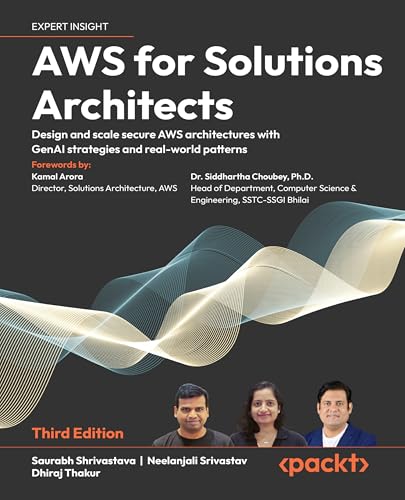
AWS for Solutions Architects: Design and scale secure AWS architectures with GenAI strategies and real-world patterns
As an affiliate, we earn on qualifying purchases.
As an affiliate, we earn on qualifying purchases.
Key Questions
Why did SpaceX acquire Cursor?
SpaceX acquired Cursor to gain control over a profitable AI application, its underlying research, and hardware, aiming to build a fully integrated AI ecosystem.
What is the significance of owning every layer of AI?
Owning all layers—from hardware to applications—provides strategic control and potential cost advantages, but does not guarantee AI performance or dominance.
Why is the AI model still considered weak?
Despite extensive infrastructure and data, the Grok model’s performance remains below industry standards, limiting its competitive potential.
What are the risks of leasing compute to rivals?
Leasing excess compute generates revenue but may also entrench competitors and expose proprietary hardware to third-party use, complicating the company’s strategic position.
What are the next steps for SpaceX’s AI ambitions?
The company will likely focus on improving the Grok model’s capabilities and integrating its infrastructure to develop a more competitive AI product while expanding its orbital data center plans.
Source: ThorstenMeyerAI.com