
TL;DR
Nvidia has released Nemotron 3 Diarization, a freely available model with about 100 million parameters that tracks up to eight speakers, including overlapping speech. It leads the cited VoiceArena benchmark at a 14.72% diarization error rate, though performance can worsen with more speakers, noisy audio, reverberation or shorter buffers.
Nvidia has released Nemotron 3 Diarization, a freely available model that identifies who is speaking at each moment in recorded or live audio. The roughly 100-million-parameter system can distinguish up to eight speakers and detect overlapping speech, giving developers a way to add speaker labels to audio workflows.

Get business pricing on tech for your team
- Business-only prices and quantity discounts
- Tax-exempt purchasing
- Multiple users, one account, clear invoices
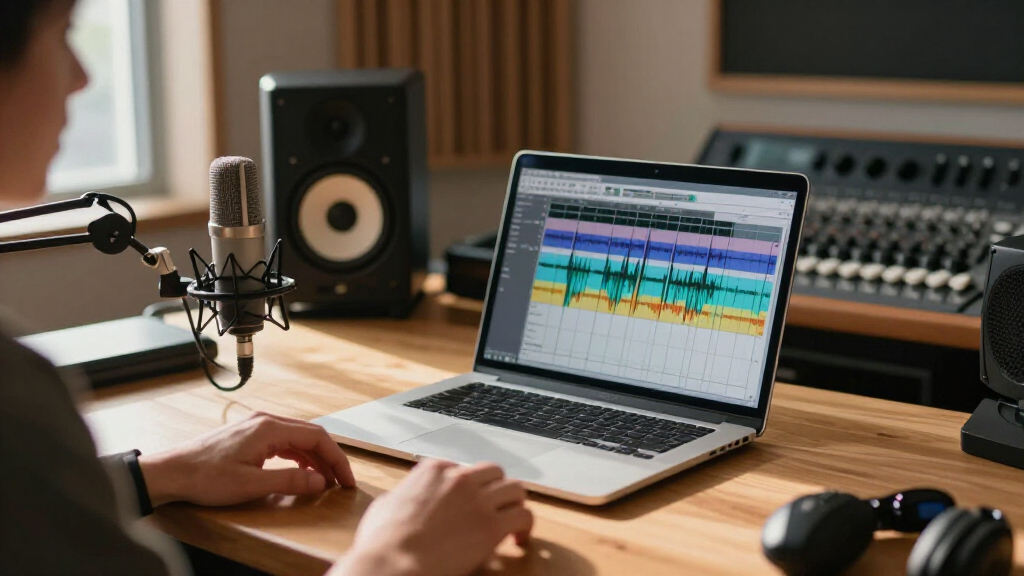
The model’s task is diarization: assigning portions of an audio stream to different speakers. It can process both recordings and live audio, and Nvidia’s release makes its model weights freely available. Its speaker count is capped at eight; the source report says that adding participants, background noise or reverberation can raise error rates.
Nemotron 3 can be paired with an automatic speech recognition system such as Nvidia’s Parakeet to produce transcripts with speaker labels. Those labels identify speakers anonymously, using names such as “speaker_2”, rather than identifying people by their real-world names. The available material does not describe a feature that determines a speaker’s identity.
The reported VoiceArena Diarization-Bench result is 14.72% diarization error rate (DER), compared with 19.3% for the next-best system listed in the report. On that benchmark, Nemotron 3 is currently ranked first. The report also says it reduced error by an average of 41% compared with Streaming Sortformer across eight test scenarios when using a 1.04-second audio buffer.
Speaker Labels for Live Audio
Speaker attribution can make transcripts easier to follow when several people take part in a meeting, interview or discussion. A system that handles overlapping speech as well as single-speaker turns could help organize recordings where speakers interrupt or talk at once. Nemotron 3’s support for live audio also makes it relevant to applications that process conversations as they happen, although the source material does not identify specific products or deployments.
The reported benchmark result offers developers a performance point of comparison, while the freely available weights give them access to the model for evaluation and use. The result does not by itself establish how the model will perform on every language, recording setup or real-world conversation. Noise, reverberation and participant count remain relevant limits, according to the report.
Products Worth Considering

Bose QuietComfort Headphones (2nd Gen), Wireless Noise-Cancelling Over-Ear Headphones, Eucalyptus Green

Sony WH-1000XM6 Wireless Noise-Cancelling Headphones (Black)

Sony WH-1000XM5 Wireless Noise-Canceling Over-Ear Headphones, Black, International Version
As an affiliate, we earn on qualifying purchases.
Buffers Shape Processing Speed
Speaker diarization and speech recognition are related but distinct tasks. Recognition converts audio into words; diarization estimates which speaker said each portion and when. Pairing the two can put speaker labels beside recognized words, but anonymous labels do not establish who a person is.
The report says Nemotron 3 offers four audio-buffer settings, spanning 30.4 seconds to 0.32 seconds. A buffer determines how much audio is collected before the system processes it. The report says shorter buffers generally reduce accuracy, while its comparison with Streaming Sortformer uses a 1.04-second buffer. That detail matters when comparing results: the measured accuracy is reported alongside a particular processing setting, and the source does not provide a single result for every buffer length.
The benchmark also treats small timing mistakes and overlapping speech as errors. According to the report, even minor misalignments at speaker changes count against a system. Its 14.72% result is therefore a benchmark score under that evaluation, not a claim that every transcript will have that error rate.
Limits of the Reported Results
The available report does not specify the languages tested, the hardware required, or the terms governing commercial use of the freely available weights. It also does not provide results broken out by language, recording conditions or speaker count, so readers cannot tell from these figures how accuracy changes in each case.
The VoiceArena ranking is described as current, but the supplied material does not give a benchmark test date or explain the full evaluation setup. The 14.72% DER and the 41% average reduction are reported figures; the material does not include independent verification or enough detail to reproduce the comparisons. It remains unclear how the model performs on audio outside the benchmark scenarios.
Testing Beyond the Benchmark
The next useful evidence will come from evaluations across different languages, microphone setups, speaker counts and levels of overlapping speech. Developers considering the model can compare its output with their own audio and test how the four buffer settings affect the balance between response time and accuracy.
Further benchmark updates could change the system’s relative ranking as other models are evaluated. The source material gives no release schedule for new evaluations or additional Nvidia details, so the timing of further results is unknown.
Key Questions
What does Nemotron 3 Diarization do?
It estimates who is speaking when in recorded or live audio, assigning speech segments to speaker labels.
How many speakers can it track?
The reported limit is up to eight speakers. The source says more participants can push error rates higher.
Does it identify speakers by name?
No such capability is described in the supplied report. When paired with speech recognition, it can use anonymous labels such as “speaker_2.”
How did it score on VoiceArena?
The report gives a 14.72% diarization error rate and says the model currently ranks first on the cited benchmark. It reports 19.3% for the next-best system listed.
Is the model free to use?
The report says the model’s weights are freely available. It does not specify licensing terms or the conditions for commercial use.
Source: rss