
Disclosure: Gewerkton is built by our publisher — we build it ourselves and write down what we learn.

Get business pricing on tech for your team
- Business-only prices and quantity discounts
- Tax-exempt purchasing
- Multiple users, one account, clear invoices
On 2 and 3 October 2026, Gewerkton replaced its entire look. The web app, the phone app for iPhone and Android, the Studio, all 26 icons and the website in 40 languages moved to a new design called HORIZON, and the website received 228 AI film runs for five regions. Gewerkton, a documentation tool for construction sites, is built in Iffeldorf, Bavaria, by Thorsten Meyer, who directs a fleet of AI coding agents (Codex and Claude). For the relaunch, those agents carried out the implementation from written plans. Meyer approved the plans, looked at the results and released each part. Here is how that worked, and what went wrong.
What changed in two days
- Web app: 281 hard-coded colour values moved to design tokens, with 11 deliberate exceptions left, and 47 cards restyled.
- Phone app: version 0.5.0 for iPhone and Android in the new look.
- Studio: the new look in light and dark.
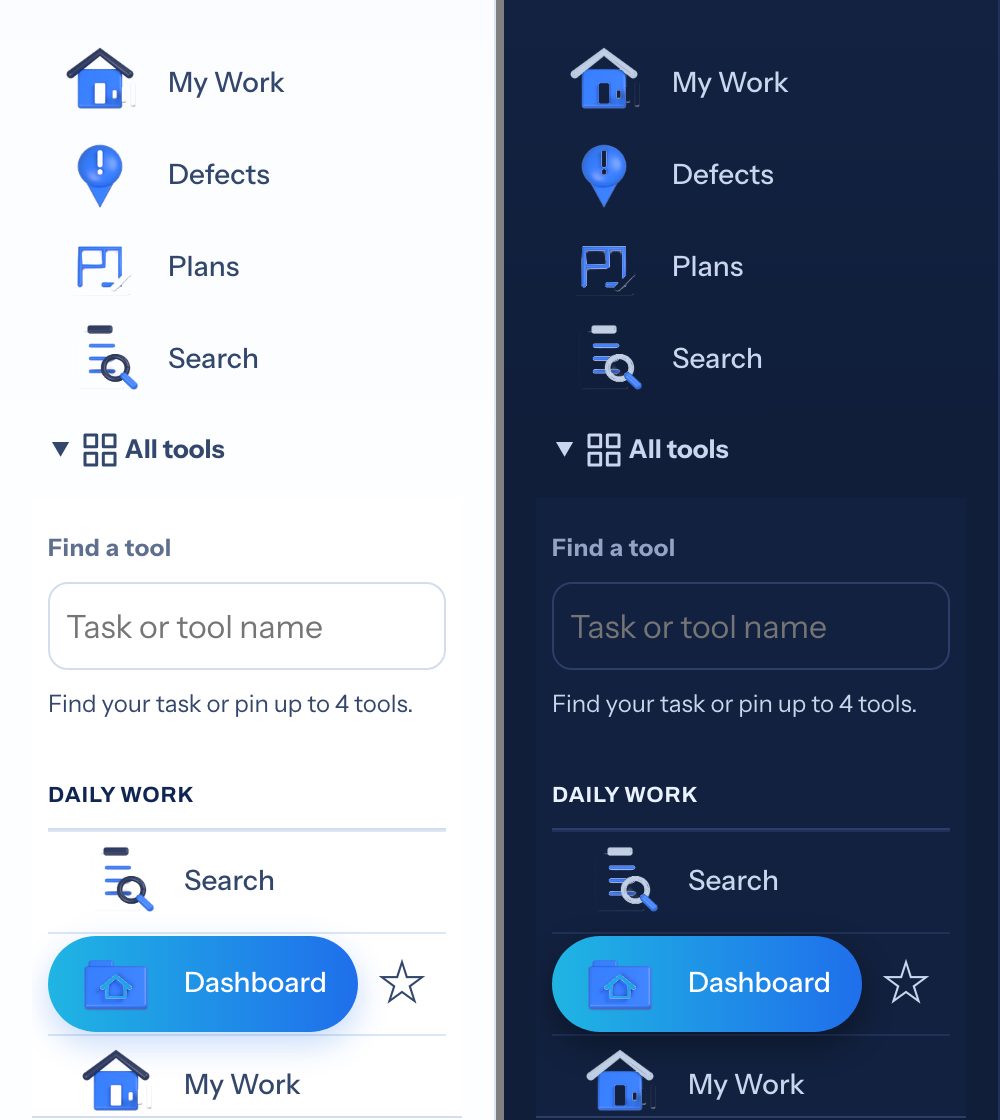
- Icons: all 26 re-rendered headless in Blender, in cobalt and navy.
- Website: 529 pages in 40 languages, a new opening section with real screens, and 1,583 files uploaded without an error.
- Films: 228 runs for five regions, 222 of them with their own regional version, plus 8 help videos.
“Two days” needs one qualification. An interim draft of the look from 26 September was carried into the work, so the design did not start from nothing on 2 October. The two days cover the execution, from the approved plan to the live website.
Who decided what
The process was more structured than asking an agent to redesign an app. It started with a plan that listed the open decisions, each with options and a recommendation, and Meyer approved it as recommended. The agents worked in a separate copy of the code on their own branch. After the first step, nothing was merged or delivered until Meyer had released that part.
Some gates were human by design. Films that show the web app or the apps were held back until Meyer had seen the new interface and approved it, which happened on 3 October. Paid film re-runs needed an explicit OK as well. And one step no agent could take at all: Apple blocked the iPhone build until the latest Program License Agreement was accepted, and only Meyer could do that.
Where the plan did not hold up, the deviation was logged and the conservative option taken. The cobalt in the original palette reached a contrast of 4.38:1 against the light background, short of the 4.5:1 that Gewerkton uses as its working standard under WCAG 2.1 AA. It was darkened slightly, to 4.80:1, instead of being shipped as designed.
The checks behind “done”
Each part had to pass tests and a visual check before release. The web app was inspected in 200 views, in English, German, Japanese and Hindi, at 390, 834 and 1440 pixels wide, in light and dark mode, with no overflow and no console errors. The phone app passed 853 of 853 tests, the Studio 2,158 of 2,158. The website passed 7 of 7 test suites and ran in the browser at all three widths through all five regions without a 404, an error or an overflow. After upload, the live site went through the same kind of run again.
Not everything was green. In the web app’s test suite, 8 tests failed in 7 files. Six of those files fail the same way on the main branch, and one depends on test order and passes when run alone. So the redesign did not cause them. It did not fix them either.
The films needed a check that no script could replace. The middle frame of each of the 157 mirrored films was inspected visually, and every reworked film was viewed again at 10, 50 and 90 percent of its length.
What went wrong
The first version of the icons sat on white tiles. In dark mode those tiles covered the labels next to them. Meyer caught it by looking at the interface; no test had flagged it. The fix had two parts: a script that turns white and pale grey inside the icons transparent, plus a separate dark variant, and a layout correction, because a general navigation style had overridden the column the icons were meant to sit in. It went live the same evening.
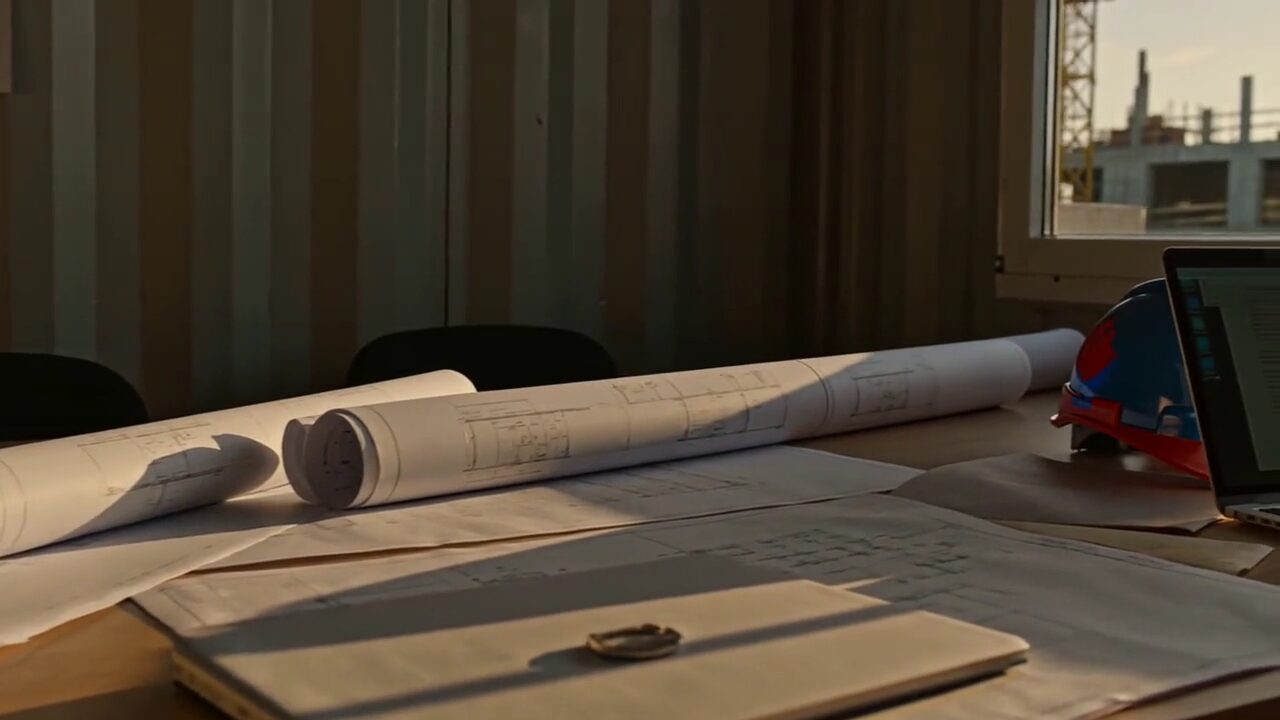
The new look drops red as a brand colour, so red had to leave the films too: helmets, jackets, emblems. An automatic mask scanned for it and missed exactly the cases that mattered. Red in shadow or in warm backlight slipped under its thresholds. One helmet on a table ended up half recoloured, with a blue shell and a red rim, and the mask registered it at 0.06 percent. Those finds came from looking, not from the scan. After the visual pass, 24 files were cleaned and 10 regional versions with leftover red were switched to the European cut for the time being. Nine of those runs were later reshot with Meyer’s approval and passed the visual check.
Recolouring could also overshoot. One attempt with a wider mask turned a person’s lips blue and was thrown away. Another left a helmet red and put a blue patch on a face instead. On a third, a sticker became a blue rectangle.
The film runs themselves were bumpy. Production was paused after round nine because 38 percent of jobs were failing; at that point 208 of the 228 runs were done. The 76 failed jobs were never billed. Earlier, 80 industry clips were redone because the first image model had barely changed the faces. New start frames follow a casting rule Meyer set on 2 October: women and men whose origin fits the region.
One bug came straight out of the redesign. In the Android test on a Pixel 10a, the buttons on the camera screen broke mid-word, because the new buttons use larger type and more padding. The German word for cancel now wraps onto two lines. It is one of five major findings from that test, none of them a blocker. All five are scheduled for version 0.5.1.
What it cost
For the films, the project’s records give one real figure: about 134 dollars actually spent, according to the account balance after the first production. The sum of the per-job estimates was higher. Reshoots after that point are not included. The figure covers film generation only, not the coding work.

What it does not show
A fast redesign says little about whether a product works on a construction site. Gewerkton is in beta. It calls 2026 its beta year: Field, Studio and Cloud are built, and not every feature is finished. Studio and Cloud are in public beta, Field is in beta ahead of the public beta, and general availability is planned for 2027, which the website itself calls a plan rather than a promise. Archive and Operations are built and in beta, but not yet in use at a customer. The same is true of all five lines.
The open list after the relaunch includes the Android fix round, AI settings that so far exist only in German, and findings in the Studio interface. What the two days do show is narrower: coding agents can carry a large amount of execution in a short time, provided the checks and the human decisions around them are planned in from the start. Anyone who wants to see the result on a real project can request access and join the waitlist.
Columbus Day / Indigenous Peoples' Day Picks
long weekend sales
As an affiliate, we earn on qualifying purchases.