
📊 Full opportunity report: Briefro: A Document That Tells the Truth on ThorstenMeyerAI.com — validation score, market gap, and execution plan.

Get business pricing on tech for your team
- Business-only prices and quantity discounts
- Tax-exempt purchasing
- Multiple users, one account, clear invoices
TL;DR
Briefro has launched a new AI document tool that binds figures to real data, runs on local hardware, and ensures trustworthiness. It aims to address inaccuracies and privacy concerns in enterprise documents.
Briefro has unveiled a new AI-powered document creation platform that guarantees data integrity and privacy by operating entirely on users’ local hardware. This development is significant for organizations handling sensitive data, such as finance, legal, and healthcare sectors, seeking trustworthy document automation without cloud reliance.
The product, called Briefro, is designed to produce branded documents, reports, and proposals where every figure is bound directly to real data sources. It ensures that figures, KPIs, and charts automatically update when data changes, eliminating errors caused by manual copy-paste or outdated information. The platform also enforces strict compliance with legal and regulatory language, using a clause library to prevent unauthorized modifications.
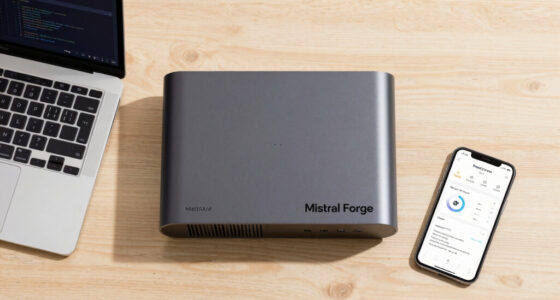
One of Briefro’s core commitments is that all processing occurs on the user’s hardware. Unlike typical AI tools that operate via cloud services, Briefro’s architecture ensures privacy and intellectual property remain entirely within the organization’s control. This feature addresses a major barrier for regulated industries considering AI adoption, as it simplifies compliance with data residency and confidentiality requirements. The product also supports customizable brand styles, enabling consistent visual identity across all generated documents.
Briefro shipped with a functional version 1, capable of generating branded documents from templates and live data. Some advanced features, such as a what-if scenario engine, are still in development and currently have known bugs, but are expected to be released soon. The platform’s design emphasizes transparency and verifiability, with outputs that are reproducible and source-cited, making them suitable for audit and legal review.
A Document That Tells the Truth
A prompt becomes a polished, branded deck, document, or proposal — where every figure is bound to your actual data, the regulated language is locked, the export is reproducible, and the whole thing is generated on hardware you own.
re-upload the data and this figure updates itself. A pasted number drifts; a bound one can’t.
The v1 contract deliberately killed the marketing site — spec written, then archived with “do not build any of it now.” The app shipped; briefro.com served nothing; four legal pages 404’d to an empty /. Subtraction taken to its end — refused until the product was real. This is the work of finally building it.
main, staged as one clean concern, committed once, and merged by PR — the dirty branch never touched.stdin, never on the command line, so the password never hit the process list.- Rotate the FTP password. It was pasted into a setup transcript, so it’s flagged for rotation as a precaution — noted, not buried.
- One-command redeploy pending. A deploy script that bakes in the control-only-TLS font trick is still to be written.
- What-if is unmerged and broken. The scenario engine reaches the KPIs but not yet the chart’s value labels; it lives on a local branch until the bug is fixed.
- Frontier vs. core. The trust architecture — local generation, data-binding, locked clauses, deterministic export — is load-bearing; some features around it are still evolving.
Independent commentary, produced with AI assistance under human editorial oversight. The views are the author’s own and may change. This is not business, financial, legal, or technical advice. Briefro is an early-stage product; some capabilities are shipped while others are in development or unmerged. Legal-page references describe templates, not advice. Infrastructure identifiers and credentials have been deliberately omitted. Product, model, and company names are trademarks of their respective owners; mention does not imply endorsement.
Implications for Data Security and Document Trust
This development matters because it addresses longstanding concerns about data privacy, accuracy, and compliance in enterprise documentation. By ensuring that figures are always linked to their sources and that documents never leave local hardware, Briefro offers a compelling alternative to cloud-based AI tools, particularly for regulated industries. Its focus on trustworthiness and reproducibility could set new standards for enterprise AI applications, reducing risks associated with misinformation and data breaches.
local AI document automation software
As an affiliate, we earn on qualifying purchases.
As an affiliate, we earn on qualifying purchases.
Background on Document Accuracy and Privacy Challenges
Traditionally, organizations rely on multiple tools—spreadsheets, slide decks, and cloud AI services—that often operate in silos, leading to errors, version drift, and privacy issues. The problem is compounded by manual data entry, outdated figures, and the risk of sensitive information leaking through cloud platforms. Recent industry discussions emphasize the need for AI solutions that can operate securely within organizations’ existing infrastructure, especially amid increasing regulatory scrutiny and data protection laws.
Briefro’s approach builds on these concerns, emphasizing local processing and data binding to mitigate errors and privacy risks. The product’s release follows a growing demand for enterprise-grade AI tools that prioritize trust and compliance, aligning with broader trends toward on-premises AI deployment.
“Our goal is to fundamentally change how organizations generate trustworthy documents—keeping data secure, figures accurate, and branding consistent—all without leaving their hardware.”
— Thorsten Meyer, CEO of Briefro
privacy-focused enterprise report generator
As an affiliate, we earn on qualifying purchases.
As an affiliate, we earn on qualifying purchases.
Remaining Questions About Implementation and Future Features
While the initial release demonstrates promising capabilities, some features, such as the what-if scenario engine, are still in development and currently contain known bugs. It is not yet clear how widely the platform will be adopted, how it will scale for larger organizations, or how it will integrate with existing enterprise systems. Additionally, the long-term reliability of the data-binding and source citation mechanisms remains to be fully validated in real-world use.
branded document template software
As an affiliate, we earn on qualifying purchases.
As an affiliate, we earn on qualifying purchases.
Upcoming Developments and Deployment Plans
Briefro plans to release the remaining features, including the bug-fixed version of the scenario engine, in upcoming updates over the next few months. The company will also initiate pilot programs with select clients in finance, legal, and healthcare sectors to gather feedback and demonstrate real-world effectiveness. Broader availability and integrations with other enterprise tools are expected later in 2024, alongside continued enhancements to usability and compliance features.
data integrity report creation tool
As an affiliate, we earn on qualifying purchases.
As an affiliate, we earn on qualifying purchases.
Key Questions
How does Briefro ensure data privacy?
Briefro runs entirely on the user’s hardware, meaning no data leaves the organization’s local environment. This architecture prevents sensitive information from being stored or processed in external clouds, addressing privacy and compliance concerns.
Can Briefro handle large datasets?
While the initial version is optimized for typical enterprise documents, scalability for very large datasets is still being tested. Future updates aim to improve performance and integration with enterprise data warehouses.
Is the product suitable for all industries?
Briefro is especially designed for regulated industries like finance, legal, healthcare, and consulting, where data accuracy and privacy are critical. Its features are adaptable for other sectors that require trustworthy documentation.
What are the limitations of the current version?
The current release does not yet include all planned features, such as the fully functional what-if scenario engine. Some features are still in beta, and real-world performance may vary until further updates are released.
Source: ThorstenMeyerAI.com
Halloween Picks
halloween
As an affiliate, we earn on qualifying purchases.