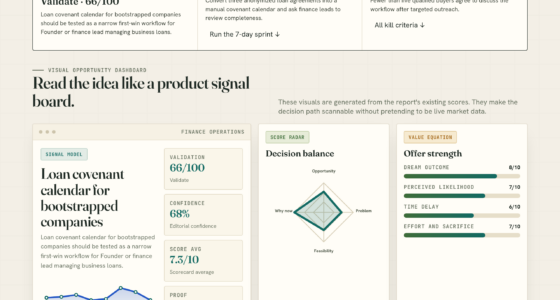

📊 Full opportunity report: AI Token Market: What Lies Beneath The Surface on ThorstenMeyerAI.com — validation score, market gap, and execution plan.
TL;DR
The recent decline in AI tokens is driven by a redistribution of margins rather than falling demand. Open-source and private labs are accelerating, but this activity remains largely invisible to public markets. The market misreads these signals, leading to mispricing.
The AI token market has experienced a significant decline, with prices dropping by 40 to 60 percent from recent highs. This drop has caused concern among investors, but new analysis suggests the fundamental demand for AI compute remains strong. Experts indicate that the sell-off is driven by a redistribution of margins and increased activity in private AI labs and open-source inference clouds, which are largely invisible to public market metrics.
According to industry observer Thorsten Meyer, the decline in AI tokens does not reflect a decrease in demand for compute. Instead, it results from a shift where margins move from expensive frontier models to more affordable open-weight models. This redistribution causes tokens to become cheaper, leading to increased consumption rather than reduced demand. Meyer emphasizes that the physical cost of producing tokens remains unchanged regardless of model type, and the market is misinterpreting the signals.
He explains that the growth in private frontier labs and open inference clouds
—areas with limited public data—are fueling demand behind the scenes. These activities influence key indicators like GPU availability and memory prices, but are not reflected in public financial statements. The market’s focus on visible players like hyperscalers misses this “dark matter” of the AI economy, which is accelerating rapidly.Furthermore, the rise of multi-model routing—using open-weight models orchestrated by a smaller number of frontier models—further complicates the picture. This pattern reduces costs for users and increases total token volume, as orchestration itself consumes tokens. Meyer notes that this dynamic inflates the value of expensive orchestrating models, making them more valuable, contrary to the zero-sum narrative often assumed.
The speculative AI names fell 40–60% from their highs in a month. Every fundamental I can measure accelerated in the same weeks. My view: the market is selling a layer of the stack it was never able to see — and panicking about the two risks that matter least.
▲ Opinion & analysis · not investment adviceOpen source taking share spooked the market as demand destruction. That’s backwards. Producing a token costs the same compute whoever emits it — so open weights don’t destroy demand, they move margin and grow the pie.
The acceleration is happening where public equities have almost no telemetry. You infer the layer from its gravitational pull on the gauges you can read.
- A handful of listed hyperscalers
- The chipmakers
- Quarterly filings, weeks late
- Private frontier labs
- Open-source inference clouds monetizing served tokens
- Its pull: GPU scarcity, rising rents, memory spot, token growth — none on a balance sheet
The two things everyone panicked about are the two I worry about least. The risks worth respecting are quieter.
For the buildout to pay for itself, trillions in new operating cash flow must appear. It can come from exactly two places.
The truth, as usual, is still getting its boots on.
Implications of Margin Shifts and Invisible Growth
This analysis suggests that the recent market decline does not signal demand destruction. Instead, it reflects a redistribution of profit margins within the AI ecosystem, with activity in private labs and open-source inference clouds growing rapidly. Investors and analysts should reconsider traditional metrics, as much of the activity fueling AI growth occurs outside public view. Misinterpreting these signals could lead to undervaluing critical parts of the AI infrastructure and innovation pipeline, potentially impacting investment decisions and market expectations.

Baseltek 6 GPU Aluminum Mining Rig Open Air Frame Case
- Material: All aluminum alloy profiles for durability
- Protection: Protects graphics cards and electronics
- Assembly: Supports stacking for stability
As an affiliate, we earn on qualifying purchases.
As an affiliate, we earn on qualifying purchases.
The current AI market is characterized by a disconnect between visible public companies and the underlying activity in private labs and open inference clouds. While public equities show signs of stagnation, demand for compute continues to accelerate in these hidden layers. This activity is inferred from rising GPU rental prices, memory costs, and token growth metrics that are not reported on public balance sheets. Historically, such invisible demand has led to market whipsaws when its effects eventually leak into visible indicators.
Thorsten Meyer highlights that this unseen activity is the true driver behind the recent market movements, emphasizing that the fundamental buildout of AI infrastructure remains robust despite the sell-off in tokens. The market's failure to recognize this "dark matter" has caused mispricing and volatility, which could persist until these hidden layers become more transparent.
"The demand for compute is not falling; margins are shifting, and activity in private labs and open inference clouds is accelerating behind the scenes."
— Thorsten Meyer
AI inference cloud service subscription
As an affiliate, we earn on qualifying purchases.
As an affiliate, we earn on qualifying purchases.
Unseen Factors and Future Market Signals
It remains unclear how quickly the private frontier labs and open inference clouds will become more visible to the public markets. The exact scale of activity in these layers is difficult to quantify, and their influence on public token prices may fluctuate. Additionally, the long-term impact of margin redistribution on overall AI infrastructure investment is still uncertain, especially if credit conditions tighten or funding shifts occur.

LOCAL LLM DEPLOYMENT: Training, Fine-Tuning, & Offline Inference: The Complete Developer’s Guide to Building, Training, and Running Private Open-Source AI Offline (with full source code)
As an affiliate, we earn on qualifying purchases.
As an affiliate, we earn on qualifying purchases.
Future developments include increased transparency around private lab activity and more granular data on open-source inference cloud usage. Investors should watch GPU rental prices, memory costs, and token volume trends for signs of continued acceleration. Market responses to these signals could validate or challenge current interpretations, influencing token valuations and investment strategies in the AI ecosystem.
AI compute hardware for private labs
As an affiliate, we earn on qualifying purchases.
As an affiliate, we earn on qualifying purchases.
Key Questions
Why are AI token prices dropping if demand is still strong?
Token prices are falling because margins are shifting from high-cost frontier models to cheaper open-weight models. This redistribution lowers the cost per token but does not reduce overall demand; in fact, demand may be increasing as tokens become more affordable.
What is meant by 'dark matter' in the AI economy?
'Dark matter' refers to the activity in private labs and open-source inference clouds that is not visible in public market data but significantly influences demand and infrastructure costs.
How does multi-model routing affect the AI market?
Multi-model routing reduces user costs by orchestrating open-weight models with a frontier model, often increasing total token volume and demand for infrastructure, which can inflate the value of the orchestrating models.
Is this market correction temporary or indicative of a larger trend?
Current analysis suggests the correction reflects a redistribution of margins and activity rather than a demand slowdown. The trend may continue until more transparent data emerges from private and open-source layers.
What should investors focus on to understand the true state of the AI market?
Investors should monitor GPU rental prices, memory costs, token growth, and activity in private labs and open inference clouds, as these are key indicators of underlying demand not captured in public financial reports.
Source: ThorstenMeyerAI.com